


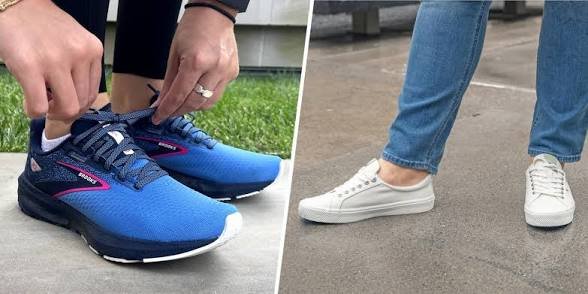
A walking shoe and an orthopedic shoe can look surprisingly similar. Both may have cushioned midsoles, roomy toe boxes, removable insoles and firm heel counters.
The difference is purpose. Walking shoes are designed for repeated forward movement and comfort. Orthopedic footwear is intended to accommodate or manage a structural, biomechanical or medical need that regular footwear cannot handle.
What Is the Main Difference Between Orthopedic and Walking Shoes?
Walking shoes are conventional footwear. Their design usually prioritises cushioning, forefoot flexibility, traction, heel stability and comfort over repeated steps.
Orthopedic footwear is used when the foot needs something beyond a standard last. Guy’s and St Thomas’ NHS Foundation Trust defines orthopaedic footwear as special shoes, boots or trainers supplied when regular footwear is unsuitable for a person’s needs. Such footwear may also incorporate prescribed insoles.
That means “orthopedic” is not simply another word for supportive. The shoe may need extra depth for a deformity, more volume for an orthosis, a modified sole to alter loading, or construction that stabilises a painful part of the foot.
Men comparing orthopedic shoes for men should therefore start with the problem they are trying to solve rather than the label on the product.
What Makes a Good Walking Shoe?
For ordinary walking, fit comes first. No amount of cushioning can compensate for a toe box that is too narrow or a heel that slips every step.
The American Orthopaedic Foot & Ankle Society recommends about 3/8 to 1/2 inch between the longest toe and the front of the shoe. The widest part of the forefoot should sit comfortably within the widest part of the shoe, and the toe box should have enough depth to prevent rubbing.
A walking shoe should also flex where the foot naturally bends.
When Does an Orthopedic Shoe Become More Appropriate?
The answer changes when anatomy or function falls outside what ordinary footwear can accommodate.
A rigid bunion, pronounced hammertoes, substantial swelling, arthritis, neurological weakness, major differences between the two feet or a brace can all change the fitting problem. Simply buying a “more supportive” trainer may not address it.
Orthopedic footwear may provide greater depth, unusual widths, stabilising structures or space for a custom orthosis. Some designs also use rocker soles or other modifications to change how pressure moves across the foot.
Specialist footwear is therefore a response to a defined need, not an automatic upgrade from a walking shoe.
Orthopedic Shoes and Orthotics Are Not the Same Thing
An orthotic, or foot orthosis, is an insert or device placed inside footwear to support, accommodate or alter loading. The shoe is the structure around it.
A man may need an orthotic without needing orthopedic footwear. If a regular walking shoe has enough depth, a removable liner and the right shape, it may accommodate a prescribed insert perfectly well.
A 2025 systematic review and meta-analysis covering eight randomised controlled trials and 486 participants with rheumatoid arthritis found that foot orthoses were associated with improvements in foot pain and disability, although not all functional outcomes improved.
The insert and shoe still have to work together. A thick orthosis inside a low-volume shoe can crowd the toes or raise the heel.
Does More Cushioning Mean Better Orthopedic Support?
No. Soft cushioning can help with comfort, but it is not always what the foot needs. Sometimes the better approach is to shift weight away from a tender spot or reduce movement where a joint is already sore.
A randomised trial involving 102 people with first metatarsophalangeal joint osteoarthritis compared prefabricated orthoses with rocker-sole footwear. Both groups improved over 12 weeks, with no significant difference in the main pain outcome. The orthosis group, however, showed better adherence and fewer adverse events.
A related biomechanical analysis found that both interventions reduced peak pressure under the first metatarsophalangeal joint, but through different mechanisms.
Softness, in other words, is not the same thing as therapeutic function.
What Is a Rocker Sole?
A rocker sole has a curved profile that changes how the foot rolls forward during a step. Instead of requiring the forefoot joints to bend through the same range as they would in a flatter shoe, the sole helps the body progress over the foot.
Rocker designs are sometimes used for forefoot pain or arthritis. A review found evidence that they can reduce plantar pressure beneath the forefoot, although no single rocker shape has been established as ideal for every condition.
That does not make rocker footwear suitable for everyone. Its value depends on diagnosis, pressure location and gait.
Can a Walking Shoe Be Enough for Bunions or Hammertoes?
Often, yes, if the deformity is mild and the shoe has the right shape.
A bunion needs enough room around the first metatarsophalangeal joint. Hammertoes require vertical depth as well as width because raised joints can rub against the upper.
FootCareMD specifically warns that inadequate shoe depth can contribute to rubbing, calluses and sores in people with hammertoes or similar conditions.
A broad, deep walking shoe may solve a straightforward accommodation problem. If deformity is severe, painful or impossible to fit in ordinary footwear, specialist assessment becomes more relevant.
Why Correct Width Matters as Much as Support
Men often solve width problems by sizing up. A shoe feels tight across the forefoot, so a size 10 becomes an 11. The extra length may reduce side pressure slightly, but it can also create heel slip and move the shoe’s flex point farther forward.
A systematic review of 18 studies found that 63% to 72% of participants wore footwear that failed to accommodate either foot length or width. Poor fit was associated with foot pain, corns, calluses and lesser-toe deformities.
If the length is correct, look for genuine additional width or depth instead of simply increasing the numerical size.
Are Orthopedic Shoes Better for Standing and Walking All Day?
Not automatically.
A man without significant deformity, instability or a medical foot problem may be better served by a comfortable walking shoe that fits properly and suits his daily surfaces.
Orthopedic footwear becomes useful when standard designs cannot safely or comfortably accommodate the foot, or when the shoe needs to perform a specific mechanical job.
A review of footwear interventions for foot and ankle arthritis found that useful characteristics varied by condition. Studies involving rheumatoid arthritis often used cushioning and wide toe boxes, while rocker soles and midsole stability appeared in interventions for gout and first metatarsophalangeal osteoarthritis.
There is no single “most supportive” design for every painful foot.
How Should Men Choose Between the Two?
Start by deciding whether the issue is ordinary fit, activity-related comfort or a more complex structural problem.
If you walk several miles a day and your feet simply feel tired, check the basics first. Measure both feet, try footwear later in the day, wear your usual socks and make sure the shoe fits immediately rather than depending on stretching. FootCareMD advises against buying shoes on the assumption that they will eventually stretch into the correct fit.
If you use an orthosis, test the shoe with it installed. Significant deformity, recurrent skin pressure, persistent pain or an inability to fit conventional shoes moves the problem beyond casual trial and error.
Men considering orthopedic shoes for men should also distinguish between retail footwear with comfort-oriented orthopedic features and footwear that has been clinically prescribed or modified.
FAQs About Orthopedic Shoes vs Walking Shoes
Are orthopedic shoes only for older men?
No. Younger men may also need specialist footwear because of injury, neurological conditions, arthritis, deformity or the need to accommodate an orthosis or brace.
Can you walk long distances in orthopedic shoes?
Yes, if the footwear is designed for walking and fitted correctly. Prescribed shoes may need to be introduced gradually when they alter pressure distribution or walking mechanics.
Are wide walking shoes considered orthopedic?
Not simply because they are wide. A conventional shoe can come in several widths without being orthopedic footwear.
Do orthopedic shoes cure foot problems?
Usually not. Depending on the condition, they may accommodate deformity, reduce pressure, support the foot or make walking more comfortable. They do not reverse every structural problem.
Choose the Shoe for the Job It Needs to Do
Walking shoes and orthopedic shoes overlap in appearance because good footwear often shares sensible features: adequate width, secure heel fit, useful cushioning and enough room for the toes.
The difference lies in purpose. A walking shoe is built to make ordinary walking comfortable and efficient. Orthopedic footwear is used when the foot requires accommodation, support or mechanical modification beyond what regular footwear can provide.
For many men, the best answer is simply a properly fitted walking shoe. For others, arthritis, deformity, bracing or persistent pressure makes specialist footwear worthwhile.
The smartest choice is not the shoe with the most medical-sounding description. It is the one that solves the actual problem without creating a new one.
