


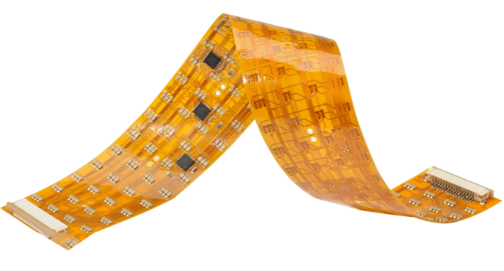
The electronics industry is continuously evolving, creating a growing demand for innovative circuit board solutions that support compact designs, lightweight structures, and advanced functionality. Traditional rigid printed circuit boards remain essential for many applications, but modern electronic products often require greater flexibility and adaptability. This is where flexible pcb manufacturing plays an important role in electronic product development.
Flexible printed circuit boards, commonly known as flex PCBs, are designed to bend, fold, or conform to different shapes while maintaining reliable electrical connections. These characteristics make them suitable for applications where conventional rigid circuit boards may not provide sufficient design freedom. FastTurn PCBA offers PCB manufacturing and assembly solutions for businesses developing custom electronic products, including applications that require flexible circuit technology.
From medical devices and wearable electronics to automotive systems and industrial equipment, flexible PCBs help manufacturers create compact and efficient electronic designs. Understanding their manufacturing process, benefits, and applications allows businesses to make informed decisions when selecting circuit board solutions.
Understanding Flexible PCB Manufacturing
Flexible PCB manufacturing involves producing printed circuit boards using bendable insulating materials instead of traditional rigid substrates. These boards typically use flexible polymer films, such as polyimide, combined with conductive copper layers to create electrical pathways.
Unlike conventional rigid boards, flexible circuits can fit into confined spaces and accommodate curved or irregular product structures. This flexibility allows engineers to develop electronic systems with fewer mechanical restrictions.
The manufacturing process requires specialized materials, precise circuit patterning, and careful quality control to ensure dependable electrical performance.
Key characteristics of flexible PCBs include:
- Bendable Construction: Flexible substrates allow circuits to bend or fold within their specified mechanical limits.
- Lightweight Design: Thin materials help reduce the overall weight of electronic products.
- Compact Integration: Flexible circuits can fit into narrow spaces and complex product layouts.
- Reliable Connectivity: Properly designed flex circuits can reduce the need for separate connectors and cables.
- Custom Configurations: Engineers can create circuits with different shapes, dimensions, and layer structures.
- Thermal Performance: Appropriate material selection supports operation under specified temperature conditions.
These characteristics make flexible PCBs valuable for electronic products requiring compact construction and advanced mechanical integration.
Why Choose FastTurn PCBA for Flexible PCB Manufacturing?
Selecting a suitable manufacturing partner is essential when developing custom flexible circuit boards. Flexible PCB manufacturing production requires careful coordination between design requirements, material properties, manufacturing processes, and final product applications.
FastTurn PCBA provides PCB manufacturing and assembly solutions intended to support different electronic design and production requirements.
Custom PCB Manufacturing Solutions
Electronic products vary significantly in size, functionality, operating conditions, and mechanical requirements. Standard circuit board configurations may not always meet these demands.
FastTurn PCBA offers manufacturing solutions for customers seeking customized circuit board designs.
Custom flexible PCB projects may involve:
- Unique board shapes and dimensions.
- Single-sided or double-sided circuit layouts.
- Multilayer flexible circuit structures.
- Specialized substrate materials.
- Custom copper thickness requirements.
- Compact component arrangements.
- Application-specific electrical specifications.
Customers should confirm the available fabrication capabilities and tolerances for their particular designs before placing production orders.
Support for Advanced Electronic Applications
Modern electronic products often require compact components, complex electrical connections, and efficient use of internal space.
Flexible PCB technology provides additional design freedom by allowing circuits to follow the physical structure of a device.
FastTurn PCBA’s PCB manufacturing and assembly services can help businesses coordinate the development of electronic products with specialized circuit board requirements.
PCB Fabrication and Assembly Integration
Coordinating PCB fabrication and assembly can become challenging when multiple suppliers are involved.
Working with a provider that supports both processes may help simplify production management.
Potential benefits include:
- Better coordination between manufacturing stages.
- Reduced communication difficulties.
- Improved compatibility between circuit design and component assembly.
- More efficient prototype development.
- Simplified supplier management.
- Greater consistency in production planning.
These advantages are particularly useful for businesses developing custom electronic products.
Different Types of Flexible Printed Circuit Boards
Flexible PCBs are available in several configurations, each designed for specific electrical and mechanical requirements.
Understanding these options helps engineers choose an appropriate structure for their applications.
Single-Sided Flexible PCBs
Single-sided flexible PCBs contain one conductive copper layer attached to a flexible insulating substrate.
These boards are relatively simple and are commonly used in applications requiring basic electrical connections.
Their advantages include lower structural complexity, lightweight construction, and suitability for compact electronic designs.
Common applications include display connections, simple sensors, and compact consumer electronic devices.
Double-Sided Flexible PCBs
Double-sided flexible PCBs contain conductive layers on both sides of the insulating material.
Electrical connections between layers are typically established through plated holes or other suitable interconnection structures.
These boards provide greater routing flexibility than single-sided designs and can accommodate more complex electrical connections.
They are useful in electronic products where additional circuit density is required without significantly increasing board dimensions.
Multilayer Flexible PCBs
Multilayer flexible PCBs incorporate three or more conductive layers separated by insulating materials.
These structures support complex circuit routing and higher connection density.
However, increasing the number of layers can affect flexibility, thickness, manufacturing complexity, and cost.
Engineers must carefully balance electrical requirements with mechanical performance.
Rigid-Flex PCBs
Rigid-flex printed circuit boards combine rigid circuit sections with flexible interconnections.
This construction allows components to be mounted on stable rigid areas while flexible sections connect different parts of an electronic assembly.
Rigid-flex technology is particularly valuable in compact devices where traditional cables and connectors would occupy excessive space.
Key Benefits of Flexible PCB Technology
Flexible printed circuit boards provide several advantages that make them suitable for advanced electronic applications.
Greater Design Freedom
One of the most important benefits of flexible PCB technology is its ability to accommodate unconventional product shapes.
Engineers can design circuits that bend around corners, connect separate modules, or fit inside curved enclosures.
This capability allows manufacturers to develop electronic products that would be difficult to create using only rigid circuit boards.
Reduced Product Weight
Flexible PCBs are generally thinner and lighter than conventional rigid boards.
By reducing the need for certain cables, connectors, and supporting structures, flexible circuits can contribute to lighter electronic assemblies.
This benefit is especially valuable in wearable electronics, portable medical devices, and aerospace applications.
Efficient Use of Internal Space
Compact electronic devices often contain limited internal space.
Flexible circuits can connect components across different sections of a device without requiring large connector assemblies.
This efficient use of space supports product miniaturization and innovative mechanical designs.
Potentially Improved Connection Reliability
Traditional electronic assemblies may contain multiple connectors and cable interfaces.
Each connection introduces another potential point of mechanical or electrical failure.
Properly designed flexible circuits can eliminate some of these interfaces, potentially improving overall system reliability.
However, reliability depends on factors such as bend radius, copper design, material selection, and operating conditions.
Support for Complex Product Designs
Flexible circuits allow manufacturers to create electronic systems with unusual dimensions and configurations.
This adaptability is useful when developing products that require integrated electronics within compact or moving structures.
Flexible PCB Manufacturing Process at FastTurn PCBA
Producing reliable flexible circuit boards involves several carefully controlled manufacturing stages.
The exact process depends on the board structure, materials, design complexity, and intended application.
Design Review and Engineering Preparation
Manufacturing begins with evaluating the circuit board design.
Engineers examine important specifications to determine whether the proposed design is compatible with available fabrication processes.
Key considerations include:
- Board dimensions and thickness.
- Number of conductive layers.
- Minimum trace width and spacing.
- Bend radius requirements.
- Copper thickness.
- Substrate material selection.
- Coverlay specifications.
- Component placement.
- Electrical testing requirements.
A thorough design review can help identify potential manufacturing problems before production begins.
Flexible Material Selection
Material selection is critical because flexible circuits must maintain electrical functionality while accommodating mechanical movement.
Polyimide is commonly used due to its flexibility, thermal resistance, and dimensional stability.
Other material options may be suitable depending on the product’s electrical and environmental requirements.
Copper foil selection is also important, particularly for circuits expected to experience repeated bending.
Circuit Pattern Formation
After material preparation, conductive circuit patterns are formed using appropriate imaging and etching processes.
Precise trace formation is essential for maintaining electrical connectivity and meeting design specifications.
Manufacturing accuracy becomes particularly important for compact circuits with narrow spacing.
Drilling and Interconnection Formation
Double-sided and multilayer flexible boards may require holes to establish electrical connections between conductive layers.
Depending on the design, mechanical drilling or laser drilling may be used.
These holes are processed and metallized where necessary to create conductive pathways.
Coverlay Application
Flexible circuits commonly use protective coverlay materials instead of conventional rigid-board solder masks.
Coverlays protect conductive traces while leaving appropriate openings for component attachment and electrical connections.
Accurate coverlay alignment helps maintain circuit protection and assembly compatibility.
Surface Finishing
Exposed copper connection areas generally require a suitable surface finish.
Surface finishing helps protect conductive pads and supports reliable soldering or other connection methods.
The appropriate finish depends on assembly requirements, component specifications, and operating conditions.
Inspection and Electrical Testing
Quality inspection helps verify that flexible circuits meet specified manufacturing requirements.
Depending on the project, verification may include:
- Visual inspection.
- Automated optical inspection.
- Electrical continuity testing.
- Dimensional verification.
- Surface finish inspection.
- Material and thickness checks.
- Application-specific mechanical testing.
These procedures help identify defects before boards proceed to final assembly or delivery.
Applications of Flexible PCB Manufacturing
Flexible printed circuit boards support numerous industries because of their adaptability and compact construction.
Consumer Electronics
Consumer electronic products frequently require lightweight circuit boards and compact internal connections.
Flexible PCBs are used in devices such as:
- Smartphones.
- Tablets.
- Digital cameras.
- Smartwatches.
- Wireless earbuds.
- Portable gaming devices.
- Foldable electronic products.
These applications benefit from flexible interconnections and efficient use of internal space.
Medical Devices
Medical electronics often require compact designs, lightweight components, and reliable electrical connections.
Flexible circuits can be used in wearable monitoring equipment, diagnostic instruments, medical sensors, and certain imaging systems.
For medical applications, manufacturers must consider relevant safety standards, material compatibility, quality requirements, and regulatory obligations.
Automotive Electronics
Modern vehicles incorporate sophisticated electronic systems for communication, safety, monitoring, and entertainment.
Flexible circuits can support compact electronic assemblies in dashboards, lighting systems, sensor modules, and other automotive components.
Automotive applications may require additional environmental qualification depending on vibration, temperature, humidity, and mechanical stress.
Aerospace and Defense Electronics
Weight reduction and compact integration are important considerations in aerospace electronics.
Flexible PCBs can help reduce wiring complexity and support specialized electronic layouts.
However, aerospace and defense applications often require strict qualification procedures and documented manufacturing controls.
Industrial Automation
Industrial equipment increasingly relies on electronic sensors, controllers, and communication systems.
Flexible PCBs can support compact sensor assemblies, robotic equipment, and electronic modules requiring specialized mechanical integration.
For moving applications, circuit designs must account for repeated bending and mechanical fatigue.
The appropriate choice depends on mechanical requirements, circuit complexity, operating environment, and production budget.
Important Design Considerations for Custom Flexible PCBs
Successful flexible PCB manufacturing begins with proper engineering design.
Unlike rigid boards, flexible circuits must account for mechanical stress in addition to electrical performance.
Bend Radius
The bend radius determines how tightly a flexible circuit can bend without exceeding its design limits.
Excessively tight bending may damage conductive traces or insulating materials.
The allowable bend radius depends on board thickness, layer count, copper type, and whether bending occurs once or repeatedly.
Copper Trace Routing
Trace routing plays an important role in flexible circuit reliability.
Engineers should avoid unnecessary stress concentrations in areas expected to bend.
For dynamic flex applications, routing geometry and copper selection require particular attention.
Component Placement
Electronic components are generally best positioned in mechanically stable areas.
Placing rigid components directly within frequently bending sections can introduce mechanical stress and increase failure risks.
Designers may use stiffeners or rigid sections where additional mechanical support is required.
Material Thickness
Thinner flexible circuits can provide greater bending capability, but they may also introduce handling and manufacturing challenges.
The correct thickness depends on electrical requirements, mechanical movement, and product construction.
Thermal Management
Electronic components generate heat during operation.
Flexible PCB materials and structures must be selected with consideration for operating temperatures and heat dissipation.
Appropriate thermal design is particularly important for high-power or densely populated assemblies.
The Role of Prototyping in Flexible PCB Development
Prototype development allows businesses to evaluate circuit functionality and mechanical performance before larger production commitments.
Because flexible circuits often interact directly with the physical structure of a product, mechanical testing is especially important.
Flexible PCB prototyping helps evaluate:
- Electrical performance.
- Circuit connectivity.
- Mechanical fit.
- Bend radius compatibility.
- Component placement.
- Thermal behavior.
- Assembly feasibility.
- Potential manufacturing challenges.
Early testing allows engineers to identify problems and refine designs before full-scale production.
FastTurn PCBA’s PCB manufacturing and assembly solutions can be considered by businesses seeking coordinated support for prototype and production requirements.
Common Challenges in Flexible PCB Manufacturing
Although flexible circuits provide significant design advantages, their production requires careful engineering.
Mechanical Fatigue
Repeated bending can cause copper traces to crack if the circuit is not designed for dynamic movement.
Selecting suitable materials and maintaining appropriate bend geometry can help reduce this risk.
Material Handling
Thin flexible substrates can be more difficult to handle during manufacturing and assembly.
Specialized fixtures and controlled production processes may be necessary.
Layer Alignment
Multilayer flexible circuits require accurate alignment to maintain dependable electrical connections.
Manufacturing tolerances become increasingly important as circuit complexity increases.
Assembly Challenges
Flexible boards may require temporary support during solder paste application, component placement, and reflow soldering.
Proper assembly planning helps prevent movement and positioning problems.
Production Costs
Flexible PCB manufacturing may involve specialized materials and additional processing requirements.
However, system-level savings may be possible when flexible circuits replace multiple connectors, cables, or separate boards.
How to Choose the Right Flexible PCB Manufacturer
Selecting a reliable flexible pcb manufacturing partner requires evaluating technical capabilities and production practices.
Businesses should consider several important factors before choosing a supplier.
Technical Manufacturing Capabilities
The manufacturer should be able to accommodate the required circuit structure, material specifications, dimensions, and electrical characteristics.
For complex designs, customers should request confirmation of manufacturing tolerances and available processes.
Engineering Communication
Clear technical communication helps identify design limitations and improve production readiness.
Manufacturing feedback is particularly valuable for products involving repeated bending or complex mechanical integration.
Quality Control Procedures
Inspection and testing practices should match the product’s reliability requirements.
Businesses should review available quality documentation and applicable certifications when necessary.
Prototype and Production Support
A manufacturer capable of handling prototype development and subsequent production can simplify project coordination.
Customers should confirm available order quantities, manufacturing schedules, and assembly services.
Cost and Delivery Considerations
Manufacturing price is important, but it should not be the only deciding factor.
Product reliability, material quality, engineering support, and production consistency can have a greater influence on long-term project success.
Future Trends in Flexible PCB Technology
Flexible FastTurn PCBA technology continues to develop alongside advancements in electronics, materials, and manufacturing methods.
Several trends are influencing future applications.
Growth of Wearable Electronics
Smartwatches, health monitoring devices, and other wearable products require compact electronic systems that fit comfortably within small enclosures.
Flexible circuits provide useful design options for these applications.
Expansion of Flexible Displays
Foldable displays and other advanced electronic interfaces create demand for specialized flexible interconnections.
Flexible PCB technology supports electrical connections within products featuring unconventional mechanical structures.
Advanced Medical Electronics
Portable diagnostic systems and wearable medical devices increasingly require lightweight electronic assemblies.
Flexible circuits can help engineers integrate electronic functionality into compact medical products.
Improved Manufacturing Precision
Advances in imaging, drilling, material processing, and inspection technologies may enable increasingly sophisticated flexible circuit structures.
These improvements can support greater design complexity and manufacturing consistency.
Integration With Rigid-Flex Technology
Rigid-flex PCB structures combine the benefits of stable component mounting areas and flexible electrical connections.
As electronic products become more compact, rigid-flex designs may provide practical alternatives to conventional multi-board assemblies.
Conclusion
Flexible printed circuit boards have become an important technology for modern electronic product development. Their ability to bend, fit into compact spaces, reduce wiring complexity, and support custom mechanical configurations makes them valuable across consumer electronics, medical technology, automotive systems, and industrial applications.
Successful flexible pcb manufacturing requires careful material selection, precise fabrication processes, effective design planning, and dependable quality control. Businesses must consider electrical performance and mechanical reliability to ensure that flexible circuits meet their intended operating requirements.
FastTurn PCBA offers PCB manufacturing and assembly solutions for businesses developing custom electronic products. By coordinating technical requirements and production considerations, the company provides an option for organizations seeking circuit board manufacturing support.
As electronic devices continue to become smaller, lighter, and more sophisticated, flexible PCB technology will play an increasingly important role in helping manufacturers create innovative, reliable, and efficient electronic solutions.
