


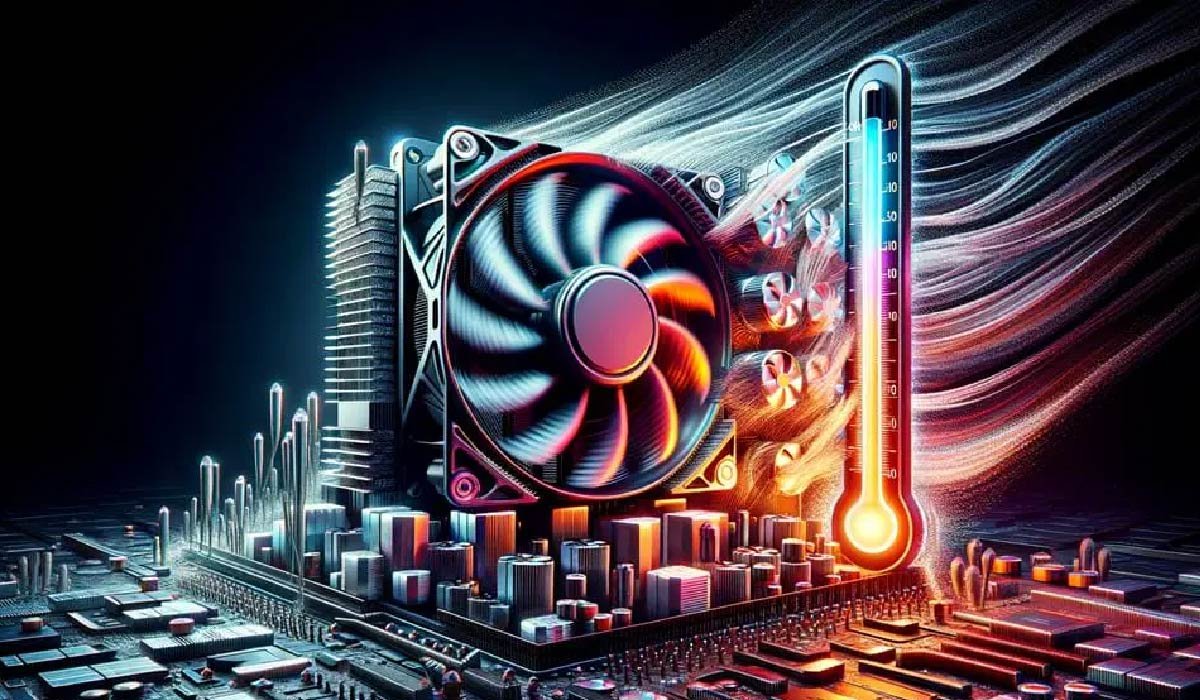
In today’s hyper-connected economy, a company’s success is deeply intertwined with the reliability of its data centers and smart manufacturing facilities. As enterprises scale their digital operations, they face an often-overlooked physical barrier: heat generation.
A single overheating server or telecom cabinet can trigger catastrophic hardware failures, costing businesses thousands of dollars per minute in unexpected downtime. Effectively managing this heat is no longer just a maintenance task; it is a critical component of operational continuity.
The Financial Impact of Overheating in Enterprise Equipment
When evaluating the operational expenditure of data centers, the efficiency of the ventilation system plays a pivotal role. Modern facilities are shifting away from legacy systems to partner with specialized ACDC FAN, ensuring that components like servers and electrical cabinets remain within optimal temperature thresholds without causing energy spikes.
Ignoring these thresholds leads to a cascading effect of financial losses, beginning with immediate hardware inefficiencies and ending in premature equipment death.
Equipment Lifespan vs. Temperature
There is a direct, scientifically proven correlation between sustained high temperatures and the accelerated degradation of IT components. When processors exceed safe operating limits, they automatically trigger thermal throttling, a self-preservation mechanism that drastically reduces processing speeds.
Prolonged exposure to excess heat causes irreversible damage to silicon chips, capacitors, and motherboards. For every 10°C increase above the recommended operating temperature, the lifespan of electronic hardware is effectively cut in half.
The Hidden Costs of Inefficient Cooling
The financial drain of poor thermal management extends far beyond hardware replacement. Outdated AC cooling systems force HVAC units to work overtime, resulting in skyrocketing monthly energy bills.
Furthermore, systems running hot require more frequent maintenance intervals. The labor costs associated with emergency diagnostics and replacing degraded components rapidly eat into a company’s IT budget.
Modern Technologies Driving Efficient Thermal Management
To mitigate these risks, the industry is transitioning from brute-force traditional cooling to smart, energy-efficient environmental controls. Modern server environments require precision.
The Rise of EC (Electronically Commutated) Fans
The most significant leap in air cooling technology is the adoption of Electronically Commutated (EC) fans. Unlike traditional AC fans, EC fans utilize a built-in brushless DC motor alongside an integrated AC-to-DC converter.
This design allows for precise, variable speed control, meaning the fan only spins as fast as the current thermal load requires. Because they operate at much higher efficiencies, EC fans drastically reduce energy consumption while minimizing acoustic noise in server rooms.
Liquid Cooling vs. Advanced Air Cooling
While liquid cooling (like direct-to-chip or immersion cooling) is gaining traction for high-density AI supercomputers, it remains prohibitively expensive and complex for standard enterprise setups.
For the vast majority of telecom cabinets and standard server racks, advanced air cooling via high-grade axial and radial fans remains the undisputed industry standard. It provides the perfect balance of cost-effectiveness, reliability, and ease of maintenance.
Best Practices for Optimizing Your Server and Cabinet Airflow
Even the most advanced cooling hardware will fail if the facility’s airflow architecture is poorly designed. IT and facility managers must deploy strategic airflow management to maximize efficiency.
- Implement Hot-Aisle/Cold-Aisle Containment: Arrange server racks in alternating rows so that cold air intakes face each other, isolating the hot exhaust air. This prevents the mixing of hot and cold air, maximizing the efficiency of the cooling units.
- Master CFM Calculations: You cannot guess your cooling needs. Accurately determining the CFM calculations (Cubic Feet per Minute) is essential. The formula typically requires knowing the total heat dissipation of your equipment in Watts, allowing you to select ventilation specs that guarantee adequate air turnover.
- Seal the Gaps: Use blanking panels in empty rack spaces to prevent hot exhaust air from circulating back to the front of the servers.
The Future of Industrial and Telecom Cooling
As the new energy sector and Industry 4.0 smart manufacturing continue to expand, hardware is being pushed into harsher, non-climate-controlled environments. Future cooling solutions will demand even more robust designs, including high-temperature resistance and IP68-rated protection against dust and moisture.
As global data demands surge, the energy footprint of IT infrastructure is under heavy scrutiny. According to industry reports, cooling alone can account for up to 40% of a data center’s total energy usage. To combat this, modern facilities are adopting stringent energy-efficiency standards, as detailed by global data center energy consumption trends, to ensure sustainable growth.
Conclusion
The physical infrastructure housing our digital world relies entirely on effective thermal management. Relying on outdated cooling systems is a massive liability that drains capital through energy waste and hardware failure.
Investing in high-quality, intelligent cooling infrastructure—specifically modern EC fan technology—is not an operational afterthought. It is a critical business strategy that protects assets, ensures maximum uptime, and drives long-term profitability.
