


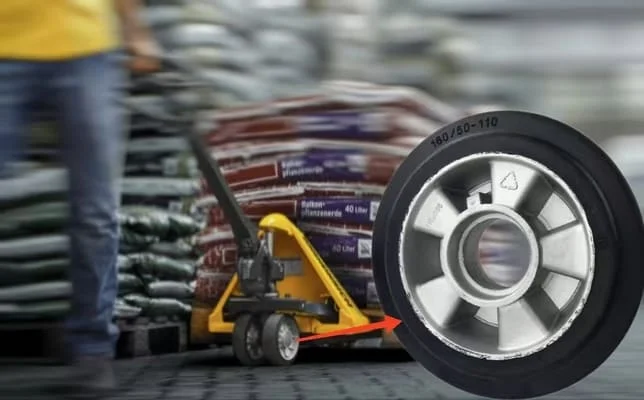
Industrial operations across multiple sectors rely on equipment that can handle continuous movement, precise positioning, and demanding load requirements without failure. While many components contribute to operational reliability, the choice of wheels often determines whether critical processes run smoothly or face unexpected downtime. The wrong wheel selection can lead to floor damage, equipment instability, noise complaints, and maintenance issues that cascade through entire facilities.
Beyond traditional manufacturing and warehousing applications, specialized wheel configurations have found their way into industries where operational consistency isn’t just preferred—it’s essential for safety, compliance, and business continuity. These applications often require specific dimensional characteristics that balance load capacity, maneuverability, and surface protection in ways that standard solutions cannot match.
Medical Equipment and Laboratory Environments
Healthcare facilities operate under strict protocols where equipment mobility must be both silent and precise. Medical carts, diagnostic equipment, and laboratory instruments require wheels that can move smoothly across various floor surfaces while maintaining stability during delicate procedures. A 7 x 1.8 solid rubber wheel provides the dimensional characteristics needed for equipment that must navigate tight spaces while carrying sensitive instruments or patient care supplies.
The solid rubber construction eliminates the risk of punctures or air leaks that could immobilize critical equipment during emergencies. This reliability factor becomes particularly important for portable X-ray machines, emergency crash carts, and mobile surgical equipment that cannot afford mechanical failures during critical moments.
Contamination Control Requirements
Healthcare environments demand wheels that can withstand repeated cleaning with harsh disinfectants without degrading or developing cracks where bacteria could harbor. Solid rubber wheels maintain their integrity through multiple sterilization cycles, unlike pneumatic alternatives that can develop weak points over time. The non-porous surface allows for thorough cleaning protocols that meet infection control standards.
Noise Reduction in Patient Areas
Patient recovery requires quiet environments, making wheel selection crucial for mobile equipment. Solid rubber wheels absorb impact and reduce rolling noise compared to harder materials, allowing medical staff to move equipment during night shifts without disrupting patient rest. This characteristic proves essential in intensive care units where sound levels directly impact patient outcomes.
Food Processing and Commercial Kitchen Operations
Food production facilities face unique challenges where equipment must meet health department regulations while withstanding wet, greasy, and temperature-variable conditions. Mobile equipment in these environments carries substantial loads while navigating around fixed machinery and through doorways designed for efficiency rather than ease of movement.
Commercial kitchens rely on mobile equipment for prep work, cooking, and cleaning operations that must continue throughout service periods. Equipment failures during peak hours can shut down entire service lines, making wheel reliability a critical operational factor.
Chemical Resistance and Washdown Capabilities
Food processing environments require daily washdowns with sanitizing chemicals that can destroy inadequate wheel materials. Solid rubber wheels resist degradation from cleaning agents, oils, and food acids that would compromise other materials. This resistance extends equipment life and prevents contamination risks from wheel breakdown.
Temperature Fluctuation Tolerance
Kitchen environments subject equipment to extreme temperature variations, from walk-in coolers to areas near cooking equipment. Solid rubber maintains flexibility and load-bearing capacity across these temperature ranges, unlike materials that become brittle in cold conditions or soft in heat. This consistency ensures equipment remains mobile regardless of environmental conditions.
Pharmaceutical Manufacturing and Clean Room Applications
Pharmaceutical production operates under stringent regulatory oversight where contamination control and process validation require equipment that performs predictably across thousands of cycles. Mobile equipment in these facilities must meet FDA current Good Manufacturing Practice standards while maintaining the mobility needed for complex production workflows.
Clean room environments impose additional restrictions on materials and equipment that can potentially introduce contaminants. Every component, including wheels, must be evaluated for particle generation, chemical compatibility, and cleaning validation.
Particle Generation Control
Manufacturing environments with air quality requirements cannot tolerate wheels that generate particles through wear or degradation. Solid rubber wheels produce minimal particulate matter compared to composite or multi-material alternatives, helping facilities maintain their required cleanliness classifications throughout production cycles.
Documentation and Validation Requirements
Pharmaceutical operations require detailed documentation of all equipment components for regulatory compliance. Solid rubber wheels provide consistent performance characteristics that simplify validation protocols, as their behavior remains predictable across temperature, load, and chemical exposure ranges that facilities must document for regulatory agencies.
Electronics Assembly and Testing Facilities
Electronics manufacturing requires precise control over static electricity, vibration, and contamination that could damage sensitive components. Mobile equipment in these facilities often carries expensive materials or finished products that represent significant value concentration in small packages.
Testing equipment and assembly line components must move smoothly without generating vibrations that could affect calibration or damage delicate connections. The wheel choice directly impacts product quality and equipment accuracy in these precision environments.
Static Electricity Management
Electronic components can be destroyed by static discharge, making wheel material selection critical for mobile equipment. Solid rubber wheels can be formulated with conductive properties that help dissipate static buildup, protecting valuable inventory and finished products from electrical damage during transport.
Vibration Dampening for Precision Equipment
Testing and measurement equipment requires stability that hard wheels cannot provide. Solid rubber wheels absorb vibrations from floor irregularities and equipment movement, maintaining the stable platform necessary for accurate measurements and quality control processes.
Aerospace Component Manufacturing
Aerospace manufacturing combines extreme precision requirements with high-value materials that cannot tolerate contamination or damage during handling. Mobile equipment must navigate around complex machinery while carrying components that may represent months of manufacturing investment.
Quality standards in aerospace manufacturing exceed those of most industries, requiring equipment components that can be traced, validated, and proven reliable across extended service periods.
Foreign Object Debris Prevention
Aerospace facilities maintain strict controls over foreign object debris that could damage engines or compromise safety systems. Solid rubber wheels resist chunking and degradation that could introduce debris into manufacturing areas, supporting the cleanliness protocols essential for aerospace quality standards.
Load Distribution for Expensive Components
Aerospace components often have complex geometries and high strength-to-weight ratios that create unusual loading conditions during transport. Solid rubber wheels provide consistent load distribution that prevents stress concentrations that could damage expensive materials or precision-machined surfaces.
Chemical Processing and Laboratory Support
Chemical facilities require mobile equipment that can withstand exposure to corrosive substances while maintaining structural integrity over extended periods. Equipment failure in these environments can create safety hazards beyond simple operational disruption.
Laboratory support equipment must navigate between workstations carrying reactive materials or finished samples that require careful handling throughout the analysis process.
Chemical Compatibility Requirements
Solid rubber formulations can be selected for specific chemical resistance properties, allowing equipment to operate safely in environments where other wheel materials would degrade. This compatibility extends equipment service life while maintaining safety margins required for chemical handling operations.
Emergency Response Mobility
Chemical facilities require emergency equipment that remains functional regardless of facility conditions. Solid rubber wheels maintain mobility even when exposed to spilled chemicals or extreme temperatures that could immobilize other wheel types during critical response situations.
Textile and Garment Manufacturing
Textile production facilities operate with mobile equipment that must navigate between machinery while carrying materials that can be damaged by vibration or rough handling. The continuous nature of textile production means equipment failures directly impact production throughput and delivery commitments.
Fabric handling requires smooth movement that prevents snagging, stretching, or contamination that could ruin entire production runs.
Fiber Contamination Prevention
Textile environments contain airborne fibers that can accumulate in wheel mechanisms and cause binding or irregular movement. Solid rubber wheels provide smooth surfaces that resist fiber accumulation while maintaining consistent rolling characteristics throughout production shifts.
Floor Protection in High-Traffic Areas
Textile facilities often have specialized flooring that cannot tolerate damage from hard wheels or metal components. Solid rubber wheels distribute loads effectively while providing the cushioning needed to protect floor surfaces from damage during heavy equipment movement.
Semiconductor Fabrication Support
Semiconductor manufacturing represents the extreme end of cleanliness and precision requirements, where mobile equipment must operate in controlled atmospheres while maintaining the reliability needed for continuous production cycles.
Fabrication facilities cannot tolerate contamination sources that could destroy entire wafer batches, making every equipment component subject to strict material and performance standards.
Outgassing Control
Semiconductor environments require materials that do not release vapors or particles that could contaminate processing equipment. Solid rubber wheels can be manufactured with low outgassing characteristics that meet the stringent requirements of these controlled environments.
Precision Movement Control
Wafer handling and processing equipment requires precise positioning that cannot be achieved with wheels that introduce play or inconsistent movement. Solid rubber wheels provide the stability and predictable rolling characteristics needed for equipment that positions materials with sub-millimeter accuracy.
Conclusion
The applications explored across these eight industries demonstrate that wheel selection extends far beyond simple mobility considerations. Each environment presents specific challenges that require careful matching of wheel characteristics to operational demands. From contamination control in pharmaceutical manufacturing to precision positioning in semiconductor fabrication, the right wheel choice supports operational reliability while preventing the cascading failures that can result from inadequate equipment selection.
Understanding these diverse applications helps facility managers and equipment designers recognize that specialized wheel requirements exist across industries where operational continuity, safety, and quality standards leave little margin for component failure. The investment in appropriate wheel selection pays dividends through reduced maintenance, improved safety, and consistent operational performance across demanding industrial environments.
