


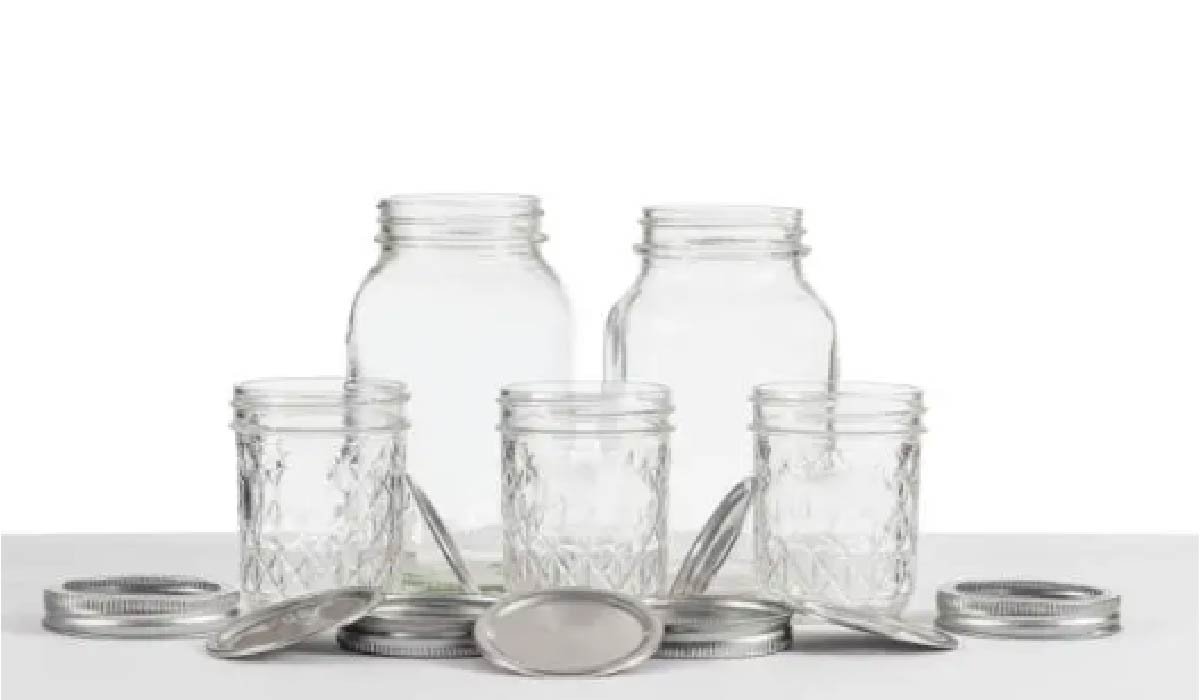
In modern packaging, few items capture both nostalgia and innovation like the mason jar. Once just a symbol of home-made preserves & simple living, it has now also become a design icon used by major corporations. For many B2B companies, this glass container is more than a practical tool; it is a combination of history, sustainability, and story-telling through design.
If you want to see how modern production is improving and elevating the design of a classic, you can check out DAXIN’s collection of glass mason jars. The level of craftsmanship their jars display is a testament to the seamless integration of traditional design and modern markets, and can cater to retail needs from small-batch production to mass production.
The Evolution of a Classic: From Preservation to Premium Packaging
The mason jar has an interesting and dynamic history. Introduced in the mid-1800s, it was considered a modern household tool, and preserver of food due to its air-tight seal. Eventually, it found its way to packaging.
In recent years, brands in the food, fragrance, and home decor sectors have rediscovered its appeal. What once was a DIY staple, is now a premium container for drinks, jams, sauces, candles, and even creams. Its authenticity is a timeless value, both consumers and retailers appreciate.
Why It Endures
The mason jar endures because it protects, displays, and lasts. Its transparency allows consumers to see the contents, and feel trust in the product. Its durable, reusable materials solidified the jar’s eco-friendly reputation. Its qualities give B2B manufacturers a strong baseline for design and logistics.
Design Versatility: Where Function Meets Brand Storytelling
Retail glass mason jars do well because they are very flexible. A single base design can fit many product categories with minor adjustments in shape, finish, or closure style.
Customization and Branding
Modern glass production brings to life impressive custom detail: embossed logos, frosted glass, and even gradients. A beverage sponsor with a rustic, organic feel may choose a textured glass, while a candle company going for a higher-end touch may select a smooth-polished glass.
Styles and Shapes For Every Audience
Although traditional round containers are still in vogue, a growing number of brands are adopting square, tapered and faceted formats. These designs, while retaining optimal production efficiency, diversify personality and shelf presence.
Purposeful Closures
Lids have also progressed. In addition to the typical screw closure, clip-top and sealed lid options provide various functionalities, such as dry or liquid storage. Some B2B customers even have their own lid inserts designed for measuring or dispensing.
Transparency as a Marketing Asset
Manufacturers say glass still reigns supreme, because consumers prefer to “see the quality.” The visual honesty of glass communicates freshness and authenticity—transparency which opaque materials cannot provide.
With glass blowing and molding processes, suppliers such as DAXIN marry traditional craftsmanship and precision engineering to help their customers design mason jars which look contemporary to users while streamlining production.
Sustainability as a Competitive Advantage in Today’s Packaging
The mason jars also meet the growing positive attribute of environmental consciousness. The mason jar exhibits both recyclability and reusability—defining characteristics of sustainable packaging.
Built for Reuse
People use mason jars as packaging for homemade food items, but unlike single-use food packaging, buyers can use mason jars for other purposes even after the food item has been consumed. They can use the jars for storage, decorative pieces, or other craft projects. This is another example of how siloed jars support circular economies.
Eco-Friendly Manufacturing
The glass industry is one of the most advanced when it comes to clean manufacturing because of their use of electric furnaces, and cullet, as well as their energy recovery use. Many glass manufacturers are now using closed-loop cooling systems, which are water and energy conserving.
Meeting Corporate Sustainability Goals
The mason jar provides B2B partners quantifiable environmental advantages. The jar’s recyclability facilitates corporate ESG reporting, and the longevity of the jar reduces overall material turnover. Many brands that utilize glass are able to more easily demonstrate transparency and accountability to their investors and consumers, as well as to demonstrate corporate social responsibility.
Lightweight Efficiency
Modern jars are also getting lighter. Refined molding techniques create thinner yet stronger walls, which reduces shipping weight and lowers transport emissions. This efficiency helps B2B distributors reduce costs whilst maintaining the strength and appearance of the jars.
B2B Potential of Mason Jars: Versatility and Market Value
Mason jars have stood the test of time, and for those in the wholesale and manufacturing sector, they are no longer just following a trend, but are a trusted packaging solution that offers reliability, versatility, and market appeal.
Consistency
As a result of mass production, jars are produced with a level of precision that eliminates the production of defective jars. Improved operational efficiency results from uniformity in volume and from sealing and mouth diameters remaining the same.
Exclusive Molds and Brand Differentiation
It is becoming more common for manufacturers to work with their B2B clients to design unique packaging molds. This streamlines and simplifies the mass production of a brand’s unique product offering.
Confidence in the Supply Chain
Suppliers of glass with world-class logistics don’t only deliver glass but an entire service: prototyping, packaging, and shipping glass anywhere in the world. This service is invaluable to B2B clients crossing borders in the retail sector.
Compliance and Liability
Mason jars are heat, impact, and pressure tested during production to comply with a myriad of international standards. This compliance is important to those exporting, and is designed for the food, cosmetics, and fragrances industries, thereby reducing liability.
Mason jars are a reliable product for B2B clients that focus on compliance packaging. Mason jars have a proven market value and unmatched versatility.
Prospects Moreover Packaging Evolution Mason Jars
Mason jars are one of the most versatile containers that still inspire creativity even after many advanced technology changes within the industry. Their timeless designs can be modernized using technology, eco-friendly methods, and novel partnerships.
Transparency
Users, through a digitized system, can authenticate jars, trace their sources, or find out the jar’s sustainability and other eco-friendly activities through a user-friendly code that uses laser etching technology and NFC Tags.
Premium Co-Creation
New premium glassware markets are being created through limited artisanal collaborations. Storytelling is a huge marketing tool that is incorporated through glass art finishing and other premium artist label designs.
Strengthening Relations
Numerous brands are enhancing their customer relationship programs that promote packaging circularity. These programs not only reduce packaging waste and costs, but decrease environmental impacts of production and transportation.
Globalized Reliability
Regardless of brand equivalency in quality, reliability and perception, glasswares and containers can be resold or reused. The mason jar remains a commercially and qualitatively valued jar in multiple continents, from sauces in Europe to candles in Asia, Diverse brands maintain uniformity. Quality mason jars can be sourced from manufacturers like DAXIN, who combine precision engineering and creativity to offer fast transitions from ideas to mass production.
Concluding Remarks
Mason jars have demonstrated versatility through the centuries—from kitchen shelves to upscale retail outlets. Its value in sustainability, ease of décor, and durability has made it a staple for numerous companies across the globe.
For https://www.daxinglassbottles.com/fr/glass-jars/mason-jar/ , branding value and ease of décor and design for the mason jar have made it a staple for companies across the globe.
Mason jars have demonstrated versatility through the centuries—from kitchen shelves to upscale retail outlets. Its value in sustainability, ease of décor, and durability has made it a staple for numerous companies across the globe.
Glass manufacturers such as DAXIN have made it possible for companies to have a traditional glass jar turn into a modern day glass jar. Such a glass jar will be an ode to craftsmanship and a reflection of modern day innovation.
While other companies will be offering the newest product in the market, you will be offering a mason jar and such an offering has always been functional, elegant, and essentially timeless. In a world that embodies novelties, the mason jar has always been a rare staple.
