


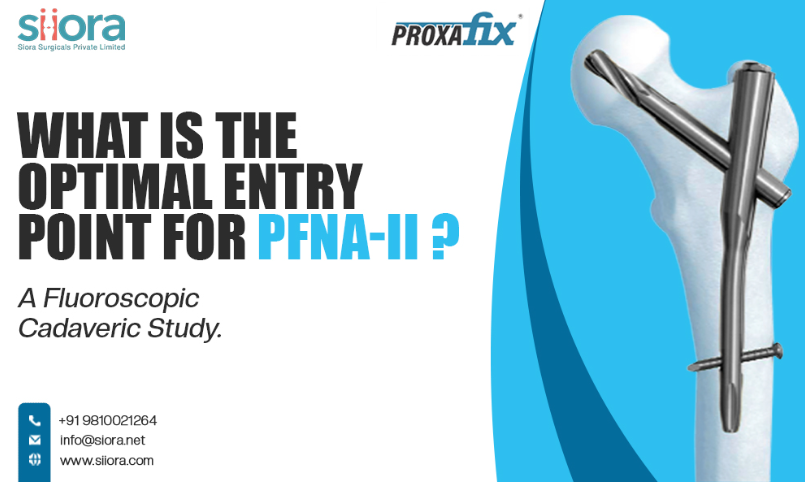
When surgeons talk about PFNA2, one thing always comes up: the entry point. It sounds like a small detail, almost too simple to matter—but anyone who has performed intertrochanteric fracture fixation knows how much this single step shapes the rest of the procedure. A recent fluoroscopic cadaveric study takes a deeper dive into this question, offering practical insight rather than broad textbook statements.
Why This “Small” Step Has Big Consequences?
With PFNA-II, precision is everything. The implant’s design—especially the helical blade—can deliver excellent stability, even in softer, osteoporotic bone. But that works only when the nail follows the natural axis of the femur. A wrong start can tilt the nail into varus, scrape the cortex, or complicate blade placement. Some errors don’t show up immediately; they reveal themselves during follow-up when the bone fails to heal as expected.
That’s why this topic doesn’t just interest researchers—it matters to every surgeon who works with proximal femoral nails on a regular basis.
How the Study Was Set Up?
Instead of relying on models or virtual reconstructions, the researchers worked with cadaveric femora under true AP and lateral fluoroscopic views. This setup gave them a clear view of how subtle shifts in the starting point alter the entire trajectory of the nail. They tried multiple entry positions, watching how each one behaved as the nail advanced down the canal.
This approach made the findings much more relatable—almost like watching a colleague demonstrate a technique right beside you.
What the Fluoroscopy Revealed?
Across all samples, one pattern stood out: the most reliable entry point was positioned just slightly medial to the tip of the greater trochanter. From this spot, the PFNA-II nail aligned naturally with the canal and sat comfortably without forcing its path.
Going too lateral repeatedly pushed the nail into varus. Shifting too far medial increased the risk of cortical breach. The sweet spot, however, gave a smooth, predictable trajectory and allowed the helical blade to settle in the correct position without resistance.
It’s not dramatic, but it’s the kind of detail that makes or breaks a good fixation.
What does This Mean in the Operating Room?
For surgeons in training, the study offers a dependable guideline—something more concrete than “aim just medial to the tip.” Seeing the consistency across cadaveric models reinforces why this small adjustment matters.
For experienced surgeons, the findings tend to echo what years of practice often teach: the anatomy of the proximal femur doesn’t tolerate guesswork. A precise entry leads to faster nail insertion, fewer corrections mid-procedure, and far fewer surprises during blade placement.
A Practical Takeaway for PFNA-II Users
PFNA-II trauma implant has many advantages, but technique drives outcomes. A well-chosen entry point prevents unnecessary impaction or cortical injury and ensures that the helical blade functions the way it’s designed to—preserving cancellous bone, minimizing rotation, and supporting stability.
By adopting the slightly-medial trochanteric entry identified in this study, surgeons can set themselves up for smoother procedures and better long-term results.
Final Thoughts
Cadaveric studies aren’t glamorous, but they often answer questions that surgeons debate for years. This one provides exactly that kind of clarity. It doesn’t reinvent PFNA-II fixation; it simply sharpens one small step that can make a significant difference.
