


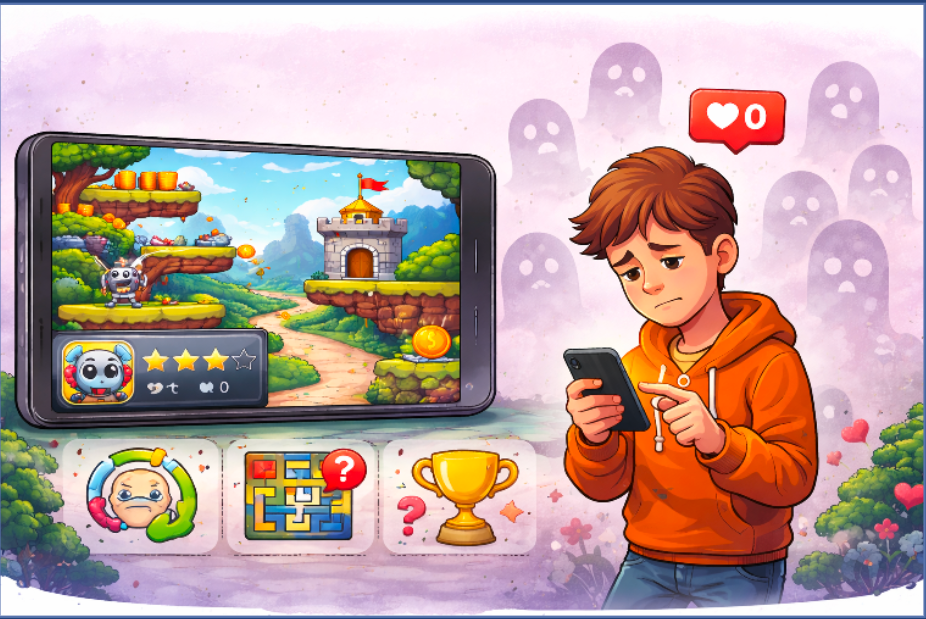
You spent time making your game look clean and colorful. The art matches the theme, screens appear polished, and everything runs without obvious bugs. Yet after release, almost no one plays it or stays for more than a few minutes. This situation happens often with AI games. The visuals impress at first glance, but the deeper experience does not hold attention or encourage shares. Players today have thousands of choices. They decide in seconds whether to try a game or move on. Good looks alone rarely convince them to stay. The real reasons people skip or drop a game usually sit in areas that are harder to see at first, such as how fun the core actions feel, whether levels guide them naturally, how easy it is to understand the goal, and whether the game gives reasons to return or tell friends.
This guide explains the main causes behind low player numbers despite strong visuals and gives clear steps to fix them. You will learn how to make the gameplay more engaging, shape better levels, improve first impressions, and encourage natural sharing. Follow these methods, and more people will discover your game, try it, and keep playing.
Why Do Looks Alone Not Bring Players
A nice appearance catches attention in screenshots or store pages, but it rarely keeps players. People play games for the feeling of doing something enjoyable, not just for pretty pictures. If the main actions feel repetitive, controls respond slowly, or progress feels unclear, players leave even when the game looks professional. In AI-generated games, visuals can look consistent while the underlying fun stays weak because generation often prioritizes variety over careful tuning. Players sense when levels feel thrown together or when successes do not feel rewarding. They also notice when the game does not clearly explain what to do or why they should care. Marketing and visibility matter too. Even a strong game stays hidden without easy ways for people to find and understand it quickly. Fixing the invisible parts that affect enjoyment and shareability turns a quiet project into one that attracts and retains real players.
Making the Core Gameplay More Engaging
The heart of any game is the repeated action players perform. If this loop feels boring or unsatisfying after a few tries, looks will not save it. Start by making the main mechanic feel good every single time. Small improvements to timing, weight, and reward create big differences in how fun the game feels. Test the core loop for long sessions yourself. Note when it starts to lose energy. Add gentle variations such as changing speeds or introducing light new twists at natural points without complicating the rules. Make successes visible and immediate so each action gives a small moment of satisfaction. Balance difficulty so new players succeed early and build confidence, while experienced players still find challenge. When the core feels solid and rewarding, players stay longer and become more likely to share their progress.
Why Your Levels Feel Random and Not Designed
Levels are often the biggest hidden reason players leave quickly. Even with good art, levels can feel messy when objects appear without a clear purpose, paths lead to dead ends, or difficulty changes without warning. Generation systems create variety easily but struggle to build natural flow and a fair challenge unless guided well. Players want levels that feel like a thoughtful journey with a clear start, interesting middle, and satisfying end. When generation scatters obstacles randomly or creates huge empty spaces, the level stops feeling designed and starts feeling like noise. This breaks immersion and makes progress feel unfair or pointless. Fixing level feel turns random layouts into purposeful spaces that guide players smoothly and keep them motivated.
Four Steps to Make Levels Feel Designed
Use these four practical steps to guide generation toward better levels.
- Define a clear structure for every level. Describe a starting safe area, a main path with connected challenges, optional side branches, and a visible goal so the system builds around a logical skeleton.
- Control spacing and density carefully. Set rules for consistent gaps between platforms or objects and include breathing spaces between tough sections so players never feel trapped or lost.
- Balance difficulty with steady progression. Start simple to teach the mechanics, then gradually combine ideas and increase challenge so each new area feels like a natural step forward rather than a sudden wall.
- Add clear visual and structural guidance. Use background elements, light patterns, or consistent landmarks that help players understand direction and progress without extra instructions.
Improving First Impressions and Clarity
Players decide whether to continue within the first minute. If they cannot understand the goal or controls quickly, they leave even when visuals look strong. Make the opening moments simple and welcoming. Show the main action immediately with minimal text or short visual hints. Place the most important button or starting action in an obvious spot. Use clear icons or short animations that demonstrate what to do rather than long explanations. Test the first minute with new players and fix any confusion right away. A strong first impression turns curious visitors into active players. Combine this with smooth controls and immediate feedback, so the game feels responsive from the very beginning.
Encouraging Players to Share and Return
Even a fun game needs reasons for players to tell others or come back. Add natural shareable moments such as easy-to-reach high scores, funny outcomes, or satisfying completion effects that players want to show friends. Include light progression like daily small goals or simple unlocks that give reasons to return without complicating the core. Make restarting quick and rewarding so failed attempts feel like learning steps rather than losses. These elements turn one-time visitors into regular players and create organic growth through word of mouth.
Four Key Areas to Attract and Keep Players
Focus on these four important areas to move beyond good looks and build real engagement.
- Core Fun and Responsiveness: Ensure the main actions feel satisfying and controls respond immediately so players enjoy every moment.
- Clear Goals and Onboarding: Make the purpose of the game obvious in the first seconds and guide new players gently without overwhelming them.
- Level Flow and Fairness: Shape levels that feel thoughtfully built with steady challenge and natural progression so players stay motivated.
- Reasons to Share and Return: Create memorable moments and light incentives that encourage players to talk about the game and come back for more.
Testing with Real Players Early
Build and test small versions often with people who have never seen your game. Watch how long they play and listen to what confuses or excites them. Their fresh reactions reveal problems with clarity, flow, or fun that become invisible to you after long development.
Use short playtests focused on the first minutes, core loop, and one full level. Fix the biggest issues before adding more content. Regular real-player feedback keeps the game on track toward something people actually want to play.
Drawing Inspiration from a Real Game
Seeing a game that attracts and holds players can clarify what works. Try Ragdoll Slingshots, which features simple yet engaging actions and levels that feel carefully shaped around fun physics moments. You can play it on an Astrocade. How clear goals, a responsive feel, and natural level flow keep sessions enjoyable. Apply similar attention to core satisfaction and the level of purpose in your own project.
Building Visibility Without Heavy Marketing
A fun and clear game spreads more easily. Create short, honest descriptions that explain the main action and why it feels good in one or two sentences. Use clear screenshots or short clips that show actual gameplay rather than just pretty menus. Share early versions in small communities and ask for honest opinions. Build a simple way for interested players to hear about updates. Consistent small efforts in visibility, combined with a strong playable experience, bring more players over time.
Wrapping Up the Changes
Your AI game with prompting can look good but attract few players when the core actions lack satisfaction, levels feel random, the first moments confuse newcomers, or there are no strong reasons to share or return. By strengthening the core fun, shaping better levels with the four steps, improving clarity and first impressions, and adding light incentives for sharing, you create an experience that draws people in and keeps them playing. Whether you build your games with Astrocade or other easy tools, these practical fixes focus on what players actually care about beyond surface visuals. Start by testing your current first minute and core loop with fresh eyes. Make one clear improvement at a time, gather real feedback, and continue refining until more people discover and enjoy your game. Players choose games that feel good to play, not just ones that look nice. Put effort into the invisible parts that shape enjoyment, and your project will move from looking good to being actively played and shared. Take these steps today and watch your player numbers grow as the full experience matches the quality of your visuals.
