


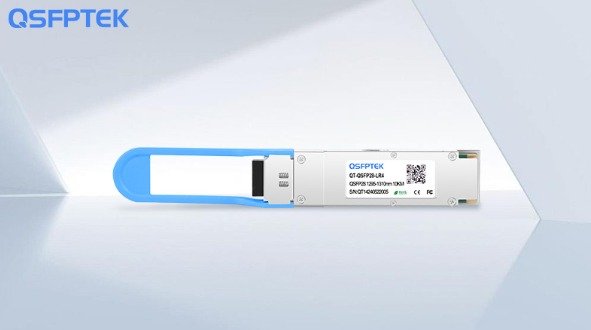
In the era of high-speed networking, choosing the right optical module is no longer just about bandwidth—it’s about matching performance with real deployment needs. Many network designers assume that longer reach automatically means a better solution, but that’s not always the case. When evaluating 100G QSFP28 modules, the question is not simply “How far can it go?” but rather “How far do I actually need it to go?” This distinction becomes especially important when considering 10km-class optics like LR4.
As data centers evolve and enterprise networks expand across campuses or metropolitan areas, transmission distance becomes a critical factor. While short-reach solutions dominate within racks or rows, they quickly fall short when links extend beyond a few hundred meters. This is where 100G QSFP28 modules designed for longer distances come into play. Among them, LR4 stands out as a reliable and widely adopted option for up to 10km transmission over single-mode fiber.
However, not every network requires 10km optics. In fact, over-specifying distance can lead to unnecessary costs and inefficient resource allocation. Understanding when 100G QSFP28 modules like LR4 are truly needed—and when alternative solutions are more appropriate—is key to building a cost-effective and scalable network infrastructure.
Understanding 100G LR4: What Makes It Different?
The 100GBASE-LR4 QSFP28 optical module is engineered for long-reach transmission over single-mode fiber, supporting distances of up to 10 kilometers. It operates at a wavelength around 1310nm and uses LAN-WDM technology to multiplex four separate 25G optical signals into a single 100G data stream. This approach allows high-capacity transmission while maintaining compatibility with duplex LC fiber infrastructure, making it practical for a wide range of deployments.
Unlike short-reach modules such as SR4, which rely on multimode fiber and parallel optics, LR4 uses wavelength division multiplexing to achieve longer distances with fewer fibers. This not only simplifies cabling but also reduces the complexity of fiber management in structured networks. Additionally, LR4 modules typically include Digital Diagnostic Monitoring (DDM), enabling real-time tracking of parameters such as temperature, voltage, and optical power, which helps ensure stable operation in demanding environments.
The key advantage of 100G LR4 lies in its ability to bridge gaps that short-reach solutions cannot cover. Whether connecting buildings within a campus or linking data centers across a city, LR4 provides a balance between reach, performance, and deployment flexibility.
When Do You Actually Need 10km Optics?
The most straightforward scenario for choosing LR4 is when your link distance exceeds the limits of short- and medium-reach solutions. For example, SR4 modules are generally limited to around 100 meters, while CWDM4 typically supports up to 2 kilometers. If your network spans distances beyond these thresholds, LR4 becomes a practical necessity rather than a luxury.
Campus networks are a common use case. Universities, corporate campuses, and industrial parks often require high-speed connections between buildings separated by several kilometers. In such environments, LR4 ensures consistent performance without the need for signal regeneration or additional active equipment. Similarly, metropolitan data center interconnects (DCI) frequently fall within the 2–10km range, making LR4 an ideal choice for linking distributed facilities.
Another scenario involves future-proofing. Even if current link distances are relatively short, organizations anticipating expansion may opt for LR4 to avoid future upgrades. By deploying optics that already support up to 10km, network operators can accommodate growth without replacing existing modules.
When 10km Optics Might Be Overkill
Despite its advantages, LR4 is not always the most efficient choice. In many cases, networks operate well within shorter distance ranges, making long-reach optics unnecessary. For intra-data center connections—such as links within the same rack, row, or even building—solutions like DAC, AOC, or SR4 are often more cost-effective and energy-efficient.
CWDM4 is another strong alternative for medium-range applications. Supporting distances up to 2 kilometers over single-mode fiber, it offers a lower-cost option compared to LR4 while still providing sufficient reach for many enterprise and data center environments. Choosing LR4 in such scenarios may result in higher upfront costs without delivering meaningful performance benefits.
Power consumption is also a consideration. LR4 modules typically consume more power than short-reach alternatives due to their more complex optical components. In large-scale deployments, this difference can add up, impacting overall energy efficiency and operational costs.
Key Factors to Consider Before Choosing LR4
Selecting the right optical module requires a careful evaluation of several factors beyond just distance. First and foremost is the actual link length. Accurate measurement of fiber runs helps prevent both under-specification and over-specification. It’s important to account for patch panels, connectors, and potential future extensions when calculating total distance.
Fiber type is another critical factor. LR4 is designed for single-mode fiber (SMF), which is optimized for long-distance transmission with minimal signal loss. If your existing infrastructure is based on multimode fiber, switching to LR4 may require additional investment in cabling upgrades.
Budget constraints also play a significant role. While LR4 offers extended reach, it comes at a higher price point compared to alternatives like SR4 or CWDM4. Balancing performance requirements with cost considerations is essential for achieving an optimal return on investment.
Finally, consider scalability and network architecture. If your network is expected to grow or evolve, investing in LR4 may provide long-term benefits. On the other hand, if your deployment is stable and confined to short distances, simpler solutions may be more appropriate.
Striking the Right Balance Between Reach and Cost
Choosing the right optical module is ultimately about aligning technical capabilities with real-world requirements. LR4 excels in scenarios where distances approach or exceed several kilometers, offering a reliable solution for campus networks, metropolitan interconnects, and future-ready infrastructures. However, its advantages diminish in short-range environments where lower-cost alternatives can deliver comparable performance.
Rather than defaulting to the longest reach available, network designers should adopt a needs-based approach. By carefully analyzing link distances, infrastructure, and growth plans, it’s possible to select the most efficient and cost-effective solution. In many cases, a mix of different optical modules—ranging from DAC and SR4 to CWDM4 and LR4—provides the best balance across the network.
In the end, the question is not whether 10km optics are better, but whether they are necessary. And when the answer is yes, 100G LR4 stands out as a proven and dependable choice.
