


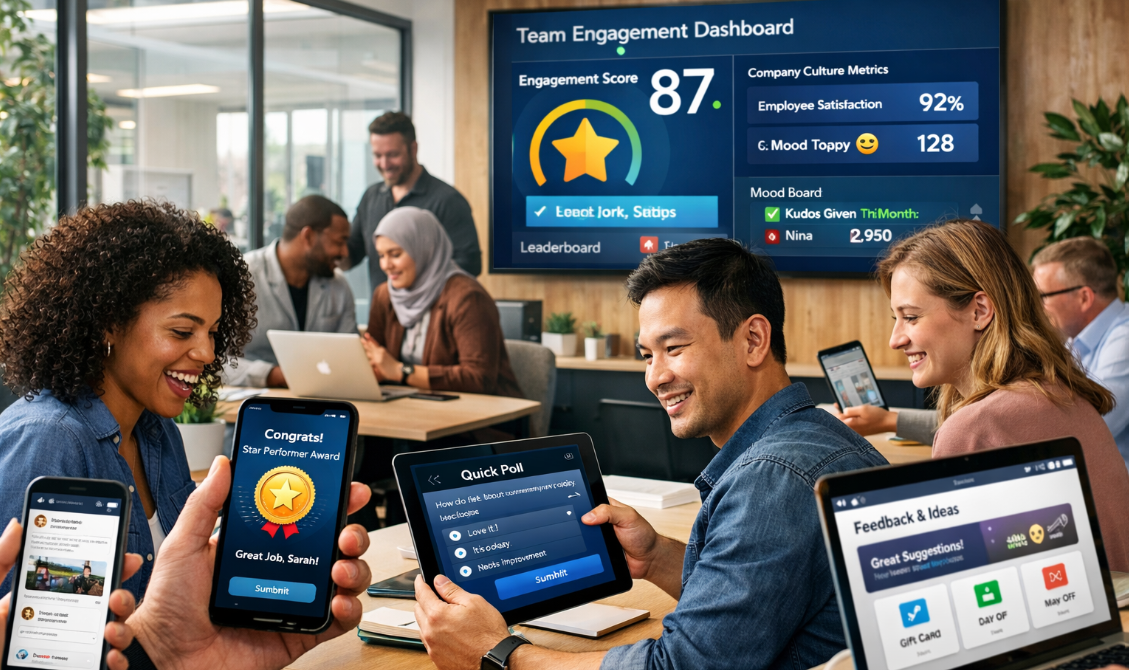
The workplace has undergone a dramatic transformation over the past few years. What started as a rapid shift to remote work has evolved into a complex ecosystem of hybrid teams, distributed collaboration, and digitally driven performance management. While this shift has unlocked flexibility and global talent access, it has also introduced a new set of challenges—employee disengagement, burnout, isolation, and declining workplace connection.
In 2026, organizations are realizing a critical truth: culture is no longer built in office corridors—it’s built through intentional, tech-enabled experiences. This is where employee engagement apps are stepping in as powerful tools to redefine how teams connect, perform, and thrive.
The Engagement Crisis in Modern Workplaces
Despite access to better tools and communication platforms, employee engagement remains a pressing issue.
- Remote and hybrid work models can lead to social disconnection
- Employees are experiencing higher levels of stress and burnout
- Traditional engagement strategies are no longer effective or scalable
- Recognition and motivation often feel inconsistent or impersonal
Recent workplace studies suggest that disengaged employees can cost organizations significantly in lost productivity and retention challenges. On the flip side, highly engaged teams show stronger collaboration, better performance, and improved wellbeing.
Why Employee Engagement Matters More Than Ever in 2026
In today’s competitive landscape, engagement is not just an HR metric—it’s a business performance driver.
Highly engaged teams are more likely to:
- Stay longer with the company
- Deliver higher-quality work
- Contribute to a positive workplace culture
- Support innovation and collaboration
As organizations look to future-proof their workforce, investing in apps for employee engagement has become a strategic priority.
What Are Employee Engagement Apps?
Employee engagement apps are digital platforms designed to improve workplace culture by fostering communication, recognition, wellbeing, and collaboration.
Unlike traditional HR tools, modern engagement platforms are:
- Interactive and user-centric
- Built around behavioral psychology and motivation
- Designed to integrate seamlessly into daily workflows
These tools go beyond surveys and feedback—they actively drive participation, connection, and performance.
Key Features to Look for in Modern Employee Engagement Apps
Not all platforms are created equal. The most effective employee engagement apps in 2026 share a few key characteristics that make them impactful and scalable.
1. Gamification
Gamification has become one of the most powerful engagement drivers.
By incorporating elements like:
- Points
- Leaderboards
- Challenges
- Achievements
…apps tap into intrinsic motivation and make participation enjoyable.
Gamified systems transform routine activities—like wellness, collaboration, or learning—into engaging experiences that employees actually want to be part of.
2. Social & Community Features
One of the biggest challenges in modern workplaces is maintaining a sense of belonging.
Top platforms address this through:
- Community groups and clubs
- Peer interactions and team challenges
- Social feeds and shared milestones
These features help recreate the human connection often lost in remote environments, building stronger workplace relationships.
3. Rewards & Incentives
Recognition is a cornerstone of engagement, but it needs to be consistent and meaningful.
Modern apps offer:
- Digital rewards marketplaces
- Wellness incentives
- Performance-based recognition
- Personalized benefits
This ensures employees feel valued—not just occasionally, but continuously.
4. Data & Insights
One of the most powerful aspects of engagement platforms is their ability to provide real-time insights.
Organizations can track:
- Participation rates
- Engagement trends
- Wellbeing indicators
- Behavioral patterns
This allows leaders to move from guesswork to data-driven decision-making, ensuring that engagement strategies actually work.
How These Apps Are Reshaping Workplace Culture
Employee engagement apps are not just tools—they are culture enablers.
Here’s how they’re transforming organizations:
✔ Creating Inclusive Experiences
Modern platforms are designed to be inclusive, allowing employees of all roles, locations, and fitness levels to participate.
✔ Encouraging Healthy Habits
Many apps integrate physical, mental, and social wellbeing, helping employees build healthier routines that positively impact work performance.
✔ Strengthening Team Bonds
Through shared challenges and collaborative goals, employees feel more connected—even when working remotely.
✔ Aligning Individual and Business Goals
By linking engagement activities to organizational outcomes, companies create a culture where employees feel their contributions matter.
Top Employee Engagement Platforms to Consider
As the demand for engagement solutions grows, several platforms are leading the way with innovative approaches.
GoJoe
Some platforms, such as GoJoe, focus on combining movement, community, and gamification to drive engagement in a more holistic way.
Rather than treating engagement as a one-time initiative, tools like GoJoe are helping companies build ongoing, habit-driven participation across their workforce.
What Makes It Different?
GoJoe emphasizes:
- Inclusive team challenges that anyone can join
- Social connection through community-driven experiences
- Gamified rewards that keep participation consistent
- Data insights across physical, mental, and social wellbeing
A Simple Use Case
Imagine a distributed team across multiple countries participating in a global challenge. Employees track activities like walking, cycling, or workouts, contributing to a shared goal.
As they progress:
- Teams stay connected through shared milestones
- Friendly competition boosts motivation
- Rewards reinforce participation
- Leadership gains insights into engagement trends
This kind of approach doesn’t just improve activity levels—it strengthens culture, morale, and collaboration.
Trends Shaping Employee Engagement Apps in 2026
The evolution of apps for employee engagement is being driven by several emerging trends:
1. AI-Powered Personalization
Engagement is becoming more personalized, with AI recommending:
- Activities
- Rewards
- Wellness programs
…based on individual preferences and behavior.
2. Integration with Health & Benefits
Engagement platforms are increasingly integrating with:
- Health insurance providers
- Wellness programs
- Employee benefits systems
This creates a more unified experience while helping organizations manage long-term health costs.
3. Focus on Preventative Wellbeing
Instead of reacting to burnout, companies are using engagement tools to:
- Encourage proactive health habits
- Reduce stress levels
- Improve overall wellbeing
4. Cntinuous Engagement (Not One-Off Programs)
Annual engagement surveys are being replaced by always-on platforms that keep employees involved year-round.
Best Practices for Implementing Employee Engagement Apps
Simply adopting a platform isn’t enough—you need a strategy.
Here’s how to maximize impact:
✔ Start with Clear Goals
Define what success looks like—higher participation, better wellbeing, improved retention.
✔ Make It Inclusive
Ensure the platform is accessible to all employees, regardless of role or location.
✔ Encourage Leadership Participation
When leaders actively engage, it sets the tone for the entire organization.
✔ Communicate Consistently
Keep employees informed, excited, and involved through regular updates.
✔ Use Data to Improve
Leverage insights to refine your approach and continuously improve engagement outcomes.
The Business Impact of Engagement Apps
Organizations investing in modern employee engagement apps are seeing measurable benefits:
- Increased productivity and performance
- Higher employee retention
- Improved workplace morale
- Stronger employer branding
- Reduced absenteeism and burnout
In many cases, engagement platforms are becoming central to workplace strategy, not just HR initiatives.
Final Thoughts
Workplace culture in 2026 is no longer defined by physical spaces—it’s shaped by experiences, connection, and shared purpose.
Employee engagement apps are playing a crucial role in making this possible. By combining gamification, community, rewards, and data-driven insights, these platforms are helping organizations build stronger, healthier, and more connected teams.
For HR leaders and founders, the takeaway is clear:
- Engagement must be continuous, not occasional
- Technology should enable connection, not replace it
- Wellbeing and performance are deeply connected
Investing in the right tools—and using them strategically—can transform not just how employees work, but how they feel about work.
