


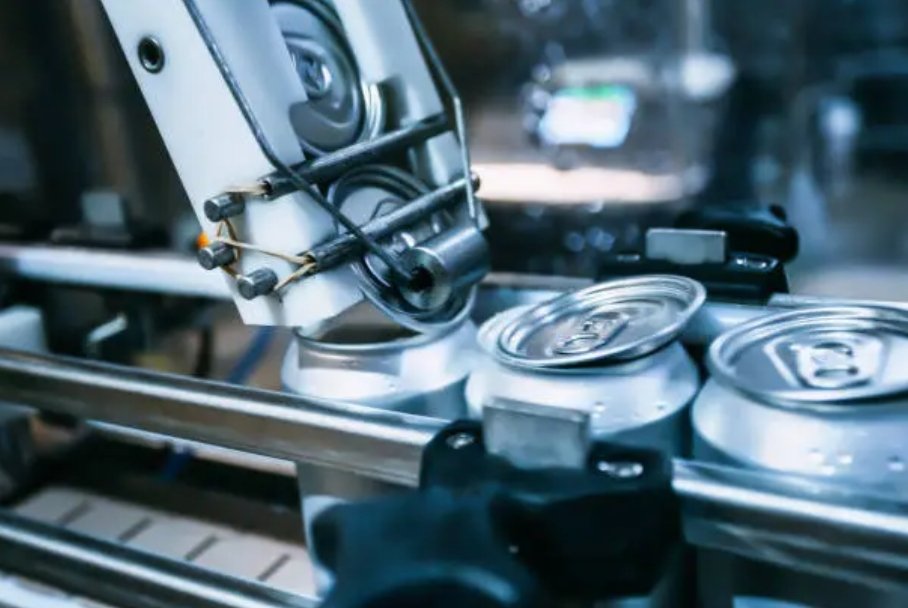
In the food and beverage industry, the filling of cans has changed dramatically over the decades. Manual labor, which was done slowly and packed without any mechanical assistance, has transitioned to rapid, smart filling operations which are fully automated. These operations are consistent and efficient across all industries. For B2B companies in all food, beverage, and chemical sectors, studying these changes gives insight into the transformative power of automation in improving the operation, safety, and bottom-line profit.
To better understand the modern advancements in technology and innovation in design, you may reference the advanced filling systems created by Levapack: https://www.levapack.com/ru/can-filling-machines/ .
From Manual Filling to Mechanized Systems
When the process of filling cans in the production of food and beverages first began, the filling process was done by the labor of an entire team. Workers scooped, measured, and then sealed cans manually. The entire process was labor intensive and to be done in a uniform and consistent manner was nearly impossible. The process was susceptible to contamination and was done one can at a time.
The start of the Industrial Revolution was the point in time when everything started to change. Due to the increased demand for canned goods and drinks, filling machines were created. By using basic automation, early machines were able to control the standardized volume of liquid using pumps and gravity-fed systems. Even though the filling machines still required a lot of manual oversight, they created the foundation for the profuse creation of products and standardized packaging.
The filling machines also increased safety and lessened the amount of contact needed between workers and the product, which was critical for maintaining hygiene. These systems provided manufacturers with a chance to control the operations to increase the amount produced, lessen wasted product, and improve overall quality.
The Growth of Semi- Automatic Can Filling Machines
The 20th century brought a lot of changes and growth to the food and beverage industry, including the semi-automatic can filling machines. These types of machines are very common to find on production lines. Semi-automated machines brought a combination of human operation and mechanical precision. The operators were in charge of can loading and positioning, while the machines automatically adjusted to fill the cans at a faster rate.
The semi-automatic machines also provided smaller packagers a lot of flexibility, specifically those with a varied product viscosity like sauces, oils, and powders. The modular design of the machines helped packagers scale to increase their production rates without needing to change their equipment.
At this point, manufacturers started to add new materials and better ways to seal things. We also started to use better stainless steel parts instead of previous metals. This improved sanitation and durability. The focus changed from purely mechanical function to more precision and safety. This paved the way for the next big improvement, fully automated filling systems.
Fully Automated Can Filling Machines: Efficiency Redefined
Today’s fully automated can filling systems offer the next great improvement in technology. Using PLCs, servo systems, and integrated sensors, modern can filling systems offer more control and accuracy to each of the can filling steps in the process.
With automation, each can is filled to the exact and predetermined volume, regardless of viscosity or temperature, to eliminate mistakes. Modern systems can automatically change settings, in real-time, to respond to changes in product flow or pressure. For B2B manufacturers filling thousands of units each hour, this consistency means less waste and better cost savings.
Advanced safety and cleaning systems are also a part of automated lines. The risk of downtime or contamination is less due to Clean-in-Place technology, which internally cleans a system without needing to disassemble it. For high volume filling operations, the flexibility to fill several can sizes at the same time increases the versatility of these machines.
For instance, the solutions offered by Levapack combine automated accuracy paired with an ergonomic design for easy adjustment to new production lines, as well as the adherence to strict hygiene regulations. Their tech exemplifies the idea that the increased efficiency brought forth by automation, as well as increased operational reliability, traceability, and the long-term reliability of industrial operations, should be never excluding operational reliability.
Smart Automation and Data Systems
The latest evolution of can filling machines is powered by the integration of sensors, data and analytics, and the Internet, also known as smart automation. With the latest advancements, machines have become smart production assets.
Modern machines are able to collect real-time data for variables including fill levels, temperature, and pressure. This data is used for predictive maintenance, whereby the system alerts operators of potential problems before critical breaks occur. For the manufacturers selling to other businesses, this feature is of high value, as it leads to reduced production downtime and decreased maintenance needs.
When smart fill machines are connected to a system that utilizes the Industrial Internet of Things (IIoT) for remote oversight and adjustable performance, operators can manage multiple production lines from a single dashboard. Machine learning optimizes performance by adjusting the filling rate to decrease the use of packing material based on data from previous production runs.
The advancement of automation has transformed can filling into an integral part of smart manufacturing by integrating the various components of the smart manufacturing ecosystem: data, quality, and productivity.
The Future of Can Filling Automation: Sustainability
Currently, the design and functionalities of can filling automation systems are driven by the dual objectives of productivity and sustainability. Global industries are under increasing pressure to reduce their emissions, and can fill automation needs to implement more effective energy and material automation systems.
Today’s automation systems feature servo driven systems that use less energy and provide more controlled filling. Automation systems are able to optimize filling to reduce spillage and achieve zoning in material use, thus supporting the goal of eliminating waste. Manufacturers are also beginning to use more sustainable design components.
In the future, can filling automation systems are expected to have an even greater integration of digital technologies. Machine learning is expected to improve filling accuracy, predictive maintenance, and the efficient use of materials. Additionally, automation systems will continue to have the ability to be modified at the manufacturing level to enable the rapid alteration of production lines to accommodate different product offerings in response to the increasing customization of B2B packaging.
From a manufacturing perspective, the future of can filling automation will provide greater agility in operations and sustainability. Manufacturers will be able to achieve more efficiency and greater environmental sustainability.
Final Thoughts
The progression of filling machines, from being entirely manual to fully automated, mirrors the general evolution of the manufacturing sector around the world. A process which was once very straightforward has now matured to an operation which is data driven, sophisticated and allows B2B businesses to respond to increased demand with speed, accuracy and safety.
Contemporary can filling machines, which incorporate automation and smart technology, allow businesses to improve production, minimize waste and maintain uniformity in product quality. As Levapack illustrates, the innovations of can fillers are increasingly characterized by smart design, the fusion of technology and efficiency to redefine the future of industrial packaging.
