


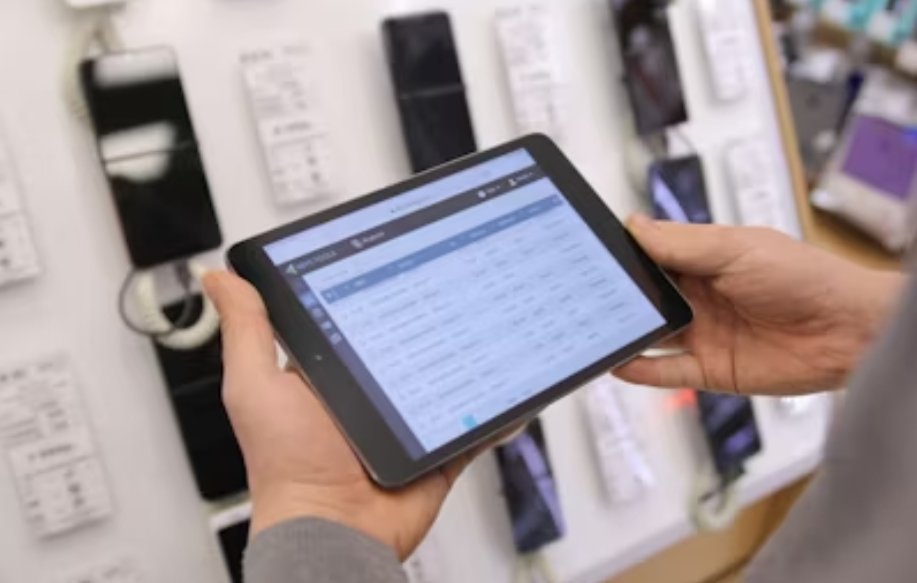
Large scale retail operations can be complicated when trying to maintain consistent pricing, product data, and communications across multiple locations. As digital transformation continues to shape retail management, Wi-Fi ESL (Electronic Shelf Label) systems are beginning to improve management of coordination, automation, and operational control.
For advanced display and labeling technology, innovative e-ink and digital signage systems can be found here: Zhsunyco Wi-Fi ESL Solutions. Zhsunyco assists retailers in ESL system implementation that enhances real-time synchronization and streamlines store management.
Retail Wi-Fi ESL Systems
Retail Electronic Shelf Labels, or ESLs, are digital devices that replace paper price tags. These displays wirelessly connect to a central database or retail management system, enabling real-time price updates, promotions, and product data. ESL systems that utilize WIFI cover retail chains that offer flexibility and scalability.
Unlike older infrared or radio-frequency systems, Wi-Fi ESLs work with enterprise IT infrastructure. They also offer two-way communication, meaning data can be sent and received from each tag. Thus, automatic price updates, visibility and error notifications can be done without manual intercession.
This level of automation in high-volume retail, such as supermarkets, department/perimeter stores, and warehouse clubs, helps achieve consistent information display across thousands of shelves. It lessens the risk of in-store vs. online price misalignment, a frequent problem in omnichannel retail.
For B2B companies with several outlets, Wi-Fi ESL systems significantly improve operational efficiency, accuracy, and retail management sophistication.
Maximizing Operational Efficiency Across Many Locations
The ability of Wi-Fi ESL systems to consolidate control over dispersed stores is one of the most significant aspects. In big retail chains, the manual and time-consuming task of ensuring price accuracy across hundreds of branches is a major of all operational challenges. Updates made manually are not only time consuming but also prone to errors.
Wi-Fi enabled ESLs allow retailers to manage and update electronic labels from one central system. Changing prices for nationwide promotions or updating regulatory descriptions are done in real time so customers can see accurate and up-to-date information at any store.
Wi-Fi ESL systems also eliminate the need for printouts which can streamline store operations. Staff can better assist customers and manage inventory as they will not have to focus on replacing labels.
For retailers with thin operating margins, the ESL systems provide cost savings and increase efficiencies. Streamlining processes and systems with ESLs increase consumer loyalty over time.
Integrating Retail Management Systems
With the new updates, Wi-Fi ESL systems work with other retail management systems like ERP, POS, and WMS. These systems enable connected and real-time data across multiple departments.
When a product attribute or price changes in the central database, the update is automatically sent to all connected ESL units via Wi-Fi. This means there is no need for manual data upload to ensure the physical shelf labels match the digital ones.
Besides price changes, this integration also handles dynamic pricing. Retailers can change prices based on market changes, competition, and stock levels in real-time. For instance, store staff can set a price to automatically lower for a product approaching its expiration. Conversely, a product in high demand can have its price increased to manage inventory levels.
On top of this, Wi-Fi ESL systems can show more than prices. They can also show barcodes, stock levels, QR codes, and promotional messages for a more informative experience. This makes the integration powerful for fully digital and physical retail environments, as information seamlessly to all layers of the retail systems.
With solutions like those offered by https://www.zhsunyco.com/ar/ , retailers can activate a fully integrated cloud solution that aligns inventory systems, in-store signage, and real-time analytics.
Scalability and Connectivity in Large Retail Networks
Technology adoption in large retail chains often hinges on the scalability of the solution, given the thousands of devices that may be connected to one system. Systems must be able to retain speed and stability, regardless of how many devices are connected. Wi-Fi ESL systems are scalable, as they operate on wireless technologies and have the ability to work with current infrastructures.
Because each ESL is part of the store’s network as an independent unit, and can receive system updates on its own, they are able to stay connected to the central control system. This decentralized system allows reliability, as individual displays can retain the last valid information, so they will still be able to share information, even if parts of the central network are interrupted.
Retail locations have already employed Wi-Fi communications systems, so adding ESL systems is often only additional hardware, which is the most financially viable solution, and the least complex, system. This is an advantage over closed, proprietary communication systems.
Aside from scalability, Wi-Fi ESL systems provide two-way communication, which allows updates to be sent from managers, and responses to be received, in the form of the ESL’s status (e.g. battery, connections, and performance). This adds an additional layer to network management, and enables IT to address issues in a system that may be on a collision course, before a disruption occurs.As large retailers begin expansion into new areas and take on different and more complex business models, Wi-Fi ESL solutions offer everything that is necessary and more in the ability to quickly adapt to changes. The ability to add, move, or change thousands of digital displays that no longer need to be manually configured or wired is one of the defining features of system sustainability.
Sustainability and Future Trends in Retail Connectivity
Modern B2B retail operations define themselves with the principle of sustainability, and the Wi-Fi ESL systems help achieve that goal in a multitude of ways. ESL systems eliminate the need for paper price tags, which in turn reduces the waste and negative environmental impact the printing and shipping of price tags would take.
E ink based ESLs take on very little energy consumption as the display only changes when power is supplied. The low energy consumption, coupled with the ability of the labels to last several years on a single battery makes the technology eco friendly and cost efficient.
Aside from the energy saving in Wi-Fi ESL systems, the data-driven techniques that help reduce and eliminate the wasteful consumption of resources are made possible as a result of the real time generated analytics. Retailers are equipped with the ability to monitor the performance of their stores, define their sales, and optimize the inventory in a way that eliminates excess production and wasteful use of storage.
Technological advancements promise to further enhance Wi-Fi ESL systems, including:
- IoT Integration: ESL devices interacting with IoT sensors, for example, updating ESLs in real-time based on store conditions (e.g., temperature, number of customers, etc.).
- AI and Automation: ESLs become more responsive to changes in sales by analyzing sales transactions to recommend prices, rearranging displays, etc.
- Cloud-Based Management: Continued growth of systems for remote management of multiple store networks, enabling control at regional or global levels.
- Hybrid Communication Models: Future ESL systems may operate on Wi-Fi and other communication technologies for improved efficiency and consistency (e.g., BLE, 2.4GHz, etc.).
The need for retail technologies that improve sustainability and performance is reflected in these trends.
Flexible Wi-Fi ESL systems that utilize scalable and low power technologies, such as those offered by Zhsunyco, align with digital transformation and environmental sustainability as industry drivers.
Conclusion
From the perspective of retail systems, Wi-Fi ESL systems are innovative and offer practical ways to address the problems associated with managing large store networks. Providing real-time updates to shelf displays, retailers improve accuracy, efficiency and sustainability.
For B2B companies with separate locations, this technology provides measurable benefits: simplified updates, lower labor expenses, and communication consistency across all locations. The modularity of a Wi-Fi ESL system allows them to grow with the company and keep pace with technology.
Retailers can upgrade their systems with innovative solutions from Zhunyco and shift to smarter, more sustainable, and interconnected systems. The retail industry is evolving, and ESL systems with Wi-Fi will continue to play an important role in intelligent, sustainable, and data-driven store management.
