


When planning a construction or DIY project, one of the most common questions is how many bags of concrete are needed. Ordering the right amount matters because running short in the middle of a pour leads to weak joints, delays, and extra costs, while ordering far too much means unnecessary expense and wasted material. The good news is that once you understand how concrete volume works and how much mixed concrete each bag produces, the calculation becomes straightforward. Whether you are setting fence posts, pouring a patio, or working on a driveway, knowing how many bags you need helps you plan the job properly.
What a Bag of Concrete Produces?
A concrete bag is sold by weight, but what actually matters is the final volume of concrete after mixing. Different brands and countries offer different bag sizes, but commonly available bags produce a known amount of finished concrete. Instead of focusing on kilograms or pounds printed on the bag, the important thing to look for is the approximate cubic feet or cubic meters it yields once mixed with water. This information is usually provided on the bag itself. Once you know how much volume one bag produces, you can work out how many bags will be needed to fill your slab, footing, or hole.
Calculating the Volume of Concrete Needed
Before getting the exact idea of concrete estimation, the total volume of concrete required must be calculated. Concrete is measured in cubic measurement, not square measurement. To find volume, you multiply the length, width, and thickness of the area to be filled. Thickness is often given in inches, so it should be converted into feet by dividing by twelve to keep the units consistent. For example, if a slab is ten feet long and eight feet wide with a thickness of four inches, the thickness becomes approximately one third of a foot. Multiplying the three dimensions gives the total cubic feet of concrete required for that slab.
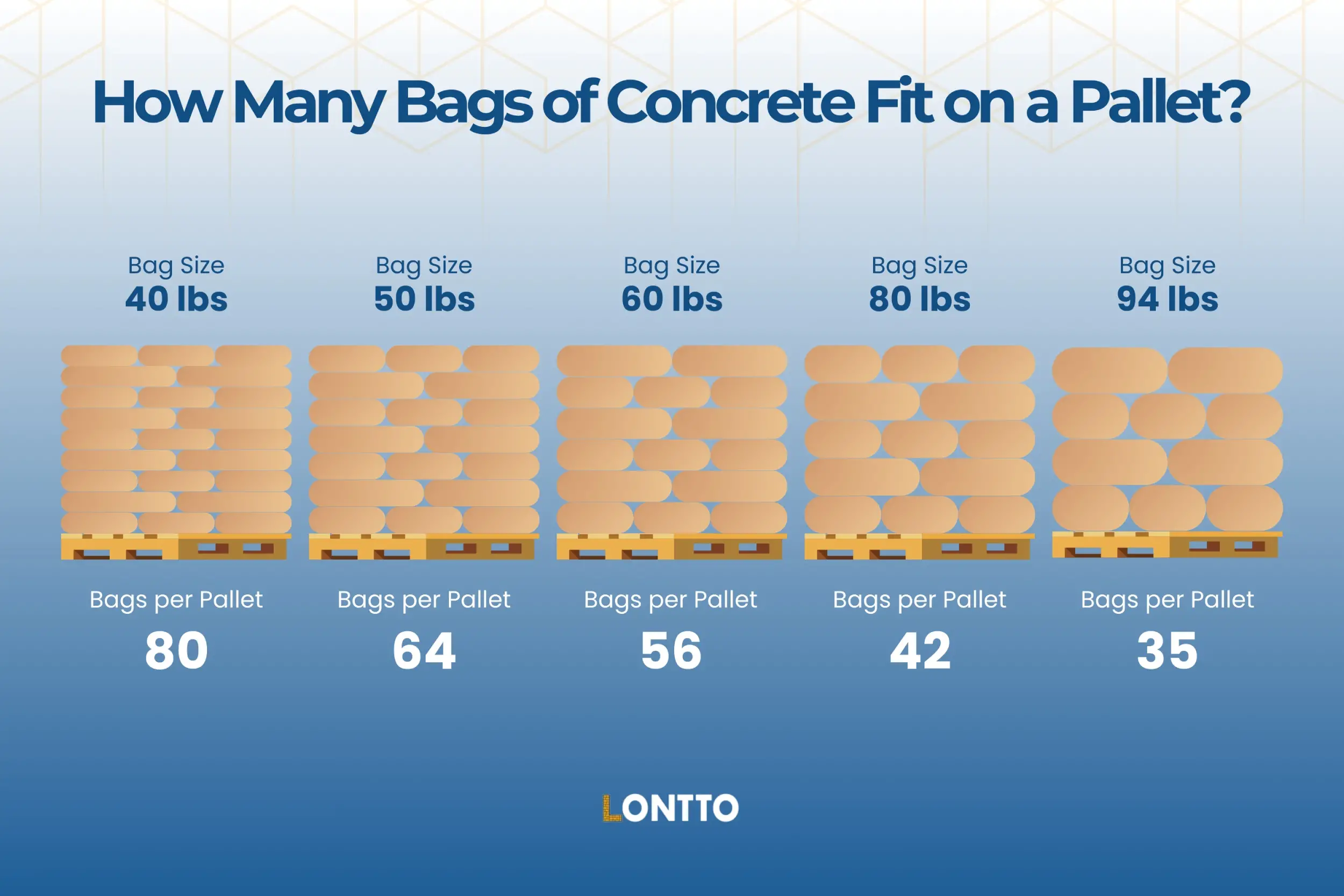
Once the volume has been calculated, the next step is to divide that number by the yield per bag. If one bag produces about half a cubic foot and the slab requires around twenty-six cubic feet, dividing the total volume by the yield tells you how many bags will be needed. Heavier bags make up more volume, which means fewer total bags, but they are also more difficult to lift and mix, especially for DIY users. Lighter bags are easier to handle physically, though more of them will be required to complete the job.
Allowing for Waste and Real-World Conditions
Even careful calculations do not always match real site conditions. Ground may not be perfectly level, forms may bow slightly, or small spills may occur while mixing and pouring. For that reason, it is wise to plan for a small amount of extra concrete. Adding a little more than the exact calculated requirement prevents you from stopping work because of a shortage when the pour is almost complete. Buying one or two extra bags is often cheaper than paying the cost of returning to the store mid-project or paying for a second delivery on a different day.
Typical Situations and What to Expect
Many people calculating concrete bags are working on projects such as patios, small slabs, walkways, or portions of driveways. A small ten-by-ten patio that is about four inches thick may require dozens of bags, and a larger driveway section may require a hundred or more. At this scale, mixing concrete in bags becomes very labor intensive. For very large projects, ready-mix concrete delivered by truck is generally more practical and ensures uniform consistency. However, for smaller areas, step repairs, garden slabs, or post installations, bagged concrete remains convenient and economical.
Another very common project is setting fence posts or sign posts. In these cases, holes are usually round rather than rectangular. The volume is found using the area of a circle multiplied by the depth of the hole. Diameter must be converted to radius, and depth kept in feet. Once the volume is calculated, it can again be divided by the bag yield to estimate how many bags are needed per hole. Many people are surprised by how much concrete a single deep post hole actually requires, especially when soil is loose and wider excavation is necessary.
When Bags Are Not the Best Option?
There is a point where using bags becomes impractical. Mixing more than a hundred bags by hand or even with a portable mixer is tiring and time-consuming. For slabs requiring several cubic yards of concrete, ordering ready-mix from a supplier is usually more consistent and faster. Bagged concrete is ideal for small jobs, but large foundations, full driveways, and long sidewalks are normally better handled by concrete trucks. A supplier can deliver the entire required volume in one go, which also prevents cold joints and maintains finishing quality.
Right Type of Bagged Concrete
Not all concrete bags are identical. Some contain standard concrete intended for general work, while others are high-strength mixes designed for heavy loads or structural applications. There are also fast-setting mixes commonly used for fence posts and small repairs, as well as crack-resistant or fiber-reinforced mixes intended to reduce shrinkage cracking. The number of bags will not change based on mix type because the volume yield remains similar, but choosing the correct mix ensures the finished concrete has the strength and properties required for its purpose. Following engineering recommendations is essential for structural elements.
Mixing and Handling Considerations
Getting the expected coverage from each bag also depends on proper mixing. Too much added water weakens the concrete and slightly increases volume in an inaccurate way, while too little water prevents full hydration and reduces strength. It is important to follow manufacturer instructions regarding water quantity and mixing time. Using a concrete mixer instead of hand-mixing in a wheelbarrow becomes much more efficient when many bags are involved. Proper mixing also ensures consistency in color and finish across the entire pour.
Avoiding Common Estimation Mistakes
Several frequent mistakes can lead to incorrect estimates. One common error is calculating area instead of volume, forgetting that thickness changes the total amount of material required. Another mistake is forgetting to convert inches to feet, which produces large miscalculations. People also sometimes neglect to account for thickened edges, deep spots, or soft soil that will absorb more material. Assuming that one bag equals one cubic foot is another misconception that leads to under-ordering. Taking time to measure carefully and recheck calculations prevents these problems.
Working out how many bags of concrete you need does not have to be complicated. The key steps are understanding the volume of your project, knowing the yield of each bag, and then adding a small allowance to cover real-world variations. Once you understand this relationship, it becomes easy to estimate bag quantities for patios, posts, small slabs, repairs, and other jobs. Careful planning not only saves money but also helps ensure a strong, durable and professional-looking result.
