


The blockchain industry is entering a new era where real-world value is becoming the primary driver of innovation. While cryptocurrencies and decentralized finance (DeFi) laid the foundation for Web3 adoption, the spotlight is now shifting toward real-world asset tokenization, a market that many analysts believe could reshape global finance over the next decade.
According to industry reports from leading institutions such as Boston Consulting Group (BCG), Ripple, and Standard Chartered, the tokenized asset market could reach between $10 trillion and $16 trillion by 2030, representing one of the largest digital transformation opportunities in modern financial history. From real estate and commodities to bonds, private equity, and intellectual property, trillions of dollars in traditionally illiquid assets are expected to move onto blockchain networks.
The momentum is already visible. Major financial institutions, including BlackRock, JPMorgan, Franklin Templeton, and HSBC, have launched tokenization initiatives, signaling growing confidence in blockchain-based ownership models. Market research also suggests that the value of RWA tokenization projects has increased significantly over the past two years as investors seek greater transparency, liquidity, and accessibility.
As enterprises, governments, and financial institutions continue exploring blockchain-powered ownership structures, asset tokenization is rapidly emerging as one of the most practical and commercially viable applications of Web3 technology. This growing convergence of traditional finance and blockchain innovation is why many experts now consider tokenization the fastest-growing sector within the broader digital asset ecosystem.
Understanding the Rise of Asset Tokenization
At its core, asset tokenization refers to the process of converting ownership rights of a physical or financial asset into digital tokens recorded on a blockchain. These tokens represent a share, ownership stake, or economic interest in the underlying asset.
For decades, many valuable assets have suffered from limited liquidity, high entry barriers, and complex ownership structures. Blockchain technology addresses these challenges by enabling fractional ownership, transparent recordkeeping, and seamless global transfers.
The growing demand for real-world assets (RWAs) on blockchain networks is being driven by investors seeking greater accessibility, transparency, and efficiency. Instead of requiring large capital commitments, investors can now purchase smaller portions of assets through tokenized ownership models.
This innovation is fundamentally changing how markets operate and how value is exchanged across industries.
Why the Market Is Expanding So Rapidly
Several key factors are accelerating the adoption of tokenization worldwide. As blockchain technology matures and regulatory frameworks become more defined, investors and businesses are increasingly recognizing the advantages of bringing real-world assets onto digital networks. The ability to improve liquidity, expand investor access, and streamline ownership management is making tokenization an attractive solution across multiple industries.
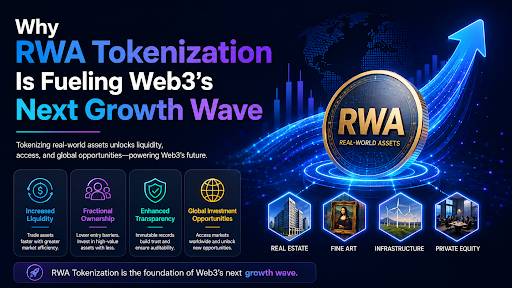
Increased Liquidity
Traditionally, assets such as real estate, fine art, infrastructure projects, and private equity investments are relatively illiquid. Selling these assets often requires lengthy legal procedures and substantial administrative costs. With tokenized assets, ownership can be divided into smaller units and traded digitally, significantly improving liquidity and creating new opportunities for investors. This enhanced liquidity allows investors to buy and sell asset-backed tokens more efficiently, creating a more dynamic and accessible investment marketplace.
Fractional Ownership
One of the most attractive benefits of tokenization is accessibility. Investors no longer need millions of dollars to participate in premium investment opportunities. Fractional ownership lowers entry barriers and democratizes access to high-value assets. By enabling smaller investment amounts, tokenization broadens participation and helps asset owners attract a larger and more diverse investor base.
Enhanced Transparency
Blockchain networks provide immutable transaction records that improve trust among investors, regulators, and asset issuers. Every ownership transfer is permanently recorded, reducing disputes and improving auditability. This transparent record-keeping strengthens investor confidence and simplifies compliance reporting for businesses operating in regulated markets.
Global Investment Opportunities
Modern investors are increasingly seeking cross-border opportunities. Web3 asset tokenization enables assets to be traded globally without many of the limitations associated with traditional financial infrastructure. These advantages are fueling strong market momentum and attracting attention from both institutional and retail participants.
As a result, businesses can access international capital pools while investors gain exposure to opportunities that were previously difficult to reach across different regions.
Institutional Adoption Is Driving Growth
One of the biggest reasons tokenization is experiencing rapid expansion is the involvement of major financial institutions.
Global banks, asset managers, and investment firms have begun experimenting with tokenized bonds, tokenized funds, and blockchain-based securities. Their participation signals growing confidence in tokenization as a long-term financial innovation.
Many organizations are implementing a real-world asset tokenization platform to streamline asset issuance, ownership management, compliance monitoring, and investor participation. These platforms help bridge the gap between traditional financial systems and blockchain infrastructure.
As institutional adoption increases, tokenization is moving beyond experimentation and becoming a practical business solution.
Key Asset Classes Being Tokenized
The tokenization market is no longer limited to a single industry. Today, businesses and investors are leveraging blockchain technology to tokenize a wide range of asset classes, unlocking liquidity, improving accessibility, and creating entirely new investment opportunities. As adoption continues to grow, several sectors are emerging as key drivers of the global tokenization economy.
Real Estate
Real estate remains one of the largest and most promising opportunities for tokenization. Traditionally, property investments require significant capital and involve lengthy buying and selling processes. Through tokenization, property owners can divide assets into smaller digital shares, enabling broader investor participation while unlocking liquidity. Investors can gain exposure to commercial buildings, residential properties, hotels, and other real estate projects without purchasing an entire asset. This approach not only democratizes property ownership but also creates more efficient and transparent real estate investment markets.
Commodities
Commodities such as gold, silver, oil, agricultural products, and precious metals are increasingly being represented through blockchain-based tokens. Tokenization allows investors to own fractional interests in physical commodities while benefiting from greater transparency and simplified trading processes. By digitizing ownership records, commodity markets can reduce intermediaries, lower transaction costs, and improve accessibility for both retail and institutional investors. As demand for alternative investments continues to rise, tokenized commodities are becoming an attractive option for portfolio diversification.
Private Equity
Private equity has traditionally been accessible only to institutional investors, venture capital firms, and high-net-worth individuals due to high minimum investment requirements and limited liquidity. Tokenization is changing this landscape by enabling fractional ownership and digital transferability of private equity holdings. Investors can participate in previously inaccessible opportunities while companies gain access to a broader pool of capital. Additionally, blockchain technology simplifies ownership tracking, compliance management, and investor reporting, making private market investments more efficient and transparent.
Intellectual Property
Intellectual property (IP) is another asset class gaining traction in the tokenization space. Patents, copyrights, trademarks, music royalties, publishing rights, and other intangible assets can be converted into digital tokens representing ownership or revenue-sharing rights. This creates innovative funding models for creators and businesses while allowing investors to participate in future income streams generated by valuable intellectual property. Tokenization can also improve transparency in royalty distribution and reduce administrative complexities associated with IP management.
Beyond Traditional Asset Classes
Beyond these major categories, tokenization is expanding into sectors such as infrastructure projects, carbon credits, luxury goods, fine art, collectibles, supply chain assets, and even renewable energy investments. As blockchain technology matures and regulatory frameworks evolve, the range of tokenizable assets is expected to grow significantly.
The remarkable flexibility of tokenization is one of the primary reasons market experts believe it will continue expanding across industries, transforming how ownership, investment, and value exchange are managed in the digital economy.
The Role of Technology in RWA Growth
Technology infrastructure is essential for scaling tokenized ecosystems. A robust RWA tokenization platform provides the foundation needed for secure asset issuance, ownership tracking, compliance management, and secondary market trading.
Modern platforms integrate smart contracts, identity verification tools, regulatory controls, and digital wallets to ensure seamless operations.
Organizations investing in digital asset tokenization solutions are creating entirely new financial products that combine blockchain efficiency with real-world economic value.
As blockchain networks become more scalable and regulatory frameworks become clearer, the technology supporting tokenization continues to mature.
Regulatory Progress Is Building Confidence
One of the major barriers to blockchain adoption has historically been regulatory uncertainty. However, governments and financial authorities worldwide are increasingly recognizing the potential benefits of tokenized assets.
New compliance frameworks are helping issuers and investors participate with greater confidence. This has created demand for specialized RWA tokenization services that help businesses navigate legal, operational, and technical requirements.
Similarly, professional asset tokenization services assist organizations in structuring tokenized offerings while ensuring compliance with relevant regulations.
The growing alignment between innovation and regulation is expected to accelerate mainstream adoption over the coming years.
How Businesses Are Entering the Tokenization Market
Companies looking to capitalize on tokenization opportunities are partnering with experienced blockchain providers to develop secure and scalable ecosystems.
A specialized asset tokenization company can help businesses identify suitable assets, establish regulatory frameworks, and implement blockchain-based ownership structures.
The process often includes:
- Asset evaluation and feasibility analysis
- Legal and compliance planning
- Smart contract development
- Investor onboarding systems
- Secondary marketplace integration
- Ongoing platform maintenance
As demand increases, organizations are investing heavily in RWA tokenization development initiatives to gain competitive advantages in emerging digital markets.
Businesses are also pursuing Web3 development strategies to build decentralized ecosystems that support tokenized asset trading and management.
The Future of Real-World Asset Tokenization
Industry forecasts suggest that tokenization could fundamentally transform global capital markets over the next decade. According to several market research reports, the tokenized asset market could grow into a multi-trillion-dollar industry by 2030, as an increasing number of financial instruments and physical assets migrate onto blockchain networks. From real estate and private equity to commodities and government securities, tokenization is expected to redefine how assets are issued, traded, and managed.
Companies investing in real-world asset tokenization development are positioning themselves to capitalize on this transformation by building scalable, compliant, and future-ready infrastructure. As investor demand for digital ownership models continues to grow, organizations that adopt tokenization early may gain significant competitive advantages in terms of market reach, operational efficiency, and liquidity generation.
Similarly, asset tokenization platform development is becoming a strategic priority for enterprises, financial institutions, and asset managers seeking to modernize traditional investment processes. Advanced RWA tokenization solutions are expected to introduce higher levels of automation, interoperability, and transparency, enabling seamless interactions between traditional financial systems and decentralized networks.
Several emerging trends are expected to accelerate adoption in the coming years:
- Institutional Participation Will Increase: More banks, asset managers, and investment firms are expected to launch tokenized funds, bonds, and alternative investment products, bringing greater credibility and capital into the market.
- Regulatory Frameworks Will Mature: Governments and financial regulators worldwide are developing clearer guidelines for tokenized securities and digital assets, creating a safer and more predictable environment for investors and businesses.
- AI and Automation Will Enhance Tokenization Platforms: The integration of artificial intelligence with tokenization ecosystems will improve compliance monitoring, risk management, investor onboarding, and asset valuation processes.
As blockchain technology continues to evolve and gain mainstream acceptance, tokenization is likely to become a core component of global financial infrastructure rather than a niche innovation. Organizations that embrace this shift today will be better positioned to participate in the next generation of digital finance and asset ownership.
Conclusion
The rapid rise of tokenization reflects a broader transformation occurring across global financial markets. By combining blockchain technology with real-world value, tokenization offers improved liquidity, transparency, accessibility, and efficiency.
As adoption continues to accelerate, demand for trusted technology partners will also increase. Organizations seeking to enter this market often collaborate with experts specializing in blockchain asset tokenization services to ensure secure implementation and long-term scalability.
Strategic asset tokenization consulting helps businesses evaluate opportunities, navigate regulatory requirements, and build sustainable tokenization ecosystems.
Among the leading innovators in this space, SoluLab, a tokenization platform development company, has been helping enterprises leverage blockchain technology to create next-generation tokenized solutions tailored to evolving market demands.
With institutional participation rising, regulations becoming clearer, and technology rapidly advancing, real-world asset tokenization is no longer a future possibility—it is becoming one of the defining growth sectors of the Web3 economy.
