


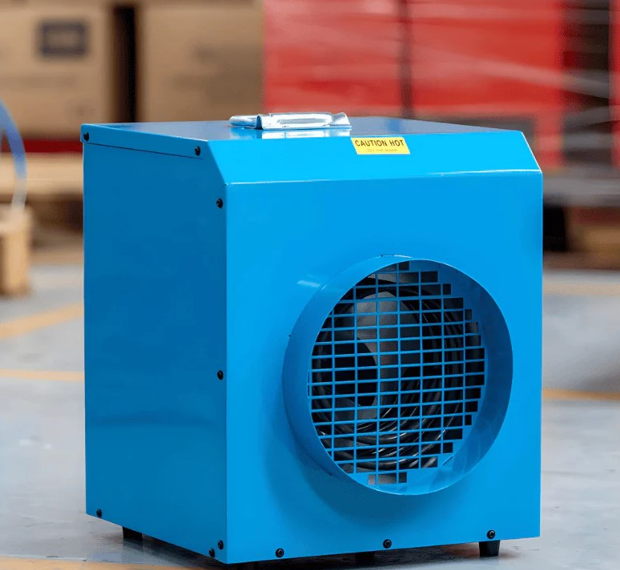
In large factories, warehouses, workshops, or construction sites, cold conditions can damage materials and cause machines to perform poorly. You may also face moisture build-up and uncomfortable working conditions if the right heating system is not in place. It means keeping industrial space warm in winter is not only crucial for comfort but also for productivity and equipment performance.
Since industrial spaces are very different from homes or offices, you cannot rely on standard heaters. You need units that can handle large areas, high ceilings, poor insulation, and tough working environments. In this article, we will explain different types of heaters, making it easier for you to decide which one is more suitable.
Types of Heaters Suitable for Industrial Settings
Fan Heater
Industrial fan heaters are ideal if you need fast and direct heat in an industrial setting. They work by heating the air and then using a powerful fan to push that warm air into space. As a result, you get almost instant results, which makes them ideal for workshops and temporary work areas.
Their biggest advantage is speed and simplicity. Fan heaters are easy to install, move, and operate. They are especially useful when you need to warm up a specific area rather than the entire building. However, their warmth can escape quickly in poorly insulated or open spaces.
Electric Industrial Heater
They are a clean and reliable option when you want consistent heat without dealing with fuel storage or emissions. They convert electricity into heat and are often used in factories and production areas where clean air is important. If you work in a space with limited ventilation or strict safety rules, this option is ideal.
Electric heaters are easy to control and maintain. You can turn them on and off instantly, adjust the temperature easily, and avoid fumes or smells. They are also quieter than many fuel-based heaters, which helps in busy work environments. However, you should keep energy costs in mind. For large spaces, electricity bills can rise quickly.
Gas Heater
They are widely used in industrial environments because they provide strong and cost-effective heat. They usually run on natural gas or LPG and are suitable for large warehouses, factories, and loading bays. If you need to heat a big space for long hours, gas heaters can be a smart choice.
The main benefit is powerful heating at a lower running cost compared to electricity. Gas heaters can quickly raise the temperature of large areas and keep it stable throughout the day. However, proper ventilation is essential to use them. You need to make sure that fumes are safely released to avoid health risks.
Radiant Heater
Radiant heaters work in a different way compared to air-based systems. Instead of heating the air, they heat objects, surfaces, and people directly using infrared radiation. It makes them highly effective in large industrial settings where warm air would normally escape.
They are ideal if you want focused heat in specific work zones. For example, they work well above workstations, assembly lines, or outdoor covered areas. You will feel the warmth instantly, even if the surrounding air is cold. Another advantage is energy efficiency, as less heat is wasted. However, radiant heaters are not designed to warm entire buildings evenly.
Oil-based Industrial Heater
They are suitable if you need steady and long-lasting heat in enclosed industrial areas. These heaters use oil inside sealed panels, which is heated to slowly release warmth into the space. They are commonly used in workshops and production areas where a stable temperature is needed.
The key benefit is the consistency they offer. Once heated, oil-filled heaters continue to give off warmth even after switching off, which helps reduce energy use. They are also quiet and safe, with no exposed flames. However, they take longer to warm up compared to fan or gas heaters. It means they are suitable for areas that need continuous heating instead of quick temperature changes.
Diesel Infrared Heater
They are a strong and reliable solution for industrial spaces where targeted and efficient heat is required. Unlike heaters that warm the air, they use infrared technology to heat people, machinery, and surfaces directly. It makes them particularly useful in open environments such as warehouses, factories, and construction sites.
The primary benefit of diesel infrared heaters is the efficiency and comfort they offer. You feel the heat almost immediately, even if the air temperature stays low. They are also cost-effective for large spaces and work well in areas with high ceilings. Since they do not rely on air circulation, heat loss is minimal. When used correctly, this heater offers dependable warmth for demanding industrial conditions.
Choosing the right industrial heater depends on your space, budget, and heating needs. By understanding how each type works and where it performs best, you can make a smarter decision that improves both comfort and productivity.
