


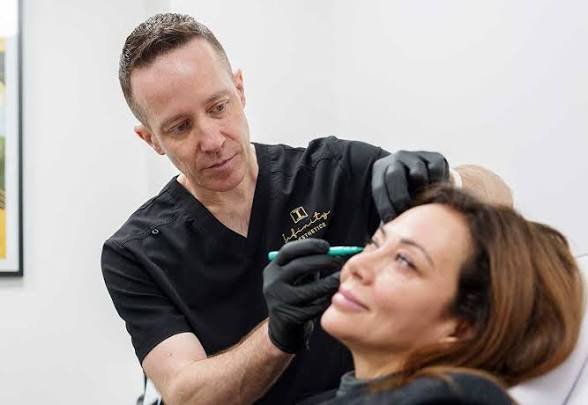
The phrase “non-surgical facelift” has been used loosely in London’s aesthetic market for over a decade, and not always to a patient’s benefit. It has been applied to everything from a single syringe of filler to a full energy-based skin tightening protocol, which means patients researching it often find themselves comparing treatments that are not remotely equivalent. For anyone evaluating non-surgical facelift London clinics options seriously, the first step is understanding what the term properly describes and what a considered clinic is actually offering.
This piece examines how the category has matured, what a genuine non-surgical facelift protocol involves, and what patients should ask before they commit.
What the Term Actually Means
A non-surgical facelift, properly delivered, is not a single treatment. It is a co-ordinated combination of interventions designed to address the multiple components of facial ageing without surgery. At a serious London clinic, the protocol typically combines structural support, skin tightening, skin quality improvement, and selective dynamic softening, tailored to the patient’s specific anatomy.
The four components
Structural support is provided by carefully placed filler or biostimulators in the deep tissue planes that naturally lose volume with age. Skin tightening is addressed with energy-based devices such as Ultherapy, Ultracel, Morpheus8, or Sofwave. Skin quality is improved with polynucleotides, Profhilo, or targeted skincare and laser treatment. Dynamic softening is delivered with precisely dosed toxin to slow the deepening of expression lines without freezing the face.
What it is not
A single syringe of cheek filler is not a non-surgical facelift. A single round of Morpheus8 is not a non-surgical facelift. A course of threads alone is not a non-surgical facelift. Clinics marketing any of these as a full non-surgical lift are either simplifying the category for marketing purposes or operating at a standard below what the term should mean.
Why the Protocol Approach Works
The logic behind the combination approach behind the combination approach is that facial ageing has multiple simultaneous causes: bone remodelling, fat pad descent and atrophy, muscle activity changes, and progressive skin laxity and decline in skin quality. No single treatment can address all four. A protocol that considers each produces outcomes that look more coherent and last longer than any single intervention.
Sequencing matters
The order in which the components are delivered matters. Energy-based tightening is typically performed first, with filler and biostimulators layered in over subsequent sessions once the skin has begun to tighten. Dynamic softening is often fine-tuned at the final stage once the broader structural changes have settled. A clinic that delivers everything in a single session is not running a properly sequenced protocol.
The importance of planning
Serious London clinics build a treatment plan with the patient before beginning, often spanning six to twelve months of staged treatments followed by a maintenance schedule thereafter. Patients who come in expecting a single-session result are sometimes disappointed; patients who commit to the plan and trust the process tend to produce some of the most striking long-term outcomes in the clinic’s portfolio.
The Transformation Facelift Concept
Some London clinics package their non-surgical facelift approach under a specific branded protocol. Dr Nyla Medispa, for instance, offers what it calls the Transformation Facelift, a structured protocol combining energy-based tightening, biostimulators, filler where appropriate, and toxin. The branded name is useful for marketing but is less important than what the protocol actually contains, which patients should always ask to have explained in detail.
What patients should ask
Ask which specific treatments are included. Ask about how many sessions and what time frame. Ask who performs each component of the treatment and what their qualifications are. Ask what the expected longevity of the result is and what the maintenance schedule looks like. Clinics that can answer these questions in detail are operating at the level patients should expect.
Credentials and Safety Standards
A non-surgical facelift is medical work. The combination of energy devices, injectables, and toxins requires clinical judgement at every step, and the work should be performed under appropriate medical governance.
What to verify
The lead clinician should be GMC, GDC, or NMC registered. The clinic should be CQC-registered where required. Professional body memberships including BCAM and BACD indicate peer accountability. Named practitioners should appear on the relevant treatment page with their credentials visible.
Dr Nyla Raja (GMC 6057913), founder of Dr Nyla Medispa, has been nominated for Tatler’s Best Non-Surgical Facelift (2025) and is a Fellow-level member of professional aesthetic bodies. Her clinic operates under the medical governance structure that patients should expect when committing to a protocol of this scope.
Candidacy and Realistic Expectations
A non-surgical facelift London protocol is suitable for patients with mild to moderate ageing changes, typically in their late thirties to early sixties. Patients with advanced skin laxity, significant jowl formation, or substantial tissue descent are sometimes better served by surgical intervention, and a good clinician will say so at consultation.
Expected results
When the protocol is well-matched to the patient, the outcomes are genuinely transformative in the literal sense of the word. The face looks tighter, more rested, and more structurally coherent. What the protocol will not do is produce the degree of lift achievable with a full surgical facelift in a patient with advanced laxity. Patients who understand this distinction are the patients most satisfied with the result.
Longevity
The full protocol, properly maintained, produces results that last for years rather than months. Energy-based tightening components typically last 12 to 18 months with maintenance. Biostimulator effects extend for 6 to 9 months. Filler placed in deep structural positions tends to last considerably longer than superficial filler. With annual or semi-annual maintenance, patients can sustain the result indefinitely.
Cost and Transparency
Non-surgical facelift protocols in London are meaningfully more expensive than individual treatments because they combine multiple modalities. Full protocols at reputable doctor-led clinics typically start from £750 and rise significantly from there depending on the patient’s needs.
Dr Nyla Medispa lists its Transformation Facelift starting at £750, which is a useful reference point for patients assessing the London non-surgical facelift market. Clinics offering full lifts at substantially lower prices are usually delivering a narrower protocol than the term properly implies.
Choosing Where to Go
Verify medical registration. Look for clinics that explain the components of their protocol transparently. Expect a multi-session plan rather than a single-session promise. Read the consultation reviews. Ask who performs each component of the treatment and why.
The non-surgical facelift category has matured considerably in London. The clinics delivering it well are doing genuinely sophisticated medical aesthetic work, and the patients who choose carefully will see the results of that sophistication for years.
Dr Nyla Raja (MBChB Hons, MRCGP Dist, DFFP, DPDermatology, BACD; GMC 6057913) is the founder and Medical Director of Dr Nyla Medispa, with clinics in London Mayfair, Cheshire Alderley Edge, and Liverpool Crosby.
