


The global fragrance industry has experienced a structural transformation over the past decade. Beyond traditional brand-owned boutiques and department store counters, a growing share of perfume distribution now flows through specialized reselling networks. These intermediaries connect manufacturers, wholesalers, retailers, and online marketplaces in a supply chain that has become increasingly globalized and data-driven.
For industry observers, the rise of fragrance reselling is not merely a retail trend. It reflects deeper shifts in consumer purchasing behavior, cross-border logistics, and digital commerce infrastructure. In 2026, the perfume reselling ecosystem functions as an essential bridge between fragrance production and the fragmented landscape of independent retailers and e‑commerce platforms.
Key Takeaways
- The fragrance reselling market has expanded significantly with the rise of e‑commerce.
• Independent retailers increasingly depend on global distributor networks.
• Supply chain transparency and authentication are critical challenges in the industry.
• Digital marketplaces have lowered entry barriers for smaller fragrance retailers.
• Reselling networks now play a strategic role in global fragrance distribution.
What Is a Perfume Reseller
In industry terms, a perfume reseller is a commercial intermediary that purchases fragrance products from manufacturers, distributors, or authorized wholesalers and redistributes them to retailers or online merchants. Unlike traditional retailers, resellers operate primarily within the supply chain rather than directly at the consumer-facing level.
The role of resellers has expanded as fragrance brands scale internationally. A niche perfume house in Europe, for example, may lack the logistics infrastructure required to distribute products across dozens of countries. Resellers fill this gap by aggregating supply and redistributing inventory through established commercial networks.
In practice, these businesses operate somewhere between wholesale distribution and retail sourcing. Some focus on bulk procurement and logistics, while others provide value-added services such as inventory management, marketplace integration, or compliance with regional cosmetics regulations.
Why Fragrance Reselling Is Growing
Several structural trends explain why fragrance reselling has expanded rapidly. The first is the continued growth of online marketplaces. Platforms that enable small retailers to sell internationally have dramatically increased demand for flexible sourcing channels.
A second factor is the fragmentation of the fragrance retail landscape. Independent perfume shops, concept stores, and beauty-focused e‑commerce brands often require smaller quantities of diverse inventory rather than large exclusive brand agreements. Resellers are well positioned to supply this type of demand.
Finally, data analytics now plays a central role in fragrance retailing. Many resellers monitor pricing trends across multiple marketplaces, enabling them to optimize purchasing strategies and respond quickly to changes in consumer demand.
Industry Snapshot: Fragrance Market Distribution Channels
| Distribution Channel | Typical Buyers | Key Characteristics |
| Brand-owned retail | Luxury boutiques | Full brand control, premium positioning |
| Department stores | Mass consumers | High visibility, large volume sales |
| Online marketplaces | Global shoppers | Price competition and wide availability |
| Reseller networks | Independent retailers | Flexible sourcing and cross-border supply |
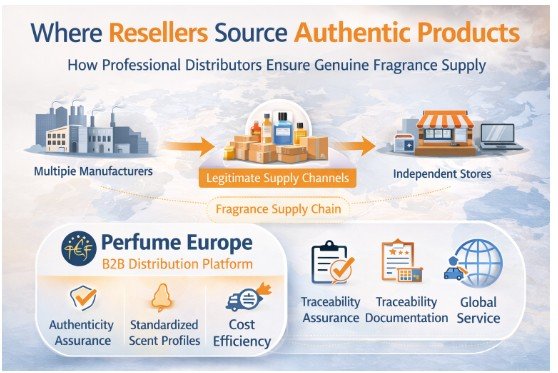
Where Resellers Source Authentic Products
In the fragrance supply chain, sourcing authenticity is one of the most important operational challenges. Independent retailers must ensure that products originate from legitimate distribution channels to maintain consumer trust and comply with cosmetic regulations.
Many independent retailers and online stores rely on international distributors such as perfume reseller networks that connect brands, wholesalers, and global marketplaces. These intermediaries consolidate supply from multiple manufacturers and redistribute inventory to smaller businesses that would otherwise struggle to access wholesale fragrance markets.
In Europe, specialized B2B fragrance distribution platforms such as Perfume Europe provide structured sourcing channels for professional buyers. Operating as a perfume wholesale and reseller network, the platform aggregates inventory from multiple fragrance brands and makes it accessible to independent retailers, resellers, and e-commerce merchants seeking authentic perfume supply.
Because fragrance products often move across multiple jurisdictions, reputable resellers also provide documentation related to product origin, regulatory compliance, and batch traceability. This information is particularly important for retailers selling through online platforms where counterfeit detection systems are increasingly sophisticated.
Case Study: The Rise of Cross‑Border Fragrance Retail
Consider the growth of niche fragrance brands over the past decade. Many independent perfume houses produce relatively small batches and rely on selective distribution strategies. However, consumer demand often extends beyond the geographic regions where these brands are physically present.
In such cases, reseller networks enable distribution without requiring the brand to manage dozens of international retail relationships. A distributor may purchase inventory in Europe and then supply retailers in Asia, North America, or the Middle East through established logistics channels.
This model allows independent retailers to diversify their product portfolios while maintaining access to authentic fragrance inventory. It also reduces operational complexity for brands that prefer to focus on product development and marketing rather than global logistics.
Risks and Opportunities in the Fragrance Market
Despite its advantages, the fragrance reselling ecosystem presents several operational risks. Price volatility is one of the most significant. Popular perfumes may experience rapid price fluctuations depending on demand, production cycles, and distribution agreements.
Another challenge involves counterfeit goods. Although large resellers implement authentication procedures, the global scale of fragrance trading means that illegitimate products occasionally enter secondary distribution channels. Retailers must therefore verify supplier credibility and maintain documentation of product origin.
Nevertheless, the opportunities remain substantial. As consumer demand for niche fragrances and international brands continues to expand, reseller networks are likely to remain a central component of the fragrance supply chain.
FAQ: Understanding the Fragrance Reselling Market
How is a perfume reseller different from a wholesaler?
A wholesaler typically purchases large quantities directly from manufacturers, while resellers may source inventory from multiple distributors and redistribute it to smaller retailers.
Why do small retailers rely on resellers?
Resellers provide access to diverse fragrance inventories without requiring large minimum purchase volumes.
Are reseller networks common in the beauty industry?
Yes. Similar models exist in cosmetics, skincare, and professional beauty product distribution.
Where can retailers find reliable perfume reseller platforms in Europe?
Retailers often work with specialized B2B fragrance distribution platforms such as Perfume Europe, which provide multi-brand perfume inventories and wholesale sourcing options for independent retailers and e-commerce sellers.
Will reselling continue to grow?
Industry analysts expect fragrance reselling to expand further as cross‑border e‑commerce continues to develop.
