


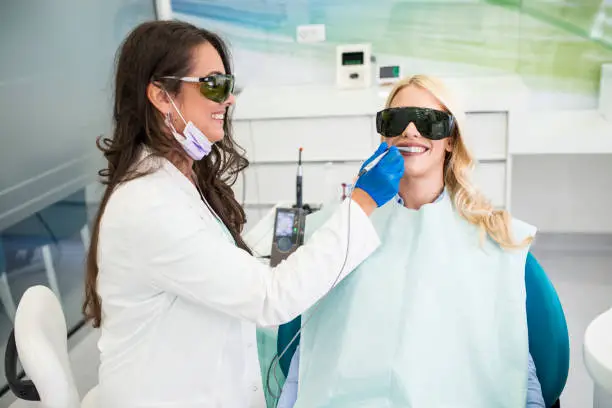
Laser dentistry has become an increasingly popular option in modern dental care. Instead of traditional drills or scalpels, dentists use highly focused light energy to treat teeth and gums with precision. This technology allows dentists to target specific areas while protecting surrounding tissue.
Because laser dentistry is precise and minimally invasive, many patients experience less discomfort, reduced bleeding, and faster healing. In this blog, you will learn how laser dentistry works, the dental procedures where it is commonly used, and the benefits it can offer for a more comfortable and precise treatment experience.
Laser Dentistry Explained: How Modern Dental Lasers Work
Laser dentistry uses focused light energy to perform certain dental procedures on teeth and gums. Dentists use specialized devices that produce concentrated light beams, which interact with oral tissue in a controlled way. This technology allows dentists to treat specific areas with high precision while limiting the impact on nearby healthy tissue.
What Are Dental Lasers?
Dental lasers are specialized instruments that produce concentrated beams of light energy used in dental treatments. This energy interacts with water and minerals in oral tissues, allowing dentists to remove, reshape, or treat targeted areas with precision. Because lasers focus light on small areas, they help dentists perform procedures with greater control and accuracy.
How Laser Energy Treats Teeth and Gums
When directed at teeth or gums, laser energy can cut, reshape, or remove small amounts of tissue during dental procedures. Dentists may use it to treat gum disease, remove decayed tooth material, or reshape gum tissue. In some treatments, the laser also helps reduce bacteria and keep the area clean during the procedure.
Hard-Tissue vs Soft-Tissue Laser Treatments
Dental lasers are designed for various procedures.
Hard-tissue lasers:
- Used on teeth
- Help detect cavities
- Assist with cavity preparation
Soft-tissue lasers:
- Used on gums and oral tissues
- Treat gum disease
- Reshape gum lines or remove small lesions
Together, hard-tissue and soft-tissue lasers allow dentists to address a wide range of dental concerns while keeping treatments precise and focused on the affected area.
Common Dental Procedures That Use Laser Technology
Laser dentistry can support a variety of treatments for both teeth and gums. Dentists use different types of lasers depending on the procedure and the tissue involved. Because lasers can target small areas with precision, they may assist in treatments that require controlled removal, reshaping, or cleaning of oral tissue.
Some dental procedures where lasers may be used include:
- Gum disease treatment: Lasers may help remove infected gum tissue and reduce bacterial levels in periodontal pockets during therapy.
- Gum reshaping: Dentists may use lasers to reshape uneven gum lines or remove excess gum tissue to improve both oral health and appearance.
- Cavity treatment: Certain dental lasers may assist in detecting cavities and removing some decayed tooth material before a filling is placed.
- Teeth whitening procedures: In some whitening treatments, laser energy may be used to activate or accelerate the whitening agent applied to the teeth.
- Treatment of oral lesions: Lasers may be used to remove small oral growths or treat certain sores inside the mouth with precision.
- Root canal disinfection: During root canal treatment, lasers may assist in reducing bacteria within the root canal system.
These procedures reflect how laser technology can be applied to address conditions affecting both teeth and gums.
Key Benefits of Laser Dentistry in Modern Dental Care
Laser dentistry offers several advantages compared with some traditional dental techniques. Because dental lasers use focused light energy to target specific areas, they allow dentists to perform certain procedures with greater control and minimal impact on nearby tissue. This approach can improve treatment precision while supporting a more comfortable recovery for many patients.
Some important benefits of laser dentistry include:
- Greater precision: Dental lasers enable dentists to target small treatment areas with accuracy, helping remove or reshape tissue while preserving surrounding healthy tissue.
- Less damage to healthy tissue: Because the laser focuses only on the affected area, there is typically less trauma to nearby tissues compared with some conventional tools.
- Reduced bleeding during procedures: Laser energy can seal small blood vessels as it works, potentially reducing bleeding during certain treatments, particularly soft-tissue procedures.
- Faster healing and recovery: With reduced tissue damage and controlled treatment areas, many patients experience quicker healing and less postoperative discomfort.
- Lower infection risk: Laser energy can help sterilize the treatment area by reducing bacteria, which may lower the risk of infection after dental procedures.
Because of these advantages, laser dentistry continues to gain attention as a modern approach to precise and minimally invasive dental care.
Patient Advantages of Laser Dental Treatments
Laser dentistry can improve the overall experience for many patients during certain dental procedures. Because laser energy targets specific treatment areas with precision, it may reduce trauma to surrounding tissue and support a more comfortable treatment and recovery process.
Reduced Pain and Discomfort
Laser dentistry often causes less irritation to surrounding tissues compared with traditional dental tools such as drills or scalpels. Because the laser targets precise areas, many procedures may feel more comfortable during treatment and may also lead to less discomfort afterward for some patients.
Less Noise and Vibration
Traditional dental drills can create noise and vibration that make some patients feel uneasy. Laser technology operates differently and usually operates quietly, without the same pressure or vibration, which can help create a calmer, more relaxed experience during dental appointments.
Less Need for Anesthesia
In certain procedures, the precision of laser technology may reduce the need for local anesthesia. Because lasers can target small treatment areas with minimal disruption to surrounding tissue, some treatments may be completed with little or no numbing.
Shorter Recovery Time
Laser treatments may cause less trauma to surrounding tissue, which can support faster healing for some patients. With reduced bleeding and swelling in certain procedures, patients may experience a smoother recovery and return to normal activities sooner.
Reduced Dental Anxiety
Many patients feel nervous about dental visits, often because of discomfort or the sound of dental drills. Since laser dentistry may reduce noise, vibration, and irritation during treatment, it can create a more comfortable experience for patients who feel anxious about dental care.
Who Can Benefit from Laser Dentistry Treatments?
Laser dentistry may benefit many patients, but it is not used for every procedure. Dentists recommend it when precision, healing support, or comfort can improve treatment outcomes.
Patients with Gum Disease
People with gum disease may benefit from laser-assisted periodontal therapy. Dental lasers can help remove infected gum tissue and reduce bacterial levels in periodontal pockets. This targeted approach allows dentists to focus on affected areas while supporting healthier gum tissue and healing during treatment.
Individuals with Sensitive Teeth
Some dental lasers may help treat tooth sensitivity by targeting exposed dentin on the tooth surface. Laser energy can help seal microscopic tubules within the dentin, which may reduce sensitivity to hot, cold, or sweet foods and drinks.
People with Dental Anxiety
Laser dentistry may be helpful for patients who feel anxious about dental visits. Because laser procedures often involve less noise, vibration, and pressure than traditional drills, some patients find the experience more comfortable and less stressful.
Patients Seeking Minimally Invasive Care
Patients who prefer minimally invasive dental care may benefit from laser-assisted procedures. Dental lasers can focus on small treatment areas, which may help preserve more healthy surrounding tissue while allowing dentists to treat certain conditions with precision.
Consider Newer Approaches in Dental Treatment
Advances in dental technology continue to expand the ways certain oral conditions can be treated. Laser dentistry is one example of a modern approach that focuses on the precise treatment of teeth and gums while supporting minimally invasive care in selected procedures.
Have you experienced dental procedures that felt uncomfortable or stressful in the past?
