


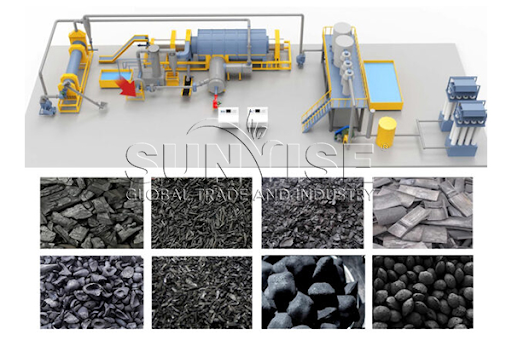
Charcoal is a vital resource used for cooking, heating, industrial processes, and even as biochar for soil improvement. Traditional charcoal production methods are often labor-intensive, slow, and inefficient. Modern technologies like large-scale continuous furnaces and charcoal production plants have revolutionized the industry, allowing manufacturers to produce high-quality charcoal efficiently, sustainably, and at industrial scale.
This article explores the features, advantages, and applications of continuous carbonization furnaces and charcoal production plants, highlighting why they are essential for modern biomass processing.
Large-Scale Continuous Furnaces: Industrial Charcoal Carbonization
What Is a Continuous Carbonization Furnace?
A large-scale continuous furnaces, also known as a continuous carbonization furnace, is industrial equipment designed for the nonstop carbonization of biomass materials such as wood, coconut shells, and agricultural residues. Unlike traditional batch kilns, which process materials in separate cycles, continuous furnaces allow raw materials to enter one end of the system while fully carbonized charcoal exits the other.
Key Features and Benefits
- Continuous Production
Unlike batch kilns, continuous furnaces operate 24/7, significantly increasing output and efficiency. - Uniform Charcoal Quality
Advanced temperature control ensures consistent density, calorific value, and burn quality for industrial, domestic, or hookah-grade charcoal. - Energy Efficiency
The system recycles pyrolysis gases and heat, reducing fuel consumption and lowering production costs. - Environmental Compliance
Modern designs minimize smoke and emissions, making the process cleaner and more eco-friendly. - Large-Scale Capacity
Ideal for industrial operations, these furnaces can handle several tons of raw material per hour.
Investing in a large-scale continuous furnace enables manufacturers to meet high-volume demand without sacrificing quality or efficiency.
Charcoal Production Plant: Complete Industrial Solution
What Is a Charcoal Production Plant?
A charcoal production plant is a comprehensive system that integrates raw material preparation, carbonization, cooling, screening, and packaging. This type of plant is designed for industrial-scale production and can process biomass materials continuously or semi-continuously.
Key Features and Advantages
- Integrated Production Process
From crushing raw biomass to packaging finished charcoal, all stages are automated or semi-automated, improving efficiency. - High-Quality Output
Produces uniform charcoal briquettes or lump charcoal suitable for cooking, industrial use, or shisha applications. - Customizable Production
Supports different biomass types, granule shapes, and sizes to meet market demand. - Cost-Effective Operation
Reduces labor, energy consumption, and raw material waste through automation and recycling systems. - Scalable Production
Plants can be designed for small, medium, or large-scale production, depending on market needs.
A charcoal production plant provides a turnkey solution for manufacturers aiming to produce consistent, high-quality charcoal at industrial scale.
Advantages of Modern Charcoal Production Technology
1. Increased Production Efficiency
Continuous furnaces and integrated charcoal production plants enable uninterrupted production, drastically increasing output compared to traditional methods.
2. Consistent Product Quality
Controlled carbonization ensures uniform density, calorific value, and burn time, producing charcoal suitable for cooking, industrial, or shisha use.
3. Reduced Operational Costs
Automation, energy-efficient designs, and pyrolysis gas recycling reduce labor and fuel expenses while minimizing waste.
4. Environmental Sustainability
Modern systems reduce smoke, emissions, and carbon footprint, supporting eco-friendly manufacturing and compliance with environmental regulations.
5. Versatility
These machines can process a variety of biomass materials, such as wood, coconut shells, palm kernel shells, and agricultural residues, offering flexibility to meet different market demands.
Applications of Charcoal Produced
- Domestic Charcoal: Briquettes or lump charcoal for household cooking and heating.
- Industrial Charcoal: Used in metal smelting, chemical processes, and energy production.
- Shisha/Hookah Charcoal: Uniform briquettes designed for hookah use.
- Biochar Production: Charcoal used as a soil amendment to improve fertility, water retention, and crop yield.
- Export Markets: High-quality charcoal suitable for international buyers and industrial clients.
High-quality charcoal opens multiple revenue streams and strengthens market competitiveness.
Choosing the Right Charcoal Production Equipment
When selecting a large-scale continuous furnace or charcoal production plant, consider the following:
- Production Capacity
Match equipment to your current and projected output needs. - Raw Material Availability
Ensure a steady supply of wood, coconut shells, or agricultural residues. - Automation Level
Higher automation reduces labor costs and ensures consistent product quality. - Product Quality Control
Equipment should allow control over charcoal density, size, and calorific value. - Supplier Support
Reliable suppliers provide installation, training, maintenance, and spare parts for long-term operation.
Selecting high-quality equipment ensures reliable production, safety, and profitability.
Conclusion
Investing in a large-scale continuous furnace and a charcoal production plant equips manufacturers with modern, efficient, and sustainable solutions for industrial charcoal production. Continuous furnaces provide consistent carbonization and high-volume output, while charcoal production plants offer a complete, turnkey solution from raw material to finished product.
By adopting these technologies, manufacturers can increase production efficiency, reduce operational costs, ensure consistent product quality, and meet growing domestic and international demand. Modern charcoal production systems provide long-term profitability, environmental compliance, and a competitive advantage in the biomass and energy sectors.
For industrial, domestic, or shisha charcoal production, investing in large-scale continuous furnaces and charcoal production plants is essential for producing premium charcoal, expanding market opportunities, and achieving sustainable business growth.
