


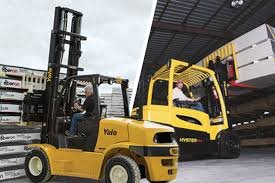
Forklift rental is an essential solution for businesses across industries that require temporary material handling equipment without committing to a full purchase. Whether for short-term projects, seasonal workload fluctuations, or testing new equipment types, renting a forklift provides flexibility, cost-effectiveness, and access to the latest models. Forklift rental allows businesses to maintain operational efficiency, reduce upfront investment, and avoid long-term maintenance obligations while still benefiting from professional-grade equipment. Understanding the types of forklifts available for rent, rental considerations, safety requirements, and cost factors is crucial for maximizing value and ensuring seamless operations.
Types of Forklifts Available for Rent
Forklifts are available in a variety of types, each designed to address specific operational needs and environments. Electric forklifts are popular for indoor use because they operate quietly, emit no harmful exhaust, and require less maintenance than internal combustion models. These forklifts are ideal for warehouses, retail centers, and cold storage facilities, where noise reduction and air quality are critical considerations.
Internal combustion (IC) forklifts, powered by diesel, gasoline, or propane, are preferred for outdoor applications or heavy-duty lifting. IC forklifts are robust, capable of handling uneven terrain, and can operate for longer hours without recharging, making them suitable for construction sites, shipping yards, and manufacturing facilities. Diesel forklifts, in particular, offer the durability needed for high-demand operations and heavy loads.
Specialized forklifts, such as reach trucks, pallet jacks, and order pickers, are also commonly available for rental. Reach trucks are ideal for narrow aisles and high stacking applications, pallet jacks provide easy maneuverability for moving pallets over short distances, and order pickers allow operators to retrieve items from elevated storage locations efficiently. Renting these specialized forklifts provides businesses with flexibility to meet short-term project requirements without investing in permanent equipment.
Benefits of Forklift Rental
Forklift rental offers numerous advantages over purchasing, particularly for businesses with fluctuating or temporary needs. One of the primary benefits is cost efficiency. Renting avoids the significant upfront investment required to purchase new forklifts, freeing capital for other operational expenses or projects. Businesses can access high-quality, well-maintained equipment without bearing the financial burden of ownership.
Flexibility is another key advantage. Rental agreements can be tailored to match project timelines, whether a few days, weeks, or months. This allows companies to scale their equipment needs according to workload demands, seasonal requirements, or one-off projects. Additionally, rental programs often include access to the latest forklift models and technology, providing operational benefits without the risk of obsolescence.
Maintenance and repair responsibilities are typically handled by the rental provider, reducing downtime and operational disruptions. Professional rental companies ensure that forklifts are serviced, inspected, and ready for immediate use, minimizing the burden on in-house teams. This also reduces long-term maintenance costs, as the equipment remains under professional supervision throughout the rental period.
Factors to Consider When Renting a Forklift
Selecting the right forklift for rental requires careful consideration of operational needs, load requirements, and working environment. Load capacity is a critical factor; forklifts come in varying capacities, from a few thousand pounds to tens of thousands of pounds. Choosing a forklift that matches the weight of materials handled ensures safety and efficiency while preventing equipment strain or accidents.
Lift height is another important consideration. For warehouse or storage operations, understanding the maximum stacking height is essential to select a forklift with the appropriate mast configuration and reach capabilities. Space constraints, aisle width, and operational layout should also be evaluated to ensure maneuverability and safe operation.
The type of power source is a major consideration. Electric forklifts are suitable for indoor or environmentally sensitive areas, while IC forklifts excel outdoors or on rough terrain. Businesses should also consider operating hours, fuel availability, and long-term energy costs when selecting between electric and IC forklifts.
Rental Duration and Terms
Rental agreements for forklifts are flexible and vary depending on the provider. Short-term rentals are ideal for projects requiring equipment for days or weeks, while long-term rentals can extend for months or years. Long-term rental agreements may offer reduced rates and additional services, making them comparable to leasing programs.
Understanding the terms of the rental agreement is critical. This includes insurance coverage, delivery and pickup logistics, maintenance responsibilities, and any additional fees. Reputable rental companies provide transparent agreements that outline all costs, responsibilities, and operational guidelines, ensuring that businesses can plan effectively and avoid unexpected expenses.
Safety Considerations
Safety is a paramount concern when renting and operating forklifts. Rental providers typically ensure that all equipment meets industry safety standards and is inspected for reliability before delivery. Businesses should confirm that forklifts are compliant with Occupational Safety and Health Administration (OSHA) regulations or local safety standards and are equipped with essential safety features such as seat belts, backup alarms, stability systems, and load backrests.
Proper operator training is also essential. Even when using rented equipment, trained operators must understand the forklift’s capabilities, limitations, and operational procedures. Ongoing safety training, adherence to workplace safety policies, and regular inspections contribute to preventing accidents and ensuring efficient use of rental forklifts.
Cost Considerations for Forklift Rental
The cost of renting a forklift depends on factors such as the type, capacity, duration of rental, and whether additional services such as delivery, maintenance, or insurance are included. Short-term rentals are often priced on a daily or weekly basis, while long-term rentals may be structured with monthly rates.
Additional costs may include fuel for IC forklifts, operator training, and any damage or wear beyond normal usage. Comparing rental rates among reputable providers, understanding the terms, and considering the overall cost-benefit ratio will help businesses select the most economical and effective rental solution.
Maintenance and Support
One of the advantages of forklift rental is that maintenance and service are often included in the rental agreement. Rental providers regularly inspect, repair, and service forklifts to ensure optimal performance. This reduces the operational burden on businesses and ensures that equipment remains in safe, reliable condition throughout the rental period.
Prompt technical support is another benefit of rental agreements. If equipment malfunctions or requires adjustment, rental providers typically offer rapid replacement or repair services, minimizing downtime and maintaining operational efficiency. This ensures that rented forklifts perform reliably even during critical project timelines.
Environmental Considerations
When selecting a forklift for rental, environmental impact may be an important factor. Electric forklifts produce zero emissions and are ideal for indoor or environmentally sensitive areas. IC forklifts, while more suitable for outdoor and heavy-duty tasks, may contribute to emissions and noise. Some rental providers offer propane or hybrid options to reduce environmental impact while maintaining performance. Choosing environmentally friendly forklifts can align operations with corporate sustainability goals and regulatory requirements.
Choosing a Reputable Forklift Rental Provider
Selecting a reliable forklift rental provider is critical to ensure equipment quality, safety, and operational support. Reputable companies maintain a fleet of well-serviced forklifts, provide transparent rental agreements, and offer technical support throughout the rental period. Checking licensing, insurance, customer reviews, and service history can help businesses identify trustworthy providers.
Professional providers also assist in determining the most suitable forklift type, capacity, and specifications for the specific project. They can provide delivery, setup, operator training, and maintenance guidance, ensuring seamless integration of rented forklifts into daily operations. Working with an experienced rental provider reduces operational risk, enhances safety, and maximizes productivity.
Conclusion
Forklift rental is an effective and flexible solution for businesses requiring temporary or seasonal material handling equipment. By providing access to a variety of forklift types, capacities, and specialized models, rental programs enable companies to meet operational needs without the financial burden or long-term commitments associated with ownership.
Careful consideration of load capacity, lift height, power type, safety features, and rental terms is essential to maximize value and ensure safe, efficient operation. Professional rental providers deliver well-maintained equipment, technical support, and operational guidance, making forklift rental a practical and cost-effective solution for warehouses, construction sites, manufacturing facilities, and logistics operations.
Whether for short-term projects, seasonal spikes, or testing new equipment types, forklift rental offers operational flexibility, cost savings, and reliable performance. By partnering with a reputable provider and adhering to safety and maintenance best practices, businesses can enhance productivity, minimize risks, and achieve long-term operational success while leveraging the advantages of rental forklifts.
