


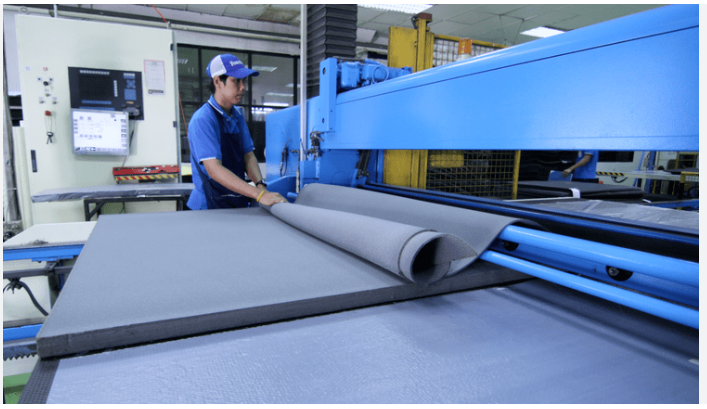
Polyurethane foam can be a versatile material. It’s commonly employed in lots of sectors every day. It has many applications, such as furniture, insulation, automotive components, and packaging. It has the advantages of lightness, wear resistance, and easy to use.
There are several chemical reactions during the manufacturing process. Each of the processes is carefully monitored by manufacturers. Correct techniques help to make a foam that has the desired characteristics. If you have an understanding of this process, then you can better understand why so many people use polyurethane foam.
About Polyurethane Foam.
Polyurethane foam is a material of a polymer type. Produced by a chemical process. The reaction is the combination of polyols and isocyanates.
The materials make a cellular structure. The structure is what affords foam its unique properties. May be soft, pliable, or hard. The types of foam are caused by variations in formulation. Every type has specific applications to use.
Main Raw Materials
Foam ingredients—Polyols. They are flexible and structured. The various polyols result in various kinds of foams.
Polyols react with Isocyanates. They’re used in the creation of the polyurethane polymer. Their choice impacts the strength and performance of foams.
Additives are also very important. They enhance foams’ quality and stability. The common additives used are: blowing agents, surfactants, etc., and catalysts.
The Manufacturing Process
Step 1: Material Preparation
All the raw materials are carefully prepared by the manufacturer. They make accurate measurements of each of the ingredients. The proper proportions result in uniform foam quality.
It’s also vital to have temperatures controlled. Chemical reactions are influenced by the proper conditions. That in itself is helping to lay the groundwork for a successful production.
Step 2: the ingredients are mixed.
The ingredients are combined in step 2. Raw materials are added to make a mixture. A uniform mixture is made with a high-speed machine. During this stage, the chemical reaction starts.
The mixture begins to rapidly expand. Mixing time should be carefully monitored and controlled in the manufacturing process. Even foam cells will result from proper mixing.
Step 3: Foam Expansion
The foam structure is made by blowing with the blowing agents. They form micro gas bubbles within the material. The quick release of this gas forms these bubbles, which give it a light texture.
When the foam is mixed, it spreads out. Slowly grows to the desired dimensions. Manufacturers know how important it is to watch expansion.
Step 4: Foam Curing
After the foam is expanded, it needs to be cured first. The structure is stable during the curing process. Good curing results in greater strength/durability.
Curing conditions are controlled by the manufacturer: temperature and time. The effects that these factors affect the final product.
Types of Polyurethane Foam
- Soft and comfortable with Flexible Polyurethane Foam. It is used in mattresses, furniture, and many other products.
- Rigid, cork, and board foam provides good insulation. It is commonly used in the construction field.
- Spray polyurethane foam will expand once it is applied. Seals gaps and enhances the efficiency of energy use.
- Different production techniques are needed for each type of foam. Formulas vary as required by the manufacturers.
Role of release agents.
Molds are generally used in manufacturing processes. Foam is capable of adhering to mold surfaces. This may pose production challenges.
Sticking problems are prevented using polyurethane release agents by manufacturers. These agents can be used to easily remove foam from molds. They also contribute to a better surface quality.
Production is efficient if the use of the appropriate release agents are used. They lessen damage at the demoulding stage. Another benefit that they offer is to prolong the mold’s lifespan.
Quality assurance in manufacturing.
Reliable foam testing to ensure foam performance. Quality testing for density and strength is conducted by manufacturers. They are also known for their versatility and durability.
Reliable testing to ensure a good product. It is one of the ways of detecting problems in production in the early stages. Quality control is an activity that helps satisfy customers.
Environmental Considerations
Today’s manufacturers have sustainability as a priority. They learn to make them in a safer manner. They are also able to help to minimize resources that are wasted in the process.
The better the technology, the more effective the processes. Recycling processes are continually evolving. All these make contributions towards having responsible manufacturing.
Applications for which polyurethane foam is used
Polyurethane Foam (PUFAs) has a wide range of applications across various industry sectors. Flexible foam is used in the furniture industry. Insulation foam, also known as rigid insulation foam, is employed by construction companies.
Foam is used in the automotive industry for comfort and safety. It’s used in packaging to protect. The characteristics also lend themselves to medical applications of products.
If you are interested in learning more about polyurethane solutions, you can view more about polyurethane technologies or applications.
Conclusion
There are a number of controlled steps in the manufacture of polyurethane foam. The quality is impacted by all raw materials, mixing, expansion, and curing. Well-made foam products are created with suitable production techniques.
Leading techniques used for performance are employed by manufacturers. Production is efficient, which is achieved thanks to the use of polyurethane release agents. Industries will be able to choose the most appropriate foam solution for their requirements, as the understanding of the process will aid them in this selection.
