


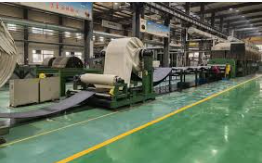
In February 2024, a limestone quarry in Rajasthan replaced a 1,200 mm EP conveyor belt that failed after just nine months. The original belt was rated correctly on paper. EP 200. Heat resistant. Abrasion grade M. The real problem surfaced later. Poor calendaring caused weak rubber penetration. Once dust and heat entered the plies, delamination followed. Downtime cost them roughly USD 18,000 per day.
That failure explains why understanding the conveyor belt manufacturing process matters far beyond theory.
If you’re researching How to Make A Conveyor Belt, this guide explains what actually happens on the factory floor, where things go wrong, and how serious manufacturers prevent silent failures.
What is the conveyor belt manufacturing process in simple terms
In short: conveyor belt manufacturing is a controlled layering, bonding, and curing process where rubber compounds and reinforcement fabrics are engineered to handle load, tension, heat, and abrasion simultaneously.
A complete belt typically takes 24 to 72 hours to manufacture, depending on belt type, width, and curing method.
Step 1: Raw material selection (the real foundation)
Manufacturing starts with three critical inputs:
- Rubber compounds (NR, SBR, EPDM, NBR)
- Reinforcement fabric (EP, NN, aramid)
- Adhesion systems (resorcinol-based bonding agents)
Rubber compound comparison
| Compound | Temp Range | Abrasion | Typical Use |
|---|---|---|---|
| NR (Natural Rubber) | -20°C to 70°C | Excellent | General material handling |
| SBR | -30°C to 90°C | Good | Aggregate conveyors |
| EPDM | -40°C to 150°C | Moderate | Heat resistant belts |
| NBR | -20°C to 110°C | Good | Oil resistant belts |
Mistake I’ve seen repeatedly: buyers specify heat resistance but ignore oil exposure. Cement plants often need EPDM + NBR blends, not pure EPDM.
Step 2: Rubber compounding and mixing
Rubber is mixed in Banbury internal mixers (typically 75–270 liter capacity) at 110–140°C. Each batch takes 6–10 minutes.
A typical NR compound ratio (by weight):
- Rubber: 100
- Carbon black: 45–55
- Oil: 5–10
- Sulfur: 2–3
- Accelerators & antioxidants: <2
Poor dispersion at this stage leads to surface cracking within 6–12 months.
Manufacturers like Continental, Bridgestone, and Fenner Dunlop run inline rheometers to monitor compound consistency. Many low-cost factories do not.
Step 3: Calendaring (where most hidden defects begin)
Calendaring bonds rubber sheets to fabric plies under pressure.
Key parameters:
- Roller temperature: 80–110°C
- Pressure: 80–120 bar
- Thickness tolerance: ±0.2 mm
Fabric comparison
| Fabric | Elongation | Strength | Typical Rating |
|---|---|---|---|
| EP | Low | High | EP 100–400 |
| NN | High | Medium | NN 200–500 |
| Aramid | Very low | Very high | Specialty belts |
A mining client in Chile rejected an entire batch after ultrasonic testing revealed air entrapment caused by uneven calendaring pressure. Loss exceeded USD 120,000.
Step 4: Belt building and ply alignment
This is controlled layering, not stacking.
Plies are aligned with ±1 mm tolerance across widths up to 2,200 mm. Misalignment causes tracking issues and edge wear.
High-end plants use laser-guided layup tables. Manual alignment still dominates mid-tier factories.
Step 5: Vulcanization (press vs continuous)
Vulcanization permanently bonds the belt.
| Method | Temp | Pressure | Best For |
|---|---|---|---|
| Press curing | 140–155°C | 10–18 bar | Custom belts |
| Continuous curing | 150–160°C | Controlled | High volume |
Curing time ranges from 30 to 90 minutes depending on thickness.
A Rubber Conveyor Belt Manufacturer – Rentone Belt I evaluated in 2023 logged curing curves digitally. That single practice reduced bonding failures by over 20 percent.
Step 6: Cooling, trimming, and edge sealing
Belts must cool gradually over 6–12 hours. Rapid cooling introduces internal stress.
Edge sealing prevents moisture ingress. Cheap belts fail here first.
Step 7: Quality testing and standards
Serious manufacturers test against:
- ISO 14890 (general purpose belts)
- ASTM D378 (tensile strength)
- DIN 22102 (abrasion resistance)
Typical tests include:
- Tensile and elongation
- Ply adhesion
- Shore A hardness
- Abrasion loss (mm³)
Skipping destructive testing is a red flag.
Three real manufacturing failure case studies
Case 1: Food-grade belt delamination
- Location: Punjab, Pakistan
- Belt: EP 160, white NR compound
- Failure: Delamination after 4 months
- Root cause: Low sulfur cross-link density
- Cost impact: USD 42,000 downtime
- Fix: Reformulated compound, longer cure cycle
Case 2: Quarry edge fraying
- Location: Oman
- Belt: NN 300
- Failure: Edge moisture ingress
- Root cause: No edge sealing
- Fix: Sealed edges, EP fabric switch
Case 3: Cement plant heat cracking
- Location: Gujarat, India
- Belt: EPDM HR belt
- Failure: Surface cracks at 8 months
- Root cause: Inadequate antioxidants
- Fix: Compound upgrade, verified mixer cycle
Frequently asked questions about conveyor belt manufacturing
How long does it take to manufacture a conveyor belt
Most belts take 1–3 days, excluding testing and shipping.
What causes conveyor belt delamination
Poor calendaring, incorrect curing temperature, or weak adhesion systems.
How thick should a conveyor belt be
Typically 6–25 mm, depending on load and application.
Are conveyor belts recyclable
Yes. Rubber can be reclaimed, but fabric separation limits reuse.
How much does custom manufacturing cost
As of Feb 2025, prices range from USD 18–60 per meter, depending on specs.
Final thoughts from the production floor
A conveyor belt is simple only when it works. Behind that motion is chemistry, physics, and discipline.
If you truly want to understand How to Make A Conveyor Belt, focus on process control, not brochures. And when evaluating suppliers, ask how they test, not how cheap they are.
That question alone separates reliable partners from expensive mistakes.
