


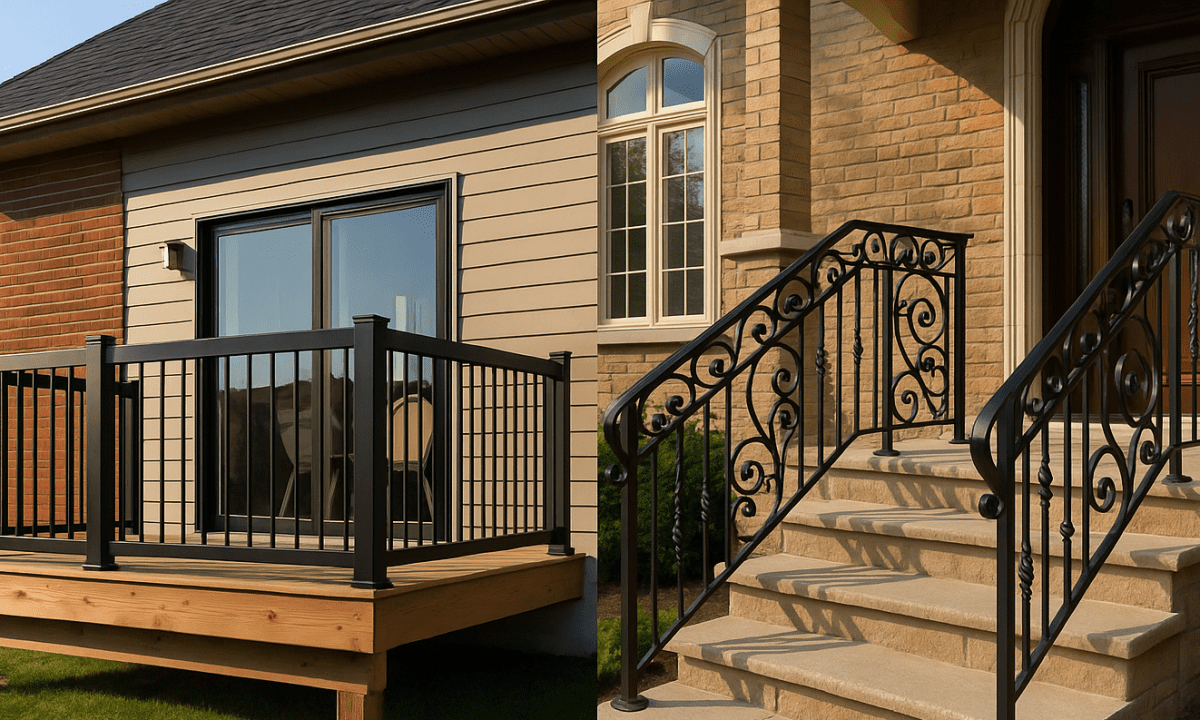
Property owners in coastal California face a fundamental choice when installing or replacing railings: invest in traditional wrought iron craftsmanship or opt for modern aluminum alternatives. This decision extends far beyond initial cost considerations, affecting long-term maintenance requirements, structural integrity, and property valuation for decades to come, notes the Crossroads Realty and Property Management team.
The material choice becomes particularly critical in coastal environments where salt air, temperature fluctuations, and seismic considerations create unique performance demands. While aluminum railings may appear cost-effective initially, the total ownership experience often reveals significant differences in durability, aesthetic retention, and replacement frequency. Understanding these operational realities helps property owners make informed decisions that align with their long-term investment goals.
The complexity of this choice increases when considering local building codes, architectural compatibility, and the specific performance requirements of different installation environments. Each material brings distinct advantages and limitations that become apparent only through extended use in real-world conditions.
Material Composition and Structural Performance
Wrought iron railings consist of low-carbon iron worked through traditional forging processes, creating dense, malleable material with exceptional tensile strength. This composition allows for intricate design work while maintaining structural integrity under significant stress loads. For property owners researching local options, a comprehensive Wrought Iron Railings Costa Mesa overview reveals how traditional craftsmanship adapts to modern building requirements and coastal environmental challenges.
Aluminum railings utilize lightweight alloy compositions that provide adequate strength-to-weight ratios for most residential applications. The material offers natural corrosion resistance through oxide layer formation, eliminating the need for protective coatings in many environments. However, aluminum’s lower density and different thermal expansion properties create distinct installation and performance characteristics.
The structural differences become apparent under stress conditions. Wrought iron demonstrates superior resistance to impact damage and maintains structural integrity even when individual components experience wear. Aluminum systems may show visible deformation under similar conditions, though catastrophic failure remains uncommon in properly designed installations.
Load-Bearing Capacity and Safety Margins
Wrought iron’s material properties allow for smaller cross-sectional dimensions while meeting or exceeding building code requirements for load-bearing capacity. This characteristic enables more refined aesthetic designs without compromising safety performance. The material’s ductility also provides warning signs before failure, typically showing gradual deformation rather than sudden breakage.
Aluminum railing systems require larger dimensional profiles to achieve equivalent load-bearing performance, influencing both visual appearance and installation requirements. The material’s different failure characteristics mean that damaged sections may require complete replacement rather than repair, affecting long-term maintenance strategies.
Thermal Expansion and Dimensional Stability
Temperature-related expansion and contraction affect both materials differently, influencing installation techniques and long-term performance. Wrought iron’s thermal expansion coefficient requires specific accommodation in longer installations, but the material’s mass provides stability during temperature fluctuations.
Aluminum’s higher thermal expansion rate necessitates careful attention to expansion joints and connection details. Coastal environments with significant daily temperature swings can create ongoing stress on aluminum installations, potentially affecting connection integrity over time.
Environmental Resistance and Longevity
Coastal California’s environmental conditions create specific challenges for metal railings, including salt air exposure, UV radiation, and moisture variations. Wrought iron’s performance in these conditions depends heavily on proper surface preparation and protective coating systems. When maintained appropriately, wrought iron installations demonstrate remarkable longevity, with many examples surviving decades of coastal exposure.
Aluminum’s natural corrosion resistance provides advantages in salt air environments, as the material forms protective oxide layers that prevent deeper corrosion. However, this protection can be compromised by physical damage or contact with dissimilar metals, creating localized corrosion issues that may not be immediately apparent.
The Environmental Protection Agency has documented how different metals respond to environmental stressors, highlighting the importance of material selection in specific geographic conditions.
Salt Air Corrosion Patterns
Wrought iron exposed to salt air develops predictable corrosion patterns that can be managed through regular maintenance protocols. Surface rust typically appears first, providing visual indicators for maintenance timing. The material’s thickness allows for surface treatment without compromising structural integrity.
Aluminum corrosion in coastal environments often manifests as pitting or crevice corrosion, which can be more difficult to detect and address. Once protective oxide layers are compromised, aluminum corrosion can progress rapidly, particularly in areas where moisture accumulates.
UV Degradation and Surface Integrity
Both materials experience surface degradation from prolonged UV exposure, though the effects differ significantly. Wrought iron relies on coating systems for UV protection, meaning that coating failure leads to accelerated corrosion. Regular recoating maintenance preserves both appearance and structural integrity.
Aluminum surfaces may develop chalking or color changes under UV exposure, particularly in powder-coated finishes. While this degradation is primarily aesthetic, it can affect property appearance and may require refinishing to maintain visual appeal.
Installation Requirements and Complexity
Wrought iron installation demands specialized techniques and equipment due to the material’s weight and connection requirements. Proper installation requires experienced craftsmen familiar with traditional metalworking techniques as well as modern building code compliance. The installation process typically involves custom fitting and may require on-site adjustments to accommodate specific architectural details.
Aluminum railing systems often feature modular designs that simplify installation procedures. Standardized components and lightweight construction allow for faster installation with conventional tools and techniques. However, achieving professional results still requires attention to expansion accommodation and proper connection details.
Foundation and Anchoring Considerations
Wrought iron’s weight requires substantial anchoring systems, typically involving deeper embedments or larger concrete foundations. This requirement can complicate installation in existing structures but provides exceptional stability once properly installed. The anchoring systems must account for both vertical loads and lateral forces from wind or seismic activity.
Aluminum installations require less substantial anchoring due to reduced weight, potentially simplifying retrofit applications. However, the material’s different expansion characteristics may require specialized anchoring details to prevent stress concentration at connection points.
Customization and Architectural Integration
Wrought iron’s malleability allows for extensive customization during both manufacturing and installation phases. Skilled craftsmen can adapt designs to specific architectural requirements, creating seamless integration with existing structural elements. This flexibility proves particularly valuable in historic renovation projects or custom architectural applications.
Aluminum systems typically offer limited customization options, relying on standard profiles and connection methods. While this standardization can reduce costs and installation complexity, it may limit design flexibility in unique architectural situations.
Long-Term Maintenance and Operating Costs
The total cost of ownership for railing systems extends well beyond initial purchase and installation expenses. Wrought iron maintenance requirements center on coating system renewal and occasional repair of damaged sections. Properly maintained wrought iron can provide decades of service, though maintenance intervals depend on environmental exposure and coating quality.
Aluminum railings generally require less frequent maintenance, with cleaning and occasional fastener tightening comprising most routine care. However, when aluminum components do require replacement, the modular nature of many systems facilitates partial replacement without affecting entire installations.
Maintenance Scheduling and Procedures
Wrought iron maintenance follows predictable schedules based on coating performance and environmental exposure. Coastal installations may require attention every three to five years, involving surface preparation and recoating procedures. Early attention to minor corrosion prevents more extensive and expensive repairs later.
Aluminum maintenance tends to be less predictable, with longer intervals between major maintenance events. However, when maintenance is required, it often involves component replacement rather than refurbishment, affecting both cost and scheduling considerations.
Repair Capabilities and Service Life
Wrought iron’s repairability represents a significant long-term advantage, as individual components can be restored or replaced without affecting entire systems. Skilled metalworkers can address damage through welding, reshaping, or partial replacement, extending overall system life considerably.
Aluminum repairs typically involve component replacement rather than restoration, as the material’s properties make field repairs challenging. While replacement components are often readily available, the cumulative cost of multiple replacements over time can exceed the cost of more durable alternatives.
Property Value Impact and Investment Return
Railing material selection affects property valuation through both immediate visual impact and long-term durability perceptions. Wrought iron installations often enhance property appeal through traditional craftsmanship associations and architectural authenticity. Potential buyers frequently view wrought iron as a premium feature that justifies higher property valuations.
Aluminum railings may be perceived as practical and low-maintenance, appealing to buyers who prioritize reduced upkeep requirements. However, the material may not command the same premium positioning as traditional wrought iron in luxury or historic property markets.
Market Perception and Buyer Preferences
Real estate market analysis reveals distinct buyer preferences based on property type and price range. Higher-end properties often benefit from wrought iron’s perceived quality and permanence, while practical buyers may prefer aluminum’s maintenance advantages. Understanding local market preferences helps inform material selection for optimal investment return.
The relationship between material choice and property value varies by geographic region and architectural context. Coastal properties with traditional architectural styles typically see greater value enhancement from wrought iron installations, while contemporary designs may accommodate either material effectively.
Replacement and Upgrade Considerations
Future replacement costs factor significantly into long-term investment calculations. Wrought iron’s extended service life may defer replacement costs for decades, while aluminum systems might require replacement or significant maintenance within shorter timeframes. These timing differences affect both financial planning and property maintenance strategies.
The ability to upgrade or modify existing installations varies significantly between materials. Wrought iron systems can often be enhanced or extended through traditional metalworking techniques, while aluminum modifications may require complete section replacement.
Conclusion
The choice between wrought iron and aluminum railings represents a complex decision involving immediate costs, long-term maintenance requirements, and property value considerations. While aluminum offers advantages in terms of initial cost and reduced maintenance frequency, wrought iron provides superior longevity, repairability, and potential property value enhancement.
For property owners prioritizing long-term value and traditional aesthetics, wrought iron installations typically justify their higher initial investment through extended service life and enhanced property appeal. Those focused on minimizing ongoing maintenance commitments may find aluminum systems better aligned with their operational preferences, despite potentially higher long-term replacement costs.
The decision ultimately depends on individual priorities regarding upfront investment, maintenance involvement, and long-term property goals. Both materials can provide satisfactory performance when properly selected, installed, and maintained according to their specific requirements and environmental conditions.
