


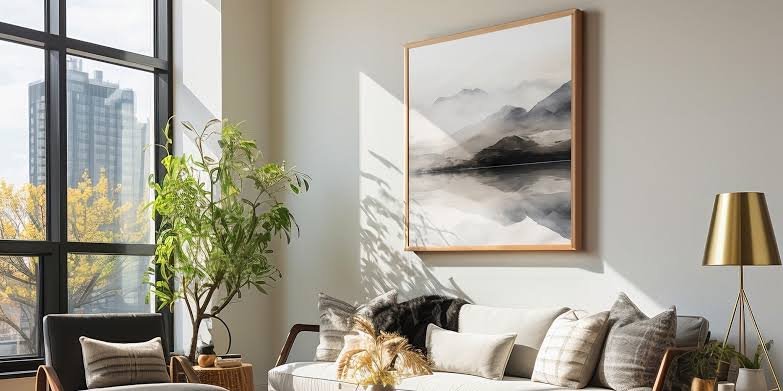
Japandi has become one of the most discussed directions in contemporary interior design, and it is not difficult to understand why. The word is a blend of Japanese and Scandinavian, and the design philosophy it describes is the product of two cultures that arrived at similar conclusions through very different routes, shares Intersection Real Estate experts. Both place a high value on quality over quantity, on the careful selection of materials, and on the idea that a well-ordered space is a space in which people function better.
The Sofa as the Room’s First Statement
The starting point for most people drawn to this aesthetic is the sofa: the largest object in the room and, in many ways, the one that sets the tone for everything around it. A sofa that sits awkwardly in a Japandi space is one whose fabric works against the room rather than with it. The principle here aligns directly with what Japandi asks of all materials: honesty, durability, and an appearance that improves rather than degrades over time. Opting for washable covers for IKEA sofas is one practical way to apply this thinking, since the removable cover can be refreshed, washed, and replaced to match the shifting character of the room without discarding the piece of furniture itself.
Why Linen Belongs in a Japandi Room
Linen sits at the centre of Japandi textile choices for reasons that go beyond its visual appearance. It is a natural fibre with a structure that softens progressively with washing rather than pilling or degrading, which means a linen-covered sofa looks more at home after two years of use than it did when first installed. This is precisely the quality that Japandi values: the material that reveals itself through time, that acquires character through daily contact rather than losing it. A synthetic weave, however well chosen at the outset, will move in the opposite direction, and its presence in a Japandi room tends to read as a small contradiction at the centre of an otherwise coherent space.
The Philosophy of Editing Rather Than Adding
Japandi design is not minimalism in the austere sense. It is, rather, a philosophy of editing: of keeping the things that serve both a practical and an emotional function, and removing those that serve neither. This is why the objects that remain in a Japandi home tend to be of high quality and to have been chosen with care. A single well-made ceramic bowl on a shelf carries more weight in this kind of space than a shelf of decorative items chosen for their appearance alone. The logic is the same one that applies to furniture and textiles: choose less, choose better, and allow what you keep to define the room rather than fill it.
Colour as Restraint Not Absence
Colour in a Japandi interior is drawn almost entirely from the natural world. Warm whites, off-whites, and the grey-greens of lichen, stone, and aged timber form the foundation; deeper tones of charcoal and walnut provide contrast without introducing harshness. What is absent is the kind of colour that announces itself, that calls for attention rather than contributing quietly to the atmosphere of the space. The palette is, in this sense, a form of restraint: not the absence of colour but the presence of colour in a form that the room can absorb and that supports rather than competes with the natural materials at its core.
How Natural Surfaces Handle Light
Light behaves differently in a Japandi room because the surfaces are designed to receive it rather than repel it. Natural wood, linen, clay, stone, and paper-based lamp shades all absorb and diffuse light in ways that polished or synthetic surfaces do not. The quality of the light at different times of day becomes part of the room’s character, rather than something the room is indifferent to. This is one reason why Japandi spaces tend to feel warmer in winter and cooler in summer than rooms finished with harder materials: the surfaces are active participants in the environment rather than passive containers.
Craftsmanship as the Core of the Style
The craftsmanship dimension of Japandi is often the most underestimated. Japanese design has always placed extreme value on the skill of the maker: the understanding that an object made well, from the right materials, by a person who understands both, will outlast and outlive many objects made without that care. As Japan’s official tourism magazine on Japandi design and craftsmanship notes in its coverage of how Japandi thinking and Japanese woodworking traditions intersect, this respect for the maker is inseparable from the style’s broader values. In a Japandi interior, a handmade ceramic or a piece of furniture joined without nails is not simply decorative; it is evidence of the philosophy made physical. The object is honest about what it is and how it was made, and this honesty is what gives it its presence in the room.
The Scandinavian Contribution to Japandi
The Scandinavian component adds a dimension that pure Japanese minimalism sometimes lacks: warmth. Hygge, the Danish concept of cosy wellbeing, is not simply about soft furnishings and candlelight, though it includes both. It is about designing for human comfort as a primary rather than secondary consideration. In a Japandi space, this means that the chair is genuinely comfortable, the throw is genuinely soft, and the room is genuinely livable. The aesthetic rigour of the Japanese tradition is tempered by the Scandinavian insistence that a room should feel as good as it looks. This is what separates Japandi from mere minimalism, and why it resonates with people who find pure minimalism beautiful in photographs but cold in practice.
Where to Begin With Your Own Space
The practical question for anyone applying these principles to their own home is not where to begin with decoration but where to begin with editing. A Japandi room typically requires the removal of several objects before it benefits from the addition of any. The question to apply to each piece in a room is whether it serves a genuine function, whether it is made from a material that belongs in the space, and whether its presence adds to the room’s coherence or quietly disrupts it. The sofa cover, the rug, the lamp, the storage unit: each of these is an opportunity to bring the room into better alignment with what Japandi asks of a space. None of them needs to be expensive. All of them benefit from being considered.
A Home That Improves With Living
Living with Japandi design is, ultimately, an ongoing practice rather than a project to be completed. The space changes with the seasons, with the household’s use, and with the gradual ageing of the materials that inhabit it. Linen softens, wood deepens in tone, ceramics acquire the slight wear that distinguishes a used object from a displayed one. These changes are not problems to be corrected; they are the point. A home that shows the evidence of being lived in is, in Japandi terms, a home that is working. The goal is not to achieve the appearance of a finished room but to build an environment that improves with time, because the things in it were chosen to do exactly that.
