


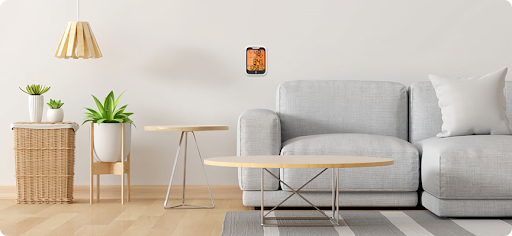
Winter in much of the United States brings cold temperatures, shorter days, and if you use a central heating system, indoor air that feels much drier than the natural environment most houseplants evolved to thrive in. While heaters keep us comfortable, they can create conditions indoors that are surprisingly tough on your green companions: low humidity, rapidly drying soil, crispy leaf edges, and slower growth are just a few of the common signs your plants are struggling.
In this detailed guide, you’ll learn not just why indoor heat dries out your plants, but also practical, easy-to-implement tips to protect them throughout the winter, including how to monitor your home’s environment effectively using tools like a smart thermo-hygrometer.
How does dry heater air harm indoor plants?
When central heating or space heaters run for months, they warm the air but strip out moisture, often dropping indoor humidity far below what houseplants like. Many homes in winter sit under 30% humidity, while most common indoor plants prefer something closer to 40-60%.
Dry heater air can cause:
l Brown, crispy leaf edges and tips as plants lose water through their leaves faster than roots can replace it.
l Drooping or wilting even when the soil is moist, because the air is pulling moisture out of the foliage.
l Slowed or stopped growth due to ongoing stress.
l Higher risk of pests such as spider mites that thrive in dry conditions.
Some plants, like ferns, calatheas, and many tropicals, suffer most in heated, low‑humidity rooms, while tougher species only show mild leaf damage.
What’s the ideal humidity for indoor plants in winter?
Most indoor plants are happiest when humidity sits in the same general range that’s comfortable for people.
l For many common houseplants, 40-60% relative humidity is a healthy target range.
l Tropical plants may like the higher end of that range or slightly above.
l In winter, many homes can drop to 10-20% humidity near heaters, which is closer to desert air than a rainforest and can quickly damage foliage.
Keeping humidity in that 40-60% band also helps prevent problems from going the other way, very high humidity can encourage mold and mildew in your home.
5 practical tips to protect plants from dry heater air
Move plants away from direct heat
Avoid placing plants right next to:
l Radiators and baseboard heaters
l Heat vents or furnace registers
l Space heaters
Constant blasts of hot, dry air cause rapid moisture loss, scorched edges, and leaf drop. Moving plants a few feet away or to a spot with more stable air flow immediately reduces stress.
Group plants to create a humid microclimate
When plants sit close together, they release moisture through their leaves and raise humidity in that small area. You can:
l Cluster humidity‑loving plants in one corner or on a shelving unit.
l Keep the group out of the direct heater airflow and away from cold drafts.
This simple step often makes a noticeable difference for ferns, calatheas, and other sensitive species.
Use trays and small water sources
Pebble trays are an easy, low‑tech way to increase humidity around plants:
l Fill a shallow tray with pebbles and water.
l Set the pots on top so the bottoms don’t sit directly in the water.
As the water evaporates, it boosts the moisture level right around the leaves. You can also place open bowls of water near plant groups, especially near sunny windows where evaporation is stronger.
Adjust watering for dry winter air
Dry air speeds up water loss from both leaves and soil. That doesn’t always mean “water more often without thinking”—instead:
l Check soil moisture regularly by finger or moisture meter.
l Water thoroughly when the soil has dried to the depth appropriate for that plant.
l Ensure pots have good drainage to avoid root rot.
The goal is to compensate for faster drying without overwatering, which is still a major winter risk.
Add a room humidifier
A small cool-mist humidifier placed near plants can quickly raise humidity in a dry room. This is especially useful in U.S. regions with long, cold winters where heaters run constantly. Keep the following in mind:
l Clean the humidifier regularly to prevent mineral buildup and mold.
l Use it in short cycles to stay within the 40-60% humidity range, not far above.
To do that well, it helps to measure humidity accurately instead of guessing.
How to control indoor humidity

Because you can’t see humidity, it’s easy to overshoot and make the air too wet or leave it too dry. A smart thermo-hygrometer lets you monitor temperature and humidity and adjust your setup to match what your plants need. A convenient option for many households is the ThermoPro TP358 Bluetooth Indoor Thermometer Hygrometer.
Key features of the ThermoPro TP358
Accurate temperature and humidity readings
The TP358 is designed to show real‑time room temperature and relative humidity on a clear display so you always know whether your plant corner is too dry, too humid, or just right. This helps you tune humidifiers, heaters, and room placement around the ideal 40-60% range for most houseplants. It delivers reliable readings (±0.9°F for temperature, ±2% for humidity), ensuring you make informed decisions about humidifier or dehumidifier use.
Bluetooth connection with smartphone app
The device pairs with your phone via Bluetooth, giving you remote access to readings from another room. You can check humidity in your plant area while sitting on the couch or lying in bed, instead of walking over to the device every time.
Customizable Alerts
Set personalized comfort zones (e.g., 45-55% humidity). If levels fall outside this range, the app sends a notification to your phone, prompting you to take action.
Data logging and trend tracking
TP358 Bluetooth hygrometers store up to 2 year historical data and show humidity and temperature trends over hours or days in the app. This helps you see patterns such as:
l How fast humidity drops when the heater kicks on.
l How much a humidifier session raises humidity and how long the effect lasts.
l Differences between daytime and nighttime conditions near your plants.
Compact design and flexible placement
A small, unobtrusive unit like the TP358 can sit on a shelf, plant stand, or windowsill near your plants. Placing it at leaf level gives you more realistic readings than relying on a thermostat across the room.
Why does the ThermoPro TP358 help protect indoor plants?
Using a Bluetooth thermometer hygrometer like the ThermoPro TP358 makes humidity control more precise and plant‑friendly.
Here’s how it supports healthier houseplants in winter:
Prevents chronic dry‑air stress
By watching humidity numbers instead of guessing, you can spot when your plant corner is slipping under 30-35%, a level where many houseplants begin to struggle. As soon as you see that dip, you know it’s time to run a humidifier, refill pebble trays, or move plants farther from a vent.
Helps you avoid over-humidifying and mold
Too much humidity can cause its own problems, including mold and fungus on soil or walls. The TP358 helps you keep humidity in a safe, balanced range. Once the reading approaches the high end of your target, you can reduce humidifier time or increase ventilation.
Connects plant symptoms to real conditions
When leaves brown or droop, it’s easy to blame watering alone. With data from the TP358, you can check whether a stretch of very low or highly variable humidity lines up with the damage you see. That lets you fix the true cause rather than only adjusting water.
Supports room-by-room plant planning
If you use multiple sensors, you can compare conditions in different rooms and decide which space is best for humidity-loving plants versus those that tolerate drier air. For example, you might learn that a bathroom with occasional showers naturally stays closer to 50% humidity, perfect for ferns, while the sunny living room needs more active humidification.
Makes winter adjustments easier to manage
As outdoor temperatures and heater usage change over the season, so do indoor humidity levels. The TP358 gives you a quick way to see those changes and adjust plant care: more humidity support on very cold weeks, less when the weather becomes milder.
Use a room humidifier when humidity dips too low and clean it regularly to prevent buildup.
Monitor temperature and humidity with a Bluetooth device such as the ThermoPro TP358 Bluetooth Indoor Thermometer Hygrometer so you can fine‑tune your environment and keep most plants in the 40-60% sweet spot.
With a better understanding of how dry heater air affects plants and a simple monitoring tool to guide your changes, you can keep your indoor jungle healthy and vibrant all winter long.
Final thoughts
Protecting indoor plants from dry heater air isn’t about one quick fix, but it’s about understanding and adapting to your indoor climate for the long haul. By measuring your home’s temperature and humidity with a reliable tool like the ThermoPro TP358 Bluetooth Indoor Thermometer Hygrometer, and then using that data to adjust watering, placement, and humidity strategies, you give your plants the best chance to thrive all winter long.
With careful attention and practical adjustments, even the driest winter air can become a safe, comfortable environment for your green companions.
