


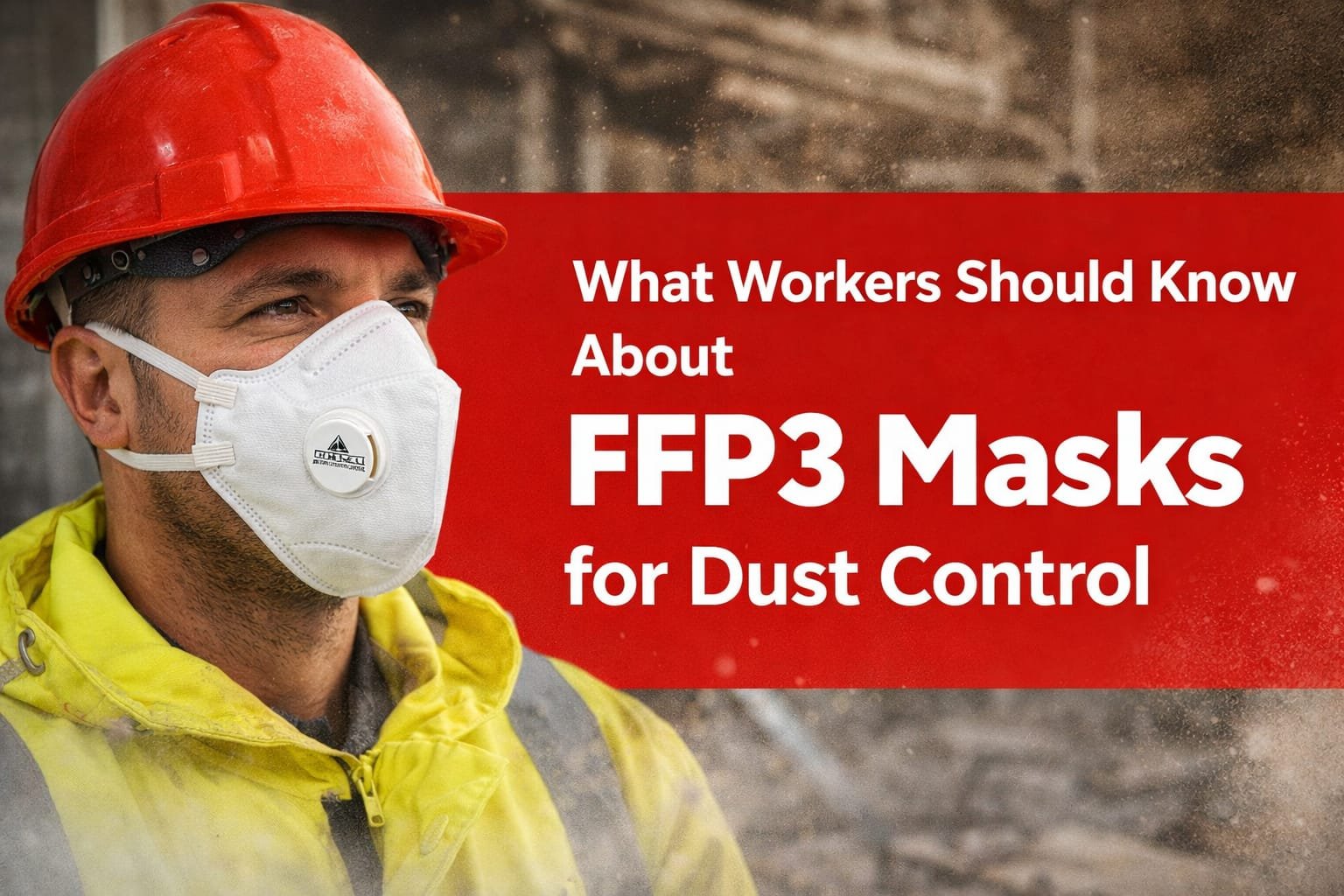
Introduction
The dust in the workplace might look harmless, but inhaling it daily may lead to severe health conditions. FFP3 dust masks are made to safeguard workers against the harmful dust particles in the construction, manufacturing, and industrial settings.
Knowing the mechanisms of FFP3 masks and the proper time to use them can keep workers safe. It also ensures breathing clean air and minimizing the health risks in the long term.
What is an FFP3 Mask and How does it work?
An FFP3 mask is a respirator face mask that allows respiratory protection and filters 99% of the air particles. These mostly contain toxic dusts, viruses, bacteria, aerosols, and radioactive materials. It is significant in an environment where there is a risk, primarily in the medical or other sectors.
How Do FFP3 Masks Work?
- Block 99% of airborne dust, fine dust, fumes, and aerosols.
- Install a series of high-efficiency filters.
- Make close contact with the face to eliminate air leakage.
- Keep the air clean and block the polluted air.
- Lesson exposure to silica, asbestos, toxic dust, and biological particles.
- Created to ensure easy breathing with limited airflow.
- Meet EN 149 safety standards for maximum respiratory protection
Types of Dust That Require FFP3 Protection
There are different types of dust that can harm human health and create long lasting impacts on the lungs.
Fine Dust
Fine dusts are minute in size and can be inhaled deep into the lungs. It occurs in sanding, cutting, grinding, and drilling. Due to the invisibility of these particles and their ability to stay in the air, FFP3 dust masks are a single solution to acquire adequate protection.
Hazardous Dust
Hazardous dust contains toxic, irritating, or harmful materials. These have adverse effects on your health when inhaled. It mainly contains silica dust, metal dust, cement dust, and chemical powders. When individuals are exposed to them over a long period, they may cause severe lung diseases, and thus FFP3 protection is required to ensure health.
Asbestos-Related Dust
Airborne asbestos particles are most harmful. Even a small amount can lead to serious health conditions such as asbestosis and lung cancer. Due to their high filtration efficiency, FFP3 masks with asbestos control are necessary to counter the effects of these dusts.
Why Dust Control Matters for Worker Health
- Fine dust particles may lead to asthma, bronchitis, silicosis, and other illnesses.
- The constant exposure to harmful dust can cause irreversible lung damage. It also raises the risk of occupational illnesses.
- Good health of workers ensures they are comfortable, concentrated, and productive in the workplace.
- Managing dust will ensure cleanliness and safety for the workers.
- It ensures protection against fine and toxic dust.
- It prevents coughing, throat irritation, eye problems, and difficulty in breathing.
- It helps in ensuring health and safety guidelines.
- Lowers the medical expenditures of employers in the long run.
When Should Workers Use an FFP3 Dust Mask?
The health of workers is the core to ensuring uninterrupted work. Scenarios that require to use FFP3 disposable dust masks:
- Working in enclosed or poorly ventilated areas
- Dust levels are high or uncontrolled
- Working with toxic materials such as asbestos or silica
- Dust particles are fine or hazardous
Who Uses FFP3 Masks for Dust Control?
- Construction & demolition workers, since such sites produce high volumes of fine and harmful dust.
- Workers who deal with asbestos removal, inspection, and renovation can use a special ffp3 mask with asbestos control.
- Mechanical maintenance workers, chemical processing workers, and metalworkers.
- The workers in the agricultural sector are exposed to dust from soil, grain, animal feed, and fertilizers.
FFP3 Masks vs Standard Disposable Dust Masks
| Feature | FFP3 Masks | Standard Disposable Dust Masks |
| Protection Level | Very high (up to 99%+ particle filtration) | Basic protection |
| Filtration Capability | Filters fine particles, aerosols, bacteria, and viruses | Filters larger, non-hazardous dust particles |
| Fit & Seal | Tight, secure seal around nose and mouth | Loose fit with gaps |
| Certified Standard | EN 149 (European safety standard) | Minimal or basic standards |
| Suitable For | Healthcare, asbestos, silica dust, hazardous environments | Light dust, DIY tasks, sweeping |
| Effectiveness Against Viruses | Highly effective | Not effective |
| Breathability | Lower due to high filtration | Higher but with less protection |
| Comfort for Long Use | Designed for extended wear with proper fit | Comfortable for short-term use only |
| Leakage Risk | Very low when worn correctly | High due to poor seal |
| Cost | Higher | Low |
| Recommended Usage | High-risk or regulated work environments | Low-risk, short-duration tasks |
When to Use a Half-Face Mask Instead of a Disposable FFP3 Mask?
- A half-face maskcan be used when workers need long-term or daily respiratory protection
- For tasks with extended exposure to dust, fumes, or vapours
- When replaceable filters are more cost-effective than single-use masks
- If a more secure and adjustable face seal is required
- When higher comfort is needed during long shifts
- For environments where consistent protection levels must be maintained
- When workers need protection from specific gases or chemical vapours
How to Select the Right FFP3 Mask for Dust Control
● Confirm Certification
Use a certified mask to EN 149:2001 + A1:2009 (FFP3 standard). Certification guarantees actual security and filtration (99%).
● Check Fit and Seal Quality
Find ffp3 disposable dust masks that have adjustable nose clips and straps on the head. It is so that the narrow seal does not allow entry of unfiltered air over the edges.
● Match Mask to Dust Type
One should always choose a mask depending on the type of dust because it demands masks with better filters or other comfort aspects. Use an FFP3 mask of high efficiency when dealing with fine dust, silica, concrete, wood, or metal particles.
● Prioritize Comfort for Long Wear
Find more comfortable padding, breathable, and properly designed masks. During dusty work, comfortable masks are more convenient to use all the time.
● Consider Exhalation Valves
Masks with valves make breathing easier by releasing heat and moisture. It is also required to ensure that valves are fine for dust control situations, but not suitable where contamination must be contained.
● Ensure Compatibility With Other PPE
It is necessary to ensure that the mask fits well with goggles, helmets, and hearing protection. But it should not conflict with other safety equipment.
● Select Reputable Brands & Suppliers
Trusted brands adhere to quality standards and provide specifications. So, select masks from a particular brand and avoid cheap masks without clear certification or product details.
● Inspect Durability & Materials
Durable straps and strong construction improve performance and longevity. High-quality filter material maintains protection even in heavy dust conditions.
● Know When to Replace the Mask
Change FFP3 masks when breathing becomes hard, or the mask is dirty, or heavily exposed. A user should always consider the instructions given by the manufacturer on the maximum wear time.
● Use a Fit Test When Possible
A fit test ensures the mask provides a secure seal to the wearer’s face. This is specifically important for industrial or high‑risk environments.
Final Takeaway
Dust exposure cannot be ignored. Using an ideal FFP3 dust mask is the most effective way of protecting workers against health risks. Workplaces ensure safe working environments by understanding dust types in the workplace, adopting the best practices, and wearing the right protective equipment.
FAQs
When should workers use an FFP3 dust mask instead of a standard dust mask?
In very fine or hazardous environments with dust that is very fine, workers must use an FFP3 dust mask. This involves activities in which the regular dust masks are not sufficient.
Can we use FFP3 masks in asbestos dust?
Yes, FFP3 masks can be used against asbestos dust. They provide maximum filtration and are usually used when doing asbestos removal and work in the handling of asbestos.
What types of jobs need FFP3 masks to control dust?
Works like construction, demolition operations, asbestos removals, metal grinding, woodworking, pharmaceutical production, and mining entail the use of FFP3 masks because of the high levels of dust exposure.
Are FFP3 masks effective against hazardous and fine dust particles?
Yes, FFP3 masks are made in order to filter very fine and dangerous dust particles and offer a high level of respiratory protection to the workers.
What are the mistakes that workers should not make when using dust masks?
Employees are not supposed to wear the wrong mask to the job, an improperly fitted mask, or disposable masks, and taking the mask off in dusty areas.
Which FFP3 mask is appropriate for workers?
The workers ought to take into account the direction of dust, exposure, working time, and the fit of the mask. The important key to protection is to have a well-fitting and comfortable certified FFP3 mask.
