


Introduction
In addition to the rise in the use of digital onboarding by banks, financial technology companies, e-commerce sites, and other organizations, identity fraud has also taken a step forward. Passwords, scanned IDs, and even still images are inadequate when it comes to ensuring the liveness of a user and preventing spoofing. This is the reason why liveness detection is now one of the key aspects of any modern identity verification procedure.
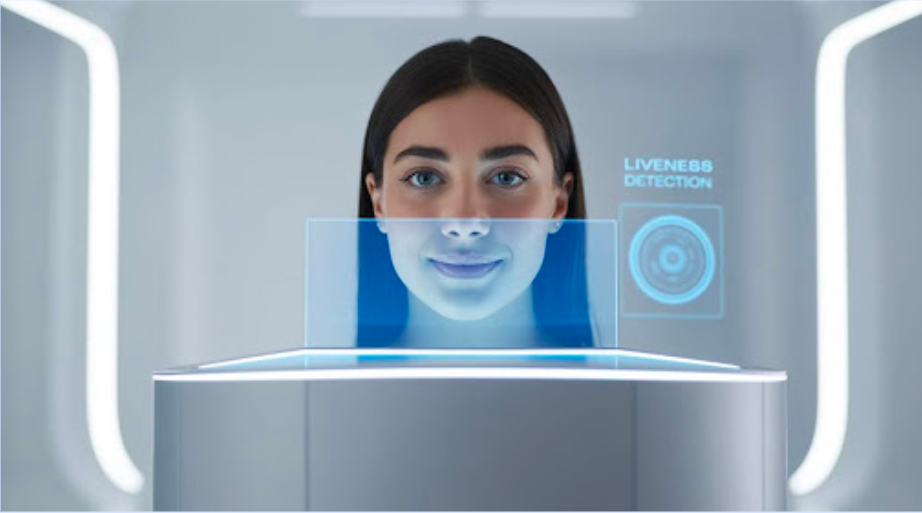
Liveness detection is a process that ensures that the person is indeed present live and not through a photograph, video recording, mask, or face generated using artificial intelligence. As remote verification becomes increasingly important, liveness detection software is a crucial tool in protecting companies from identity fraud.
Understanding Liveness Detection
The biometric authentication method, which helps verify whether the face image or video is really that of a living person, is known as liveness detection. This process is mainly employed in facial recognition systems where the task is to discern a real person from their spoofs.
Unlike face recognition, liveness detection involves analysis of biological and behavioral cues, including eye movements, micro-movements on the face, depth information, and skin texture. These cues will assist the system in separating real from fake input data.
In addition to facial matching, the technology will take into account biological and behavior-based data, such as eye movement, micro-expressions, skin textures, and depth cues. In the process of analyzing input data, all this will come in handy and assist in distinguishing whether it is genuine or artificial.
Working of Liveness Detection Software.Working of Liveness Detection Software.
To work, the Liveness Detection Software needs AI, Computer Vision, and machine learning algorithms to analyze user input data during authentication procedures. Two operating modes can be chosen, depending on how secure the transaction needs to be.
Active Liveness Detection requires users to perform some actions, which may include blinking, smiling, or moving their heads. These actions are analyzed in real-time for verification of the presence of a living human being to prevent cheating on the system using still pictures or videos of people.
Passive liveness detection operates without the need for any user participation in the process. It analyzes reflections on faces, evenness of facial texture, and facial recognition in selfies or video recordings. It’s an excellent tool for a more enjoyable user experience without reducing security standards.
The Liveness Detection in Digital Security is crucial. Liveness Detection in Digital Security is of great importance.
In light of deepfake creation, identity generated using AI, and advanced spoofing, identity fraud is now a lot more complicated than before. The problem is that, using high-resolution images or videos created synthetically, cybercriminals can bypass existing verification processes, which do not provide adequate security against such attempts.
In the absence of liveness detection, there are some possible threats that may jeopardize the company, including account creation, financial fraud, identity fraud, and violation of guidelines.
Liveness detection software offers several advantages. There are several benefits to Liveness Detection Software.
Another significant advantage of liveness detection software is that it enables organizations to improve security levels without affecting the user experience. This technology provides comprehensive protection against various attacks and ensures a prompt and fully automated onboarding procedure.
It eliminates fraud losses and complies with all requirements, such as KYC and AML. At the same time, users will experience faster and more precise identity verification and, therefore, higher satisfaction from using online services.
The second significant advantage of this technology is scalability. Its capacity to handle many verifications at a time makes it an ideal solution for rapidly growing digital enterprises.
Real-World Applications
This technology is widely used in all sectors where identity verification plays a key role. Financial institutions and fintech companies use liveness detection technologies to protect themselves from fraudulent activity or any unauthorized actions while creating new customer accounts or verifying transactions.
Wallet creation on cryptocurrencies and compliance with regulations are possible due to liveness detection technology. In addition, in e-commerce, the technology can be applied to prevent fake accounts and transactions.
Challenges and Limitations
Despite the efficiency of liveness detection, there are several challenges that exist. Along with the advancements in deepfake technologies, new ways to bypass liveness detection emerge. Thus, it is critical to constantly upgrade detection software.
This may occur due to the accuracy of the camera used as well as lighting; this leads to the denial of access to some people without any legitimate cause. The problem of privacy arises here as well since proper protection of biometric information is vital.
To address these challenges, modern solutions involve the implementation of liveness detection technology along with other types of verification, including behavioral biometrics and AI-based risk scores.
Liveness Detection Technology’s future is bright.
Liveness Detection Software: The Future Depends On The Advancements In The Fields Of Artificial Intelligence and Biometric Security. The development of advanced systems aimed at the identification of deepfake images is taking place now.
Innovations include 3D facial mapping, infrared detection, and continuous authentication, which involve verifying the users’ credentials throughout the session and not only at the start. The multi-modal biometric systems involving facial recognition and other kinds of verifications, such as voice recognition and behavioral recognition, have also become common.
The rise in the digitization of the ecosystem would also mean that liveness detection would continue to remain a very crucial component of trusted identity verification.
Conclusion
In the current digital era, liveness detection has become a very necessary component of digital security protocols. Liveness detection will prevent organizations from becoming victims of identity fraud, while at the same time making users trust the organization since they know that a live person is available for verification.
On the other hand, the liveness detection system is also developing with the help of artificial intelligence in the verification process, which has made the process highly efficient and secure.
