


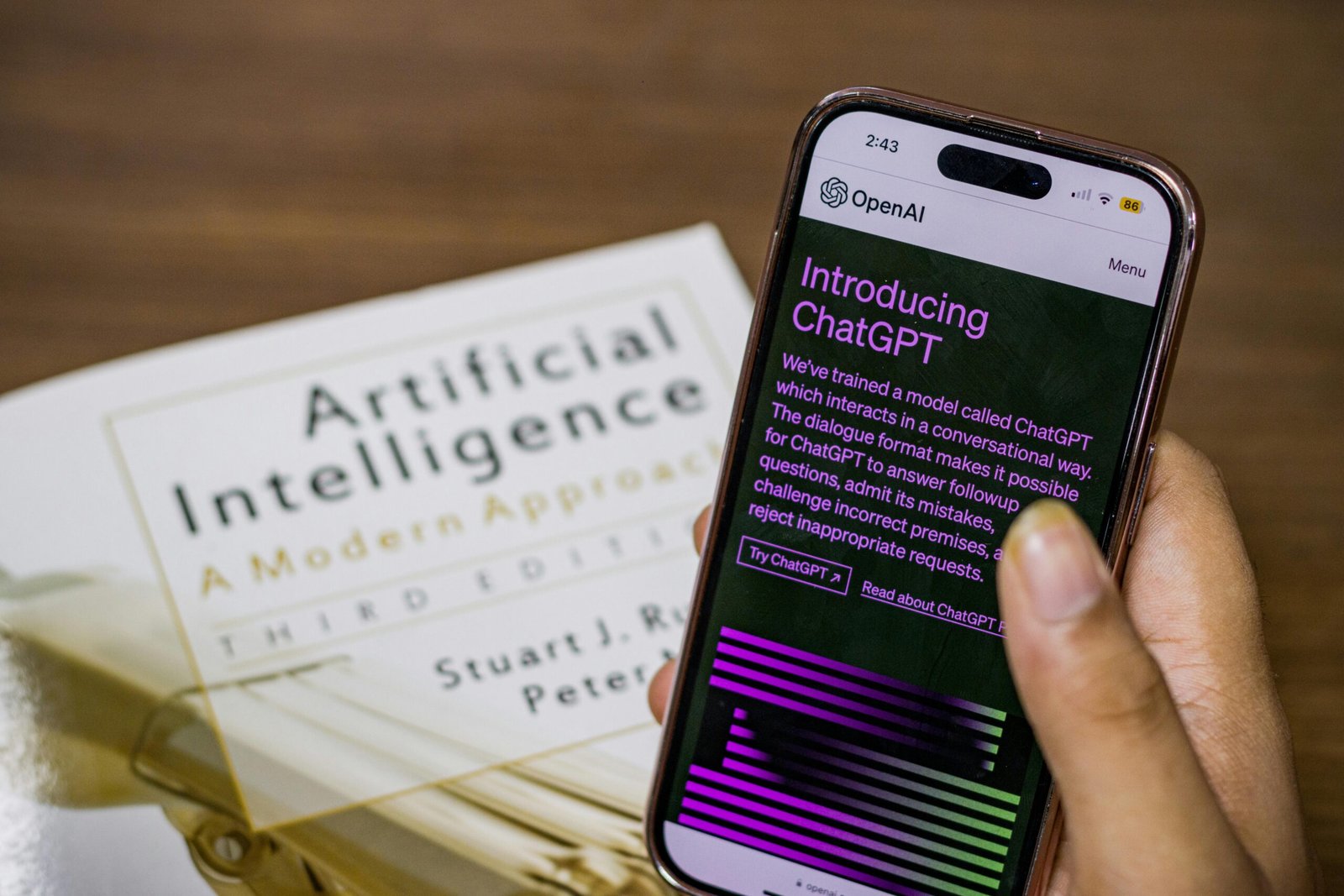
It’s 2026, and the digital landscape looks vastly different than it did just a few years ago. We’ve moved past the initial “wow” factor of generative AI and straight into a sophisticated, somewhat exhausting “arms race.” On one side, we have incredibly powerful LLMs (Large Language Models) that can draft a 2,000-word essay in seconds. On the other, we have increasingly aggressive AI detectors like GPTZero, Originality.ai, and Turnitin’s latest “Integrity AI” modules.
For students, content creators, and especially English as a Second Language (ESL) writers, this creates a massive problem. You might use AI for legitimate help—brainstorming, structuring, or refining grammar—only to find your work flagged as “robotic” or “fraudulent.”
The solution isn’t to stop using AI; it’s to learn the art of the “stealth edit.” In this guide, we’ll explore how to humanize AI text and leverage the power of undetectable AI to ensure your voice is heard without being silenced by an algorithm.
Why “Raw” AI is Getting Caught (The Perplexity Problem)
Before you can fix the problem, you have to understand the “fingerprint” AI leaves behind. Detectors don’t look for facts; they look for mathematical patterns. Most AI models are built on the principle of probability—choosing the most likely next word in a sequence.
This results in two tell-tale signs:
- Low Perplexity:The writing is too predictable. There are no “surprising” word choices.
- Low Burstiness:The sentences are all roughly the same length and rhythm. It’s a monotonous “thump-thump-thump” that screams machine-generated.
When you fail to humanize AI output, you’re essentially handing in a statistical average. To get past the gatekeepers, we need to break those patterns and inject “human chaos” back into the prose.
The Student’s Shield: Avoiding the “False Positive” Trap
For the modern student, the stakes couldn’t be higher. A false AI detection flag can lead to failed assignments or even disciplinary action. The irony is that many high-achieving students naturally write with a formal, structured tone that detectors often mistake for AI.
How to Stay Safe:
To achieve undetectable AI status in your assignments, you can’t just copy-paste. You need a “hybrid” workflow:
- Use AI for the Skeleton:Let AI build your outline and provide the core research.
- The “Humanizer” Pass:Run your draft through a professional tool designed to humanize AI. These tools go beyond simple word swapping; they rearrange syntax and inject the “burstiness” that detectors look for.
- Cite Like a Human:AI is notoriously bad at specific, real-time citations. Manually adding your footnotes and specific quotes from class readings is the fastest way to prove a human was at the helm.
The ESL Advantage: Leveling the Global Playing Field
Perhaps no group benefits more from the ability to humanize AI than English as a Second Language (ESL) speakers. For years, non-native writers have struggled with the subtle nuances of English “flow.” AI has been a godsend for these writers, allowing them to compete on a global stage.
However, many ESL writers find that their “perfected” English—the kind they get after using a grammar checker or AI—is precisely what triggers AI detectors. It sounds too correct, too clinical.
Empowerment through Undetectable AI
By using tools to create undetectable AI content, ESL writers can:
- Preserve Their Unique Voice:Professional humanizers allow you to set a “tone,” ensuring that the final output sounds like a professional human, not a standard dictionary.
- Bridge the Cultural Gap:Humanizing tools often inject idioms and conversational transitions that are difficult for non-native speakers to master but essential for passing as a “human” writer.
For a student in Beijing or a freelancer in Berlin, humanizing AI isn’t about “cheating”—it’s about linguistic equity.
Content Creators: Why “Undetectable” Means “Profitable”
If you’re a blogger or an SEO specialist in 2026, you know that Google has moved toward “Helpful Content.” While Google doesn’t explicitly penalize AI, it does reward “Experience, Expertise, Authoritativeness, and Trustworthiness” (E-E-A-T).
Raw AI content is rarely “authoritative.” It feels hollow. To rank on the first page, your content needs to be undetectable AI—not just to satisfy the bots, but to satisfy the human readers who decide your “dwell time” and bounce rates.
The Content Creator’s Toolkit:
- Inject Personal Experience:AI doesn’t have a life. It hasn’t “tried this product” or “visited this city.” Adding a sentence like, “When I first tried this in 2024, I was skeptical because…” instantly humanizes the piece.
- The Style Shift:Use an undetectable AI humanizer to vary your sentence structures. A punchy, one-sentence paragraph can do wonders for engagement.
- Fact-Checking as a Signature:AI still “hallucinates.” A creator who manually verifies and adds a unique, updated 2026 statistic is doing something a bot can’t easily replicate.
How to Humanize AI: A Practical 3-Step Strategy
If you want your work to be truly undetectable AI, you need a system. Here is the workflow used by professional SEO writers:
Step 1: The “Messy” Draft
Start with your AI tool (ChatGPT, Claude, etc.), but don’t ask for a “final article.” Ask for a “conversational brain dump.” The less formal the initial AI output, the easier it is to humanize later.
Step 2: The Stealth Transformation
Take that draft and put it through a specialized humanize AI platform. These platforms are specifically tuned to defeat 2026 detection logic. They use advanced NLP (Natural Language Processing) to ensure the text has the “flavor” of human spontaneity.
Step 3: The “Me” Test
Read the final result out loud.
- Does it sound like you?
- Is there a sentence that’s a bit too long? Good.
- Is there a word that’s slightly informal? Even better.
Humans aren’t perfect. If your writing is “perfect,” it’s suspicious. The goal of undetectable AI is to embrace the beautiful imperfections of human speech.
The Ethical Question: Is This “Cheating”?
The conversation around AI is shifting. In 2026, we’ve realized that AI is just a more advanced version of the “spell check” or “thesaurus.” Using a tool to humanize AI isn’t about deceiving people; it’s about optimizing communication.
If a student has a brilliant idea but struggles with structural organization, using AI to help—and then humanizing it to avoid a false plagiarism charge—is simply using a modern tool for a modern education. If a creator uses AI to handle the “drudge work” of a 3,000-word guide so they can focus on the creative strategy, that’s just efficiency.
Conclusion: The Future is Hybrid
The “Bot vs. Detector” war isn’t going away. As detectors get smarter, the tools to humanize AI will also get more sophisticated. But the winner of this race won’t be the person who uses the most AI; it will be the person who knows how to blend AI efficiency with human soul.
Whether you are a student trying to protect your academic future, an ESL writer finding your voice in a new language, or a creator building a brand, the goal is the same: Be undetectable. Not because you have something to hide, but because you have something worth saying—and you don’t want a “robotic” label to get in the way of your message.
