


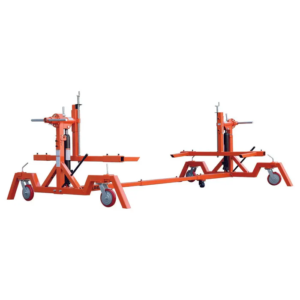
In the United States, vehicle restoration, repair preparation, and bodywork continue to play an important role across workshops, transport service facilities, training environments, and specialty automotive businesses. For warehouse managers, equipment operators, logistics professionals, and industrial procurement teams, efficiency in vehicle handling is not only about moving parts from one place to another. It is also about how safely and effectively a vehicle body can be positioned during inspection, repair, cleaning, and finishing work. That is where a car automotive rotisserie becomes important.
A Car Automotive Rotisserie is designed to hold and rotate a vehicle shell or frame so technicians can access all sides of the structure more easily. In practical terms, that supports underside work, rust repair, welding, coating, and detailed cleaning without forcing workers into poor positions. In a market where labour time, shop safety, and restoration quality all matter, that makes the equipment highly relevant.
Why This Equipment Matters in the United States
Across the United States, automotive restoration ranges from private workshop projects to commercial rebuild operations. Older vehicles, fleet rebuilds, collector cars, and damaged body shells often require full access to the underbody and structural sections. Without a rotisserie, technicians may rely on stands, lifts, or repeated repositioning, which can slow work and increase risk. A dedicated rotating support system helps create a more controlled process for demanding repair tasks.
Common Methods and Use Cases
Full Access for Restoration Work
One of the main uses is full-body restoration. Rotating the vehicle body gives better access to floor pans, rocker panels, frame sections, and wheel wells. This helps technicians inspect damage, remove corrosion, and complete welding or surface preparation with more control.
Support for Cleaning and Coating
Rotisseries are also useful for blasting, sealing, priming, and painting lower or hidden sections. Instead of working overhead or from difficult angles, operators can rotate the shell to a safer working position.
Why Efficiency, Safety, and Productivity Matter
In vehicle restoration, working position affects both speed and quality. Reaching awkward angles can slow every stage of repair and increase physical strain. A rotisserie improves workflow by reducing repositioning time and giving technicians more direct access to the repair area.
- Better access to the underside and structural sections
- Reduced need for repeated manual repositioning
- Safer working posture during welding and repair
- More consistent preparation and finishing quality
Technical Basics and Capability Considerations
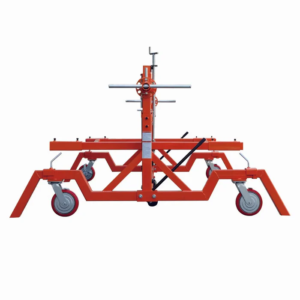
Buyers should review weight capacity, adjustment range, mobility, locking method, and lift control. In this equipment class, a 4000 pound rating, dual hydraulic cylinders, and adjustable working length are important because vehicle shells vary widely in size and balance. Locking casters and stabilizer points also affect how safely the unit can be positioned and secured during work.
Factors That Affect Performance and Effectiveness
Real performance depends on the condition and weight distribution of the vehicle body, correct mounting location, floor level, operator experience, and inspection discipline. Even a well-designed rotisserie can become difficult to use if the shell is mounted off-centre or if the work area does not provide stable footing and clearance.
Safety Considerations and Best Practices
- Confirm the vehicle body weight before mounting
- Use approved attachment points and secure all fasteners
- Keep the unit on a level floor with clear working space
- Lock casters and rotation points before repair work begins
- Inspect hydraulic components and mounting arms regularly
Safe use also depends on training. Workers should understand load balance, rotation control, and emergency stop procedures before operating TMG Industrial equipment.
Equipment, Accessories, Advantages, and Limits
Common related items include engine hoists, body dollies, welding tools, measuring equipment, protective covers, and shop lighting. The main advantages are full-body access, better ergonomics, and stronger repair visibility. The main limits are floor space requirements, setup time, and the need for careful load matching and body mounting.
A realistic example is a United States restoration shop rebuilding an older vehicle body with heavy corrosion under the floor structure. Using a rotisserie allows the technicians to rotate the shell for cleaning, cutting, welding, and coating in a more controlled sequence, which helps improve both safety and repair consistency.
Conclusion
A car automotive rotisserie remains an important tool for restoration and repair work where vehicle access, stability, and technician safety matter. Its value comes from better positioning, improved workflow, and more effective control over demanding repair tasks. Looking ahead, United States workshops are likely to place more value on equipment that supports safer handling, better restoration quality, and more efficient use of skilled labour.
