


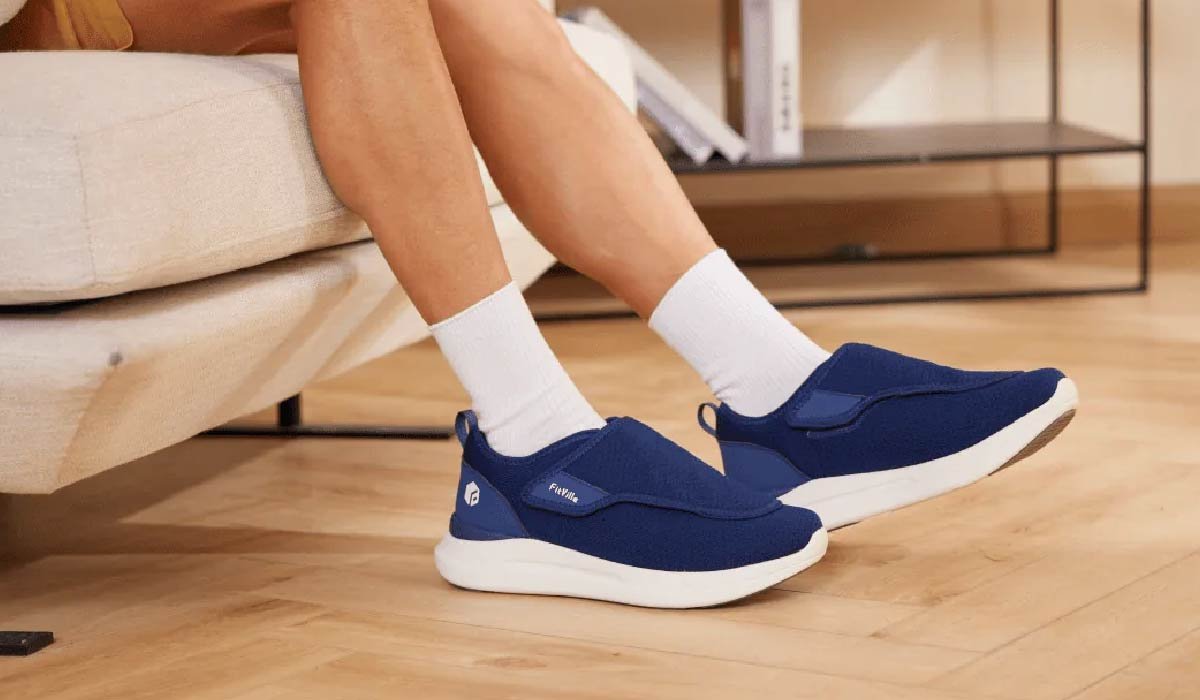
Living with diabetic neuropathy changes the way you think about your feet.
Things that once felt minor, a tight trainer, a rough seam, a long day on hard pavements, can start to matter far more than they used to. Some people notice tingling. Others feel burning, numbness, sharp discomfort, or a strange mix of all three. Many simply realise that ordinary shoes no longer feel trustworthy.
That is why footwear stops being a style decision and becomes part of everyday self-care.
For men in the UK dealing with diabetic neuropathy, the right pair of shoes can help reduce pressure, lower friction, improve daily comfort, and make walking feel safer and more manageable. The wrong pair can do the opposite. It can create rubbing you do not notice quickly enough, crowd the toes, irritate sensitive areas, and turn routine movement into a source of stress.
This is exactly why more people now search for the best shoes for diabetics with neuropathy uk instead of relying on standard trainers that were never designed with diabetic foot needs in mind.
Why diabetic neuropathy changes everything about shoe choice
Neuropathy affects sensation.
That is the heart of the issue. When feeling in the feet changes, small problems can be harder to catch early. A seam rubbing against the little toe, pressure across the top of the foot, or a toe box that feels slightly tight may not register the way it once did. By the time the discomfort becomes obvious, the irritation may already have been building for hours.
That makes shoe fit more important, not less.
A good shoe for diabetic neuropathy should help protect the foot from avoidable stress. It should reduce rubbing, allow room for swelling or shape changes, and support the foot without squeezing it. It should feel calm and dependable, not aggressive or restrictive.
This matters in the UK especially because day-to-day life often means a lot of walking. High streets, stations, pavements, work commutes, shopping runs, school pickups, and wet-weather walking all put regular pressure on the feet. If your shoes are wrong, you feel it. If neuropathy is involved, the risks are harder to ignore.
Why ordinary footwear often falls short
Most mainstream shoes are built for general comfort and appearance, not diabetic protection.
They may look soft and supportive online, but still have narrow fronts, shallow uppers, harsh seams, rigid panels, or a shape that presses too hard on the wrong parts of the foot. Many are also made to feel snug because snug is often marketed as secure.
That is not always helpful for diabetic feet.
A narrow trainer may crowd the toes. A shallow shoe may press on the top of the foot. A rough inner lining may create friction. A soft but unstable sole may feel pleasant at first, then tiring after an hour outdoors. These problems are common in everyday shoes, and they become more serious when neuropathy is part of the picture.
What feels manageable to one person may be risky to someone who cannot always feel early warning signs properly.
What the right footwear does differently
A better shoe is not just softer. It is smarter in how it handles pressure.
It gives the foot enough room to sit naturally. It reduces contact points that can rub over time. It offers support without forcing the foot into a narrow shape. It helps distribute weight more evenly, which matters when walking on pavements, standing for long periods, or moving through a full day at work.
The best options also tend to feel more predictable.
They do not shift too much. They do not squeeze unexpectedly as the day goes on. They do not create hot spots near the bunion area, the little toe, or the heel. That kind of consistency matters when foot comfort is already less straightforward than it used to be.
That is one reason many people specifically look for the best shoes for diabetics with neuropathy uk rather than taking chances on generic walking shoes.
Room in the toe box is a major advantage
A cramped toe box is bad for almost anyone. For someone with diabetic neuropathy, it is even worse.
When the front of the shoe narrows too sharply, the toes get crowded together and the forefoot sits under constant pressure. This can lead to rubbing, irritation, and stress that builds quietly over time. If you also deal with bunions, swelling, hammertoes, or a naturally wider forefoot, the problem becomes even more obvious.
A roomier toe box gives the front of the foot breathing space.
That does not mean the shoe should feel sloppy. It means the toes should be able to rest in a natural position without pressing into each other or into the side walls of the shoe. A better shape can make walking feel steadier and reduce the kind of low-level friction that becomes a real issue later.
Smooth interiors matter more than people realise
Many shoppers focus on the outer sole and ignore what is happening inside the shoe.
That is a mistake.
For diabetic neuropathy, interior comfort is one of the biggest deciding factors. Rough stitching, internal seams, stiff edge construction, and abrasive lining materials can all create avoidable irritation. These are the small details that might not show up in a product photo but become very real after a few hours of wear.
A good diabetic shoe usually feels gentler inside.
The lining is smoother. The pressure points are fewer. The collar and tongue feel less harsh. The shoe does not seem to fight the foot. That kind of design is not just about first-impression comfort. It is about lowering daily wear stress in ways that matter over time.
Depth and adjustability make daily life easier
Feet do not stay exactly the same all day.
They swell. They warm up. They respond to activity, weather, and long hours on the move. This is why extra depth and adjustable fit are so useful. A shoe that fits perfectly for ten minutes in the morning may feel much tighter by late afternoon if it has no flexibility in the upper or not enough room inside.
A deeper shoe gives the foot more vertical space.
That helps if you have swelling, higher insteps, or need extra room for insoles. Adjustable closures matter too because they allow you to fine-tune the fit rather than accept a one-position squeeze. In real life, especially in UK conditions where people may be in and out of shoes, wearing thicker socks in colder months, or walking across mixed surfaces all day, that flexibility makes a difference.
Cushioning should protect, not destabilise
A lot of shoes confuse softness with support.
They feel plush when you first step in, but after a while the foot starts moving around too much. That can increase rubbing instead of reducing it. For diabetic neuropathy, that is not ideal. You want cushioning that takes the sting out of hard surfaces without making the foot feel loose or unstable.
A good sole absorbs impact in a controlled way.
It should soften each step on pavements and indoor floors while still keeping the foot steady. The best shoe is not the softest one in the shop. It is the one that makes walking feel less jarring and more secure at the same time.
Stability can make walking feel safer again
Neuropathy can make movement feel uncertain, especially if sensation has changed a lot.
That is why stability matters. A shoe with a secure heel, balanced sole, and dependable underfoot feel can make everyday walking feel more confident. It helps the foot stay supported without wobbling or rolling too easily. For men who walk regularly, use public transport, or spend long hours on their feet at work, that steadiness becomes part of daily comfort.
You should not feel like your shoes are adding another variable to manage.
Good footwear should make life simpler. It should let you focus on where you are going, not on whether the shoe is rubbing or slipping in the background.
Why this matters for quality of life, not just foot comfort
The conversation around diabetic footwear often stays too narrow.
Yes, foot protection matters. But the right shoes also affect mood, routine, confidence, and mobility. When your feet feel safer and more supported, everyday tasks feel less draining. A walk to the shops feels easier. Commuting feels more manageable. You are less likely to dread time spent on your feet.
That matters more than people admit.
When foot discomfort becomes constant, it quietly shrinks daily life. People walk less. Stand less. Go out less. They stop trusting their own comfort. Proper footwear helps reverse some of that. It does not cure neuropathy, but it can remove avoidable strain and make movement feel less like a gamble.
That is why choosing the best shoes for diabetics with neuropathy uk is not just about footwear. It is about protecting normal life.
When to rethink the shoes you are wearing now
If your current shoes leave marks on your feet, feel tight by midday, rub at the sides, crowd the toes, or feel unstable on walks, they may not be good enough anymore.
The same applies if you keep removing them for relief the moment you get home, or if your feet feel unusually tired after ordinary daily errands. Those signs matter. They are often the body’s quiet way of saying that the fit, support, or internal construction is working against you.
It is better to change early than wait until a small daily irritation becomes a bigger problem.
Final thoughts
Living with diabetic neuropathy in the UK means paying closer attention to everyday details, and footwear is one of the biggest.
The right shoes can reduce friction, ease pressure, support steadier walking, and help protect feet that need more care than ordinary shoes usually provide. They can make daily movement more comfortable, less stressful, and more predictable. That does not sound dramatic, but in real life it matters a great deal.
A better shoe will not solve every foot issue by itself.
What it can do is remove many of the avoidable problems that poor footwear creates. And when neuropathy is already part of the picture, removing avoidable problems is a smart place to start.
FAQs
What kind of shoes are best for diabetic neuropathy?
Shoes with a roomy toe box, smooth interiors, extra depth, stable cushioning, and a secure but non-tight fit are usually the most helpful.
Should diabetic shoes feel tight for support?
No. They should feel secure, but never tight. A tight shoe can create pressure and rubbing that diabetic feet do not need.
Are ordinary trainers enough for neuropathy?
Sometimes they are not. Many standard trainers are too narrow, too shallow, or too rough inside for feet affected by diabetic neuropathy.
Why does toe box width matter so much?
Because cramped toes create pressure and friction. A wider front helps the foot sit more naturally and lowers rubbing.
When should I get professional foot advice?
If you notice sores, skin changes, swelling that worsens, or persistent irritation, it is wise to speak to a podiatrist, diabetic foot specialist, or GP promptly.
