


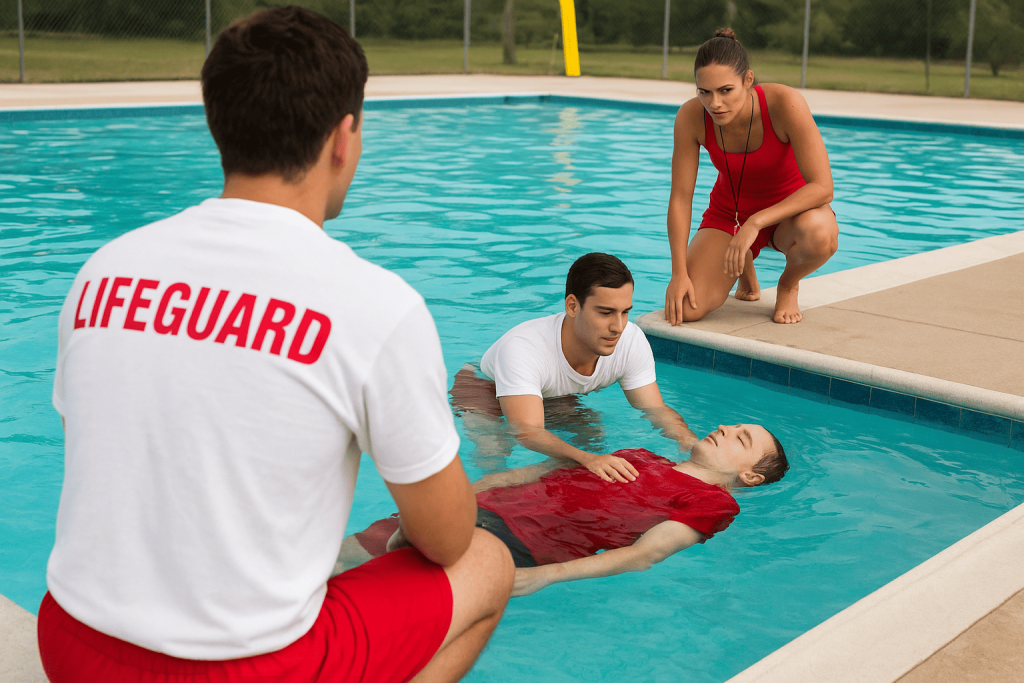
Lifeguard training prepares you to protect lives in high-risk environments. You learn how to prevent accidents, respond to emergencies, and provide immediate care. A lifeguard class provides the mandatory skills to protect swimmers and manage aquatic emergencies. The American Lifeguard Association offers streamlined training for individuals seeking immediate employment. You learn to recognize danger, perform rescues, and provide medical care. This training transforms you into a professional first responder.
Why Lifeguard Training Matters
Drowning remains a leading cause of accidental death worldwide. Supervised facilities reduce this risk by over 90 percent.
Your role as a trained lifeguard:
- Spot danger early
- Act within seconds
- Perform rescues with control
- Provide CPR and first aid
Lifeguard Training Requirements
It is not only about rescue skills, it also builds responsibilities and discipline.
You must pass a swim test before enrollment.
Basic requirements:
- Minimum age: 15 years
- Swim 300 yards without stopping
- Use front crawl or breaststroke
- Tread water for 2 minutes using legs only
- Retrieve a 10-pound weight from 7 to 10 feet depth
Core Skills You Learn in Lifeguard Training
The American Lifeguard Association focuses on practical skills you use on the job.
Water Rescue Skills
You learn how to handle different emergency types.
- Active victim rescue using front and rear approach
- Passive victim recovery from underwater
- Surface dives and quick retrieval
- Spinal injury stabilization using head splint
You practice each drill until your movements become automatic.
CPR and AED Training
You train for cardiac emergencies.
- Perform chest compressions at 100 to 120 per minute
- Maintain airway and breathing support
- Use an AED safely
- Respond to adult, child, and infant cases
Fast response improves survival rates within minutes.
First Aid Skills
You manage injuries on deck and in water.
- Control bleeding with pressure or bandaging
- Treat heat stroke and dehydration
- Handle fractures and allergic reactions
- Recognize stroke symptoms
These skills prepare you for daily incidents at aquatic facilities.
Process of Getting Lifeguard Certification
1. Enroll in a training program
First, you need to enroll in a professional training program where you learn the basics of water safety and rescue techniques.
2. Complete theory lessons
During theory sessions, students learn about safety rules and basic techniques.
3. Pass practical tests
These classes include different types of training. This training prepares students for real-life water emergencies. Practical sessions give students experience in swimming pools.
4. Demonstrate CPR and rescue skills
In this session they practice rescue techniques, CPR, and first aid. They become professional rescue responders under the guidance of experienced instructors. Instructors help students to understand the right way to handle emergencies. They also give them tips to improve their skills.
5. Receive certification
After completing this training, students receive a certificate.
Lifeguard Training Equipment
You train with professional tools used in real rescues.
- Rescue tube supports both you and the victim
- Whistle signals alerts and commands
- Pocket mask protects during rescue breathing
- Bag valve mask supports oxygen delivery
- Backboard stabilizes spinal injuries
You learn to handle equipment under stress.
Lifeguard Training Schedule
Most courses follow a 3-day structure.
Day 1
Focus on swimming skills and water entries
Practice stride jump and compact jump
Day 2
Perform rescue drills
Learn victim carries and removals
Day 3
Practice CPR and first aid scenarios
Complete written and practical exams
You must score at least 80 percent to pass.
American Lifeguard Association
Choosing the right program affects your timeline and job options.
American Lifeguard Association:
- Fast-track certification
- Online theory modules
- Immediate digital credentials
- Nationwide acceptance
- OSHA-compliant training
Specialized Lifeguard Training
Some facilities require advanced skills.
Waterpark training includes:
- Managing wave pools
- Monitoring slide dispatch timing
- Handling large crowds
- Responding in moving water
These roles often offer higher hourly pay due to increased responsibility.
Tips to Pass Lifeguard Training
You improve your performance with preparation.
- Drink water before training sessions
- Eat a balanced meal before class
- Wear a fitted swimsuit for speed
- Practice breaststroke for endurance
- Study course materials in advance
Small improvements increase your success rate.
Legal Responsibilities
You have a duty to act when on duty.
Your responsibilities:
- Follow trained procedures
- Respond without delay
- Document every incident
- Maintain focus at all times
Job Opportunities After Lifeguard Training
Certified lifeguards work in many environments:
- Public pools
- Private clubs
- Waterparks
- Beaches
- Indoor aquatic centers
Hiring demand increases before summer.
Certification Renewal
An American lifeguard certificate is not valid for a lifetime. It needs to be renewed after a certain period. It also helps lifeguards perform their duties more effectively. It is important to stay updated. Many individuals take refresher training courses to keep the certification active. These courses help them to learn important skills such as CPR, first aid, and rescue techniques. It also gives them a chance to correct mistakes and improve their performance. Regular practice is also very important.
Enroll in Lifeguard Training Today
The American Lifeguard Association provides direct, skill-based training designed for real emergencies.
You gain:
- Practical rescue skills
- Medical response training
- Job-ready certification
Register for a course. Complete your training. Step into a role where your actions protect lives every day.
