


Climbing a Himalayan peak is an unforgettable experience and the final summit push is often the most challenging and rewarding part of the journey.For the climbers venturing on the Mera Peak Climbing, the peak day is exhilarating and physically demanding, as well as breathtaking.
Mera Peak is the tallest trekking peak in Nepal, standing at 6,476 meters (21,247 ft). Determination, preparation and patience are required for one to reach the summit.
Knowing what to expect in the Mera Peak Summit Push can assist the climbers in preparing both mentally and physically. Since the climb startsat midnight to the last steps on the snowy ridge, the summit day is not an easy but amazing one.
The Night Before the Summit Push
Mera Peak Climbing typically starts at an altitude of the High Camp, at about 5,780 meters (18,963 ft). High Camp is perched on a snowy ridge above the Mera Glacier and has magnificent views of the Himalayan Peaks around it.
The night before the summit push is devoted to rest and preparation. The climbers have an early dinner, pack up and put on warm clothes as it is going to be cold. The temperatures up here will be well below the point of freezing, usually to -15°C -25 °C (5°F -13°F).
Guides usually give a pre-trip talk on the route, safety protocols, and speed. Proper food and enough water should be taken since the following day will be a long and physically demanding one. The majority of climbers attempt to sleep early but the excitement and elevation occasionally ensure that they do not get to rest properly.
The Midnight Start
Mera Peak Summit Push will often start early,around 1:00 AM or 2:00 AM. Setting off early in the morning enables the mountain climbers to traverse firmer snow and summit before the weather shifts in the afternoon.
Climbers walk up in the dark, dress in several warm layers, and have a light breakfast. The use of headlamps is necessary as the whole team sets out to climb during the night. The quietness of the mountains and the stars in the sky generates a very special mood when the climbers enter the glacier.
By this time, climbers have crampons and they have been roped to keep them safe. The pace is slow and gradual as the elevation makes all steps heavier.
Climbing the Mera Glacier
The path crosses the Mera Glacier after leaving High Camp at 5,780 meters (18,963 ft). This phase of the ascent is associated with slopes that are not too steep, yet snow and ice are present, and the elevation is such that the trip is physically challenging.
There is a wide and open glacier, and climbers walk in a row behind their guide. The thin air at this height causes breathing to slow down and be deeper. The rhythm should be sustained throughout the Mera Peak Summit Push, as one can be easily exhausted by rushing.
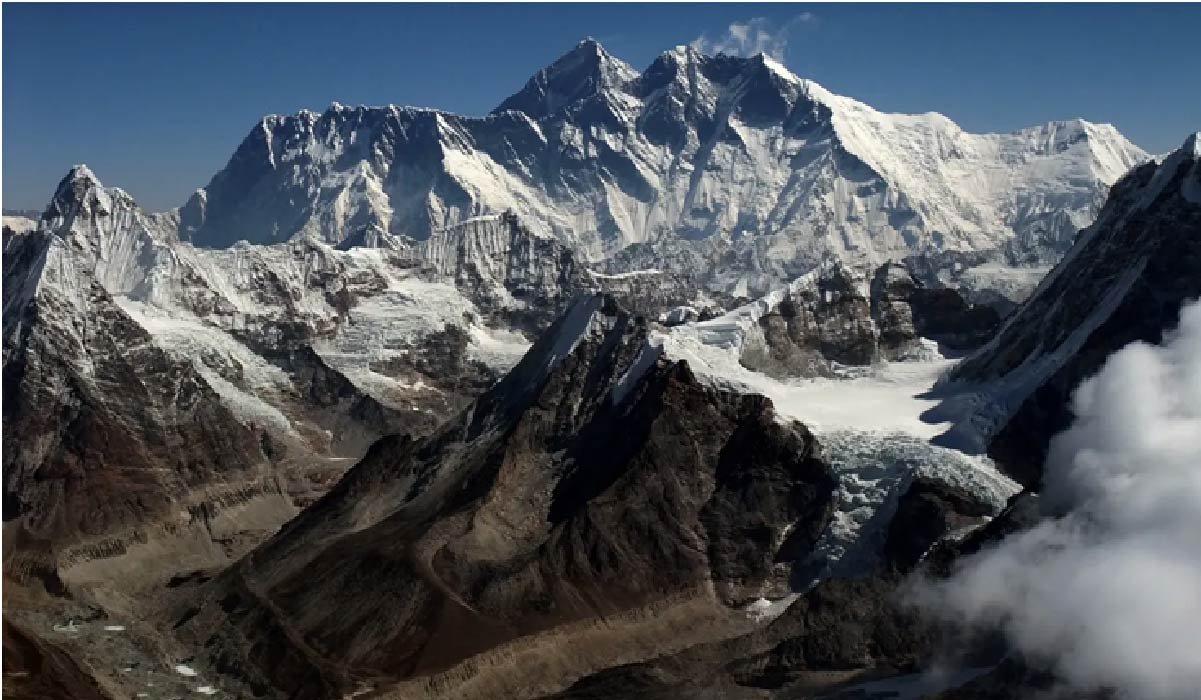
When the team ascends to greater levels, the first ray of dawn starts to shine on the Himalayas. The sight of the sunrise shining on the mountains in the far distance, Everest, Makalu, and Lhotse, are some of the most remarkable experiences in the whole climb.
The Final Ascent to the Summit
The gradient increases as the flowing climbers approach the upper slopes. The last part that leads to the Mera Peak Summit is the snow slope, which might have an angle of about 30 to 40 degrees.
This is the time when the guides secure a rope so that the mountaineers can easily reach the top of the steep region. A jumar or ascender is a device that is used by climbers to keep climbing up the rope consistently.
The elevation is very high, and the mountaineers are now at an altitude of 6,476 meters (21,247 ft). Each step involves hard work, and regular short breaks allow one to conserve some energy.
Even though the climb is physically hard, climbers stay motivated because the excitement of reaching the summit keeps them going.
Reaching the Mera Peak Summit
The summit of the Mera Peak is an emotional experience. Climbers stand on one of the most scenic points in the Himalayas after hours of constant climbing in freezing temperatures.
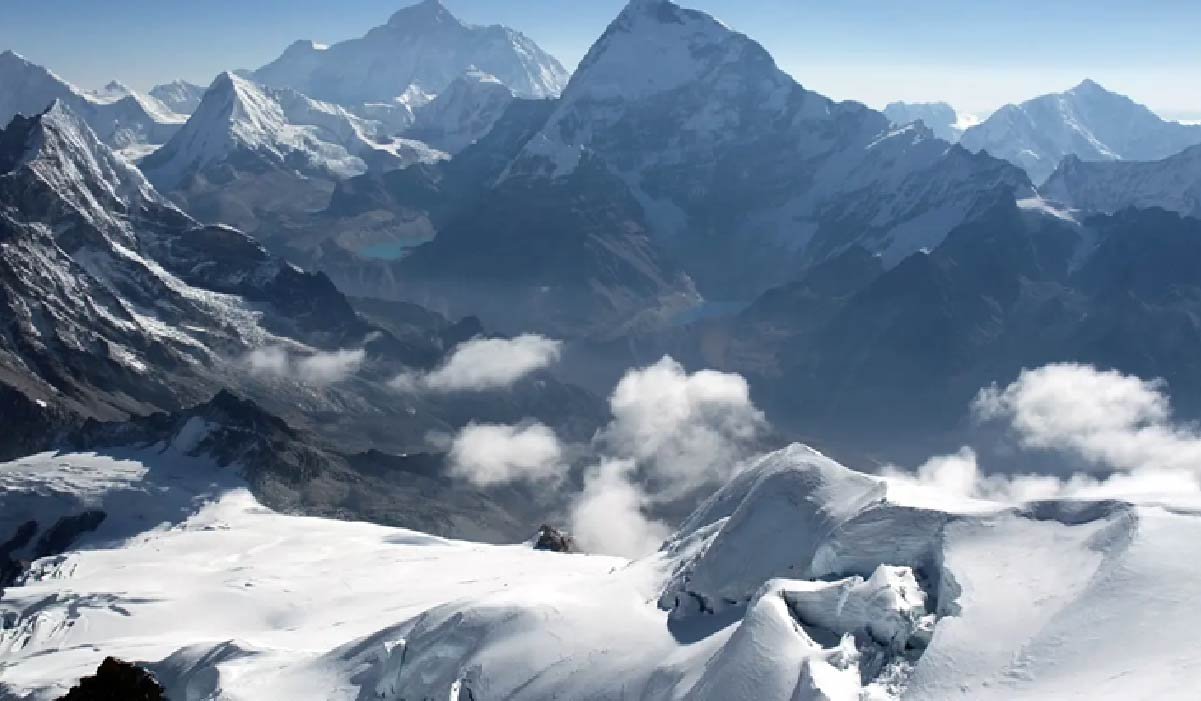
The mountain offers the view of the five tallest mountains in the world,which areMount Everest of 8,848 meters (27,932 ft), Lhotse of 8,516 meters (27,940 ft), Makalu of 8,485 meters (27,838 ft), Cho Oyuof 8,188 meters (26,864 ft), and Kangchenjunga of 8,586 meters 28,169 ft) in the far distance.
The peak is typically a snowy ridge that is not spacious. Climbers take a few minutes to take pictures, have panoramic views, celebrate, and start the descent.
Due to the weather and the altitude, one should not stay too long on the summit.
The Descent from the Summit
Coming down the Mera Peak Summit is usually more physically exhausting than the climb. The climbers have to reverse their steps slowly through the steep slopes uphill and through the glacier.
Though descending needs less oxygen, the exhaustion of legs and snowy conditions may make the descent difficult. Guides guard climbers and remain attached to the rope, and ensure that there is adequate spacing.
The majority of climbers come back to the High Camp of 5,780 meters (18,963 ft) a few hours later. On the same day, after resting and eating, most of the teams descend to Khare at 5,045 meters (16,552 ft) the same day.
The low altitude aids the body in recuperating faster after the strenuous climb up to the summit.
Weather and Conditions During the Summit Push
The success of the Mera Peak Summit Push is largely affected by the weather. Sunny days and calm weather are the perfect conditions to attempt a summit, and bad wind and snowfall can lead to the risk of climbing.
The temperatures on the summits are terribly low, especially before sunrise. The wind chill may make the weather feel significantly colder than it really is.
Guides are very watchful of the weather predictions before making the decision of whether to attempt the summit. In some cases, teams have to spend an additional day at the High Camp in case of unfavorable weather.
Physical and Mental Challenges
Mera Peak Climbing is often considered suitable for beginner climbers, but the final summit push is still a tough challenge.
The body receives significantly lower oxygen at almost 6,500 meters (21,300 ft) compared to when at sea level. Climbers usually end up being tired, moving slowly, and breathless.
It is also crucial to be mentally strong. Many hours of coldness and darkness may be tiresome, yet the focus and determination will aid climbers to continue the path to the summit.
Acclimatization is one of the key elements in the success of climbing Mera Peak because, with the appropriate acclimatization on the way to the summit, the success rate of the climb will be greatly increased.
Why the Summit Push Is So Rewarding
Despite the difficulties, the Mera Peak Summit Push has been among the most rewarding experiences in Himalayan climbing. The climb to the summit consists of physical effort, teamwork and the scenic beauty of the mountain peaks.
Climbers feel a profound feeling of victory standing on the Mera Peak Summit of 6,476 meters (21,247 ft) in height. The panoramic view of the tallest peaks in the world leaves one with a lifetime memory.
For many climbers, Mera Peak is a stepping stone toward more advanced expeditions in the Himalayas.The practice that is experienced in the Mera Peak Climbing assists in creating confidence in future high-adventure climbing.
Final Thoughts
The climax of the whole trip is the summit push on Mera Peak. From the midnight start at High Camp 5,780 meters (18,963 ft) to the incredible views from the Mera Peak Summit at 6,476 meters (21,247 ft), the journey itself is a true challenge and adventure.
Well-prepared climbers value the altitude as well as the pace taken, and increase their chances of success greatly. It is a challenging and tiring climb, but the view of being above the Himalayas is what makes the experience really memorable.
For anyone who loves Himalayan adventures, the Mera Peak Summit Push is a dream come true and an unforgettable introduction to high-altitude mountaineering.
