


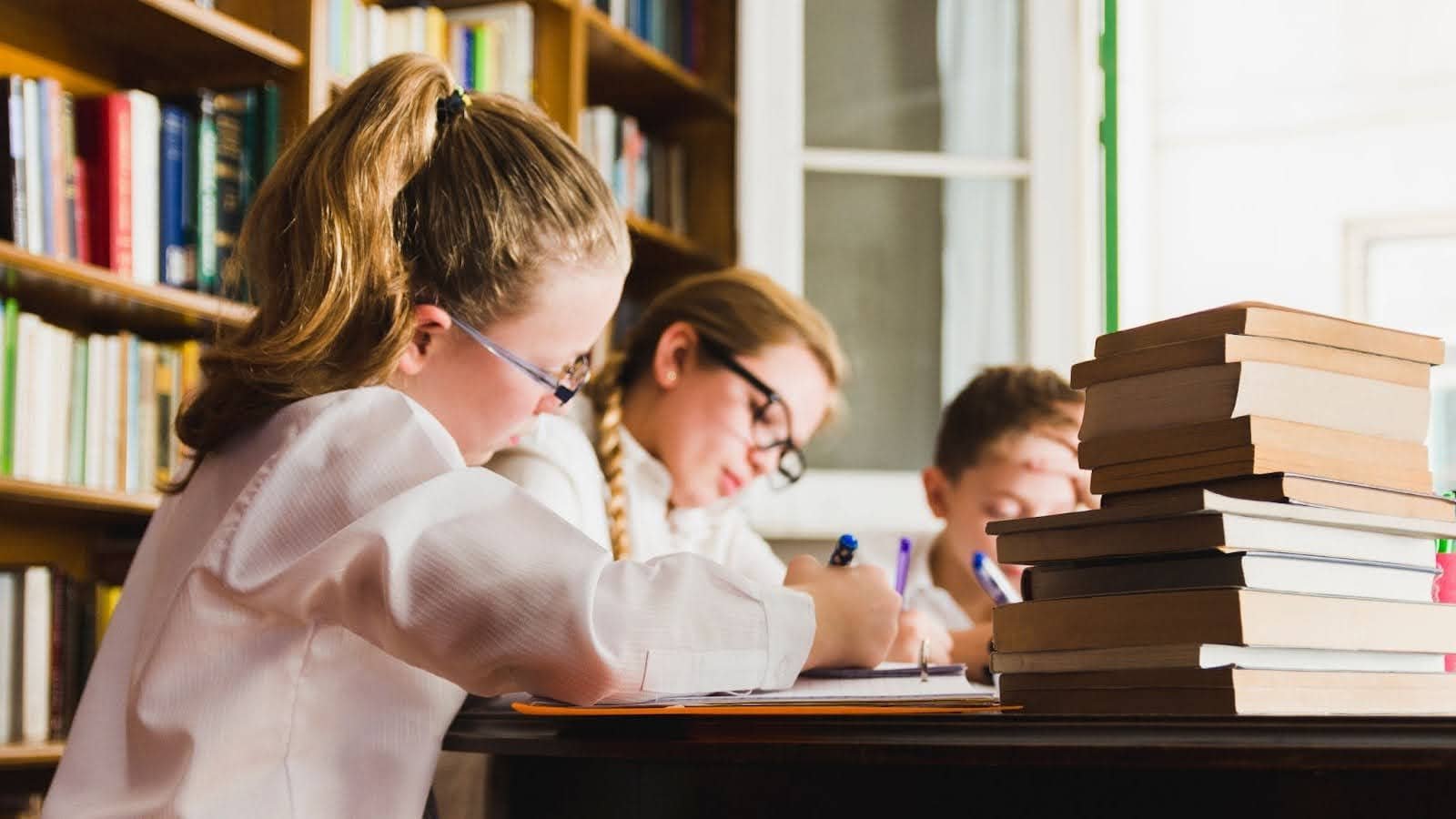
Private education has always carried a certain mystique — the promise of something more, something better, something that sets graduates apart for life. But what exactly is that “something”? Beyond the manicured campuses and smaller class sizes, the real difference between private and public education often comes down to what happens inside the classroom and beyond it. From cyprus private schools serving expat communities to historic institutions in the UK and US, the gap in educational experience is wider than most parents realize.
Advanced and Accelerated Academic Programs
The most visible difference begins with the curriculum itself. While public schools are bound by national standards and standardized testing frameworks, private schools have the freedom to go further, faster, and deeper.
Many private institutions offer the International Baccalaureate (IB) program — a globally recognized curriculum that demands critical thinking, interdisciplinary research, and genuine intellectual curiosity. IB students write extended essays, complete community service hours, and take courses that connect subjects rather than siloing them. The rigor is real. Graduates of IB programs consistently outperform peers in university readiness assessments.
Beyond IB, private schools commonly offer Advanced Placement courses, dual-enrollment university partnerships, and subject accelerations that allow gifted students to progress at their own pace. A student interested in mathematics, for example, might be studying university-level calculus by age 16 — something rarely possible in a standard public school environment.
Leadership and Public Speaking Training
Here is where the difference becomes truly striking. Private schools treat leadership not as an elective — but as a core life skill woven into the fabric of daily school life.
Students are regularly placed in positions of responsibility: running student councils, organizing school events, leading peer mentorship programs, and representing their school in external competitions. Public speaking is practiced from an early age through debates, presentations, and formal assemblies. By graduation, private school students have typically delivered dozens of formal speeches — while many public school peers have delivered none.
Trinity School, for example, integrates structured debate and rhetoric programs across all year groups, ensuring that articulate self-expression becomes second nature rather than a source of anxiety.
Arts, Music, and Sports Investment
Private schools don’t treat the arts and sports as afterthoughts. They treat them as pillars. The investment in these areas is often staggering compared to what public schools can afford.
A typical private school might offer:
- Full orchestras, choirs, and individual instrument tuition from specialist teachers
- Professional-standard theater productions with lighting rigs, sound systems, and costume budgets
- Fine art studios with ceramics, sculpture, darkrooms, and digital design labs
- Multiple sports pitches, swimming pools, tennis courts, and fitness centers
- Specialist coaches for individual sports — not generalist PE teachers managing 30 students at once
- Trips to international competitions, art exhibitions, and music festivals
This breadth of provision matters enormously. Children discover talents they never knew they had. A student who struggles academically might find their confidence — and their future — through music or competitive rowing. The diversity of opportunity is itself an education.
At an international school level, these programs often carry a global dimension. Students from cyprus private schools, for instance, regularly participate in Model United Nations conferences, international sports leagues, and cross-border arts exchanges that broaden perspectives in ways no textbook can replicate.
Character Education and Ethics
Perhaps the most underappreciated difference is this: private schools actively teach who to be, not just what to know.
Character education — the deliberate cultivation of values like integrity, resilience, empathy, and responsibility — is embedded in the curriculum and culture of most serious private institutions. This happens through advisory programs, pastoral care systems, community service requirements, and the tone set by leadership. Students aren’t just graded on what they produce academically; they’re held to behavioral and ethical standards that shape their character over years.
Trinity School and institutions like it build entire pastoral frameworks around this idea. Tutors and housemasters track not just grades but emotional wellbeing, social dynamics, and personal growth. When a student is struggling — academically or personally — there is a dedicated adult in their corner.
The IB program itself formalizes this through its CAS requirement (Creativity, Activity, Service), which mandates that students contribute meaningfully to their communities as part of their diploma. This is character building by design, not accident.
Real Examples from Top Private Institutions
The proof is always in the outcomes. Graduates of elite private schools — from boarding institutions in Switzerland to cyprus private schools catering to international families — consistently demonstrate stronger university placement rates, higher starting salaries, and broader professional networks. But the less-quantifiable outcomes matter just as much.
They know how to speak in a room. They know how to lead a team. They know how to fail and recover. They know how to think ethically under pressure. An international school graduate who has lived across three countries, studied the IB curriculum, captained a sports team, and spent a summer volunteering in a local community doesn’t just have a better résumé — they have a richer inner life.
Private education, at its best, doesn’t just prepare students for university. It prepares them for everything that comes after.
