


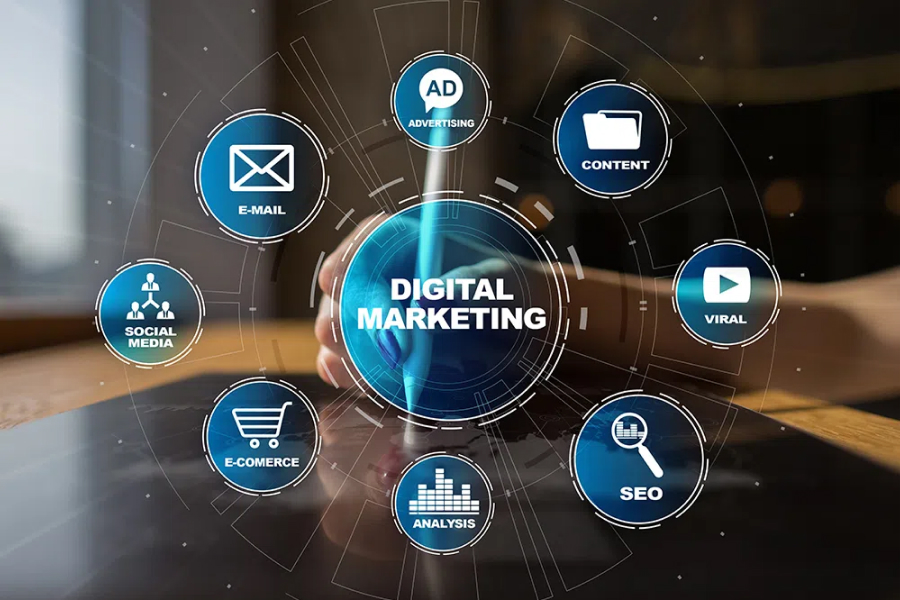
Understanding the Scope of Modern Marketing Support
When businesses decide to work with a marketing company, the first question is often simple: what exactly are we getting? Marketing today is not limited to placing ads or posting on social media. It is a coordinated system of strategy, data, messaging, and technology designed to attract attention, build trust, and convert interest into revenue. A modern marketing company typically offers a wide range of services that extend far beyond surface-level promotion.
At its core, a marketing company helps define positioning. Before campaigns begin, there is usually research into competitors, target audiences, industry trends, and customer behavior. This stage often includes brand audits, customer journey mapping, and performance analysis of existing marketing channels. The goal is clarity. Without it, even creative campaigns struggle to deliver measurable results.
From there, the company develops a strategic roadmap. This may outline growth targets, messaging pillars, content themes, channel priorities, and performance metrics. Rather than jumping straight into execution, reputable agencies emphasize alignment between business goals and marketing activity. Strategy becomes the framework that guides every tactic that follows.
Brand Development and Creative Services
Branding is often one of the earliest deliverables. This can include logo refinement, visual identity systems, tone of voice guidelines, and messaging frameworks. A marketing company may conduct workshops to uncover what differentiates a business and translate that into cohesive branding that resonates with the intended audience.
Creative services extend into campaign design, ad creative, video production, website design, and user experience improvements. These services are not just about aesthetics. They are about ensuring consistency and clarity across every touchpoint. A brand that communicates visually and verbally with cohesion builds recognition and trust more effectively over time.
In many cases, marketing companies also manage website optimization. This may involve redesigning layouts, improving page load speed, refining calls to action, or restructuring content for better usability. Since a website often serves as the central conversion point, refining it can significantly impact overall performance.
Digital Marketing and Performance Channels
One of the most visible services offered by marketing companies involves digital advertising and performance marketing. This includes paid search campaigns, display advertising, social media ads, and retargeting strategies. These efforts are typically guided by detailed audience targeting and performance tracking.
Search engine optimization is another foundational service. Agencies often conduct keyword research, technical site audits, on-page optimization, and backlink strategies to improve organic visibility. In some cases, businesses may explore ai seo services to enhance their search performance. These services use automation and data modeling to analyze search patterns, identify optimization opportunities, and monitor rankings more efficiently. While ai seo services can accelerate analysis and reporting, they are most effective when integrated into a broader strategy guided by experienced marketers.
Email marketing campaigns, marketing automation workflows, and customer segmentation strategies are also commonly included. These channels help nurture prospects, re-engage customers, and maintain consistent communication across the buyer journey. A marketing company may build automated sequences that respond to user behavior, ensuring that messaging remains timely and relevant.
Content Marketing and Thought Leadership
Content marketing remains a critical component of modern marketing services. Agencies frequently develop blog strategies, white papers, case studies, video scripts, podcasts, and social media content calendars. The purpose of this content is not merely to fill space but to educate, engage, and establish authority within a specific market.
Audience research often drives content strategy. By analyzing search behavior, social engagement patterns, and customer feedback, marketing companies identify topics that align with both business goals and audience interests. Content performance is tracked through analytics platforms, allowing teams to refine messaging and distribution strategies over time.
In some cases, agencies also provide public relations and outreach services. These efforts may include media pitching, influencer partnerships, press release development, and brand mention monitoring. Building credibility through third-party validation can significantly strengthen brand perception and expand reach.
Analytics, Reporting, and Strategic Adjustments
Behind every visible campaign lies ongoing measurement. Marketing companies typically offer comprehensive analytics reporting that covers traffic sources, engagement rates, conversion performance, and return on investment. Dashboards are often customized to reflect business priorities rather than generic metrics.
Performance reviews are usually conducted on a monthly or quarterly basis. During these reviews, marketing teams assess what is working, identify gaps, and adjust strategy accordingly. This iterative process ensures that campaigns remain aligned with evolving market conditions and internal business objectives.
Advanced analytics may also include attribution modeling, predictive forecasting, and customer lifetime value analysis. These insights allow businesses to allocate budgets more effectively and prioritize high-performing channels. Data-driven decision-making is one of the defining characteristics of a professional marketing partnership.
Strategic Consulting and Long-Term Growth Planning
Beyond tactical execution, many marketing companies function as strategic advisors. They may assist with market expansion planning, product launch strategies, pricing analysis, or customer experience improvements. In some cases, they collaborate directly with executive teams to align marketing efforts with overall business growth plans.
This consulting role often includes competitive benchmarking and scenario planning. By examining industry trends and competitor movements, agencies can recommend proactive strategies rather than reactive adjustments. Long-term planning becomes essential for sustainable growth rather than short bursts of activity.
Marketing companies may also provide training and internal support. Workshops on brand messaging, social media best practices, or analytics interpretation help internal teams build stronger capabilities. In this way, the relationship extends beyond outsourcing tasks and becomes a collaborative partnership.
A Comprehensive Partnership for Growth
Working with a marketing company typically involves far more than running advertisements or posting content online. It is a coordinated effort that includes strategy development, brand refinement, digital channel management, content creation, analytics reporting, and ongoing optimization. When these services operate together, they form a cohesive system designed to increase visibility, strengthen brand authority, and drive measurable results.
Whether incorporating emerging technologies such as ai seo services or refining traditional branding efforts, the common thread is alignment. Marketing companies succeed when their services directly support business goals and adapt to changing market conditions. For organizations seeking sustainable growth, the value lies not in any single tactic but in the integrated approach that connects insight, creativity, and execution into a unified plan.
