


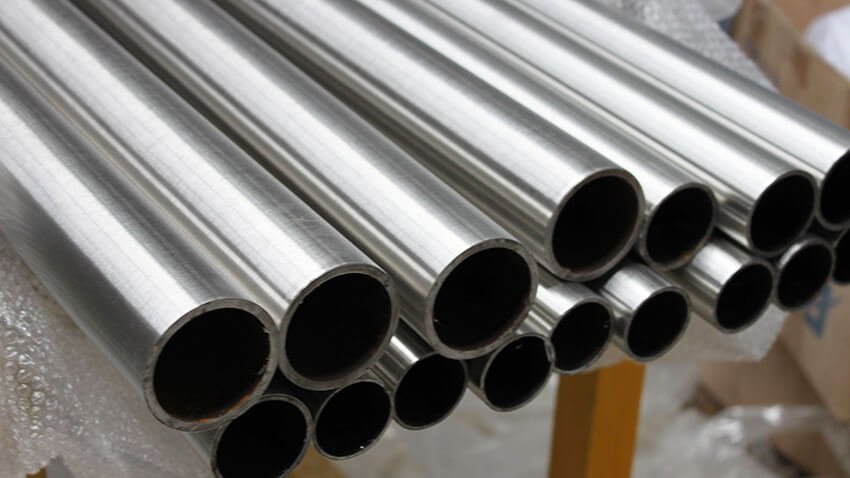
Industrial manufacturing depends on materials that behave predictably under pressure, heat, and repeated use. Components are rarely selected for strength alone. Engineers and operations teams look for materials that maintain form, resist degradation, and integrate smoothly into established production workflows. When materials fail to meet these expectations, the consequences show up downstream as rework, downtime, or shortened equipment life.
Stainless steel strip is one such material where consistency matters as much as composition. Used across forming, fabrication, and high-temperature applications, strip materials must respond reliably to cutting, bending, welding, and prolonged service exposure. Among the available grades, a 321 stainless steel (ss) strip occupies a specific role in industrial manufacturing because of how it handles heat and structural stability over time.
What 321 SS Strip Is and Why It Is Used in Manufacturing?
A 321 ss strip is a flat-rolled stainless steel product made from a titanium-stabilized austenitic alloy. It is supplied in coil or cut lengths and is designed for applications where the material will be exposed to elevated temperatures, welding, or thermal cycling without losing corrosion resistance.
The defining characteristic of this grade is its stabilization with titanium. This stabilizing element reduces the risk of intergranular corrosion that can occur when stainless steel is exposed to heat over time. In practical manufacturing terms, this means the strip retains its integrity during fabrication and continues to perform reliably in service environments where heat exposure is unavoidable.
Manufacturers choose this material not because it is the strongest option available, but because it offers balanced performance across forming, joining, and long-term operation.
Why Strip Form Matters in Industrial Workflows?
Strip products are central to many manufacturing processes because they allow for controlled shaping and repeatability. Unlike plate or bar, strip can be fed through automated equipment, stamped, rolled, or formed into precise geometries with minimal material waste.
In industrial settings, strip form supports:
- Continuous production processes
- Tight dimensional control
- Efficient use of material
- Consistent part geometry
When the strip material behaves unpredictably, these advantages are lost. Variations in hardness, surface condition, or internal structure can disrupt tooling performance and increase scrap rates. This is why the choice of strip grade directly affects manufacturing efficiency.
The Role of Heat Resistance in Industrial Applications
Many industrial components operate near heat sources or experience repeated thermal exposure during use. Exhaust systems, heat shields, furnace components, and high-temperature enclosures are common examples. In these environments, materials must tolerate both sustained heat and thermal cycling without structural degradation.
321 stainless steel strip is suited to these conditions because its stabilized structure limits carbide precipitation at grain boundaries. This helps maintain corrosion resistance and structural integrity after welding or prolonged heat exposure.
From a manufacturing perspective, this reduces the risk that a component will degrade prematurely due to thermal history rather than mechanical load.
Manufacturing Reliability and Material Stability
Industrial manufacturing prioritizes reliability. Processes are designed around materials that behave consistently across batches and over time. Strip materials that vary in response to forming or welding introduce uncertainty that affects scheduling, quality control, and cost.
Stable strip materials support:
- Predictable forming behavior
- Consistent weld response
- Reduced inspection burden
- Longer tool life
321 stainless steel strip is often specified in applications where this stability outweighs the need for maximum strength or hardness.
Forming and Fabrication Considerations
Strip materials are commonly bent, rolled, or stamped into shape. These processes place localized stress on the material, making ductility and uniformity important. Strip that cracks, springs back unpredictably, or distorts during forming increases production complexity.
321 stainless steel strip supports forming operations by offering a balance between strength and ductility. Its austenitic structure allows it to deform without brittle failure, while stabilization helps preserve properties after thermal exposure during fabrication.
This balance makes it suitable for parts that must be formed first and then exposed to heat later in their service life.
Welding and Joining Behavior in Production
Welding is a routine step in many industrial assemblies. Materials that lose corrosion resistance or structural integrity after welding create long-term reliability concerns. In unstabilized stainless steels, heat-affected zones can become vulnerable to corrosion over time.
The titanium stabilization in 321 stainless steel strip reduces this risk, allowing welded components to maintain corrosion resistance without extensive post-weld treatments. For manufacturers, this simplifies joining operations and reduces the need for corrective processing.
Reliable welding behavior supports:
- Cleaner joints
- Reduced post-weld inspection
- More predictable service performance
Dimensional Control and Fit-Up
Industrial components often rely on tight tolerances to function correctly. Strip materials with inconsistent thickness or flatness complicate assembly and introduce stress into finished parts.
Dimensional consistency in strip materials supports:
- Accurate forming and stamping
- Reliable fit during assembly
- Even stress distribution in service
Manufacturers value strip grades that maintain dimensional stability throughout processing, as this reduces adjustment and rework during production.
Surface Condition and Functional Performance
Surface condition influences how strip materials perform during manufacturing and in service. Clean, uniform surfaces support reliable forming, consistent welding, and predictable corrosion behavior.
321 stainless steel strip is typically supplied with controlled surface finishes appropriate for industrial use. A stable surface condition helps ensure that protective oxide layers form uniformly when exposed to heat, supporting long-term corrosion resistance.
From an operational standpoint, this consistency reduces variability across production runs.
Industrial Use Cases for 321 Stainless Steel Strip
The properties of 321 stainless steel strip align with a range of industrial applications where heat exposure and fabrication reliability intersect.
Common use cases include:
- Heat shields and thermal barriers
- Exhaust and ducting components
- Furnace and kiln internals
- High-temperature enclosures
- Welded assemblies exposed to cyclic heat
In each case, the material’s role is not to maximize strength, but to provide dependable performance under predictable stress conditions.
Material Choice as a Lifecycle Decision
Industrial manufacturing decisions are rarely based on initial material cost alone. Lifecycle performance, maintenance requirements, and reliability all factor into material selection. Strip materials that fail prematurely or require frequent replacement increase total operating cost.
By choosing materials designed for thermal stability and fabrication reliability, manufacturers reduce long-term risk. This is particularly important in systems where access for repair or replacement is limited.
Standards Context and Material Definition
The general classification and behavior of austenitic and stabilized stainless steels are well documented by authoritative sources on overview of stainless steel types. These references explain the role of stabilization and alloying elements in principle.
In practice, industrial manufacturing depends on how those principles are applied in real material products, especially in strip form where consistency and repeatability are essential.
Balancing Performance and Practicality
321 stainless steel strip occupies a practical middle ground in industrial manufacturing. It does not aim to replace higher-strength alloys where load is the primary concern, nor does it compete with lower-cost grades in low-temperature environments.
Instead, it fills a specific need:
- Reliable performance after welding
- Stability during and after heat exposure
- Compatibility with common forming processes
This balance makes it a functional choice for manufacturers managing both production efficiency and long-term performance.
Integration Into Industrial Supply Chains
Strip materials are often sourced in volume and integrated into automated workflows. Supply consistency matters as much as material properties. Manufacturers depend on repeatable material behavior to keep production lines stable.
Materials that vary unexpectedly disrupt scheduling and quality planning. Grades like 321 stainless steel strip are often selected because they reduce this variability when used in appropriate applications.
Conclusion: The Role of 321 Stainless Steel Strip in Industrial Manufacturing
Industrial manufacturing relies on materials that behave consistently under real operating conditions. Strip products, in particular, must support efficient fabrication while maintaining performance after exposure to heat and stress.
321 stainless steel strip plays a defined role in this landscape. Its stabilized structure supports welding, forming, and high-temperature service without sacrificing corrosion resistance. For manufacturers, this translates into predictable production behavior and reliable long-term component performance.
Understanding where and why this material is used helps engineers and operations teams make informed decisions that align material choice with manufacturing reality rather than theoretical capability alone.
