


Manufacturing operations across heavy industry face mounting pressure to improve energy efficiency while maintaining continuous uptime. Equipment failures in cement plants, steel mills, and chemical processing facilities can result in production losses measured in hundreds of thousands of dollars per hour. Motor control systems represent critical infrastructure in these environments, where traditional brushed motor controllers often fall short of modern reliability and performance requirements.
The shift toward brushless motor control technology addresses fundamental operational challenges that have plagued industrial facilities for decades. Unlike conventional systems that rely on physical brush contact, brushless controllers eliminate mechanical wear points while delivering precise speed control across varying load conditions. This technological evolution matters because it directly impacts production consistency, maintenance schedules, and long-term operational costs in demanding industrial applications.
Understanding Brushless Motor Controller Architecture in Industrial Settings
Brushless motor controllers operate through electronic commutation rather than mechanical brush systems, fundamentally changing how power flows to motor windings. The controller uses sensor feedback or sensorless algorithms to determine rotor position and switches current to appropriate windings at precise timing intervals. This electronic switching eliminates the friction, heat, and eventual failure associated with carbon brushes wearing against commutator segments.
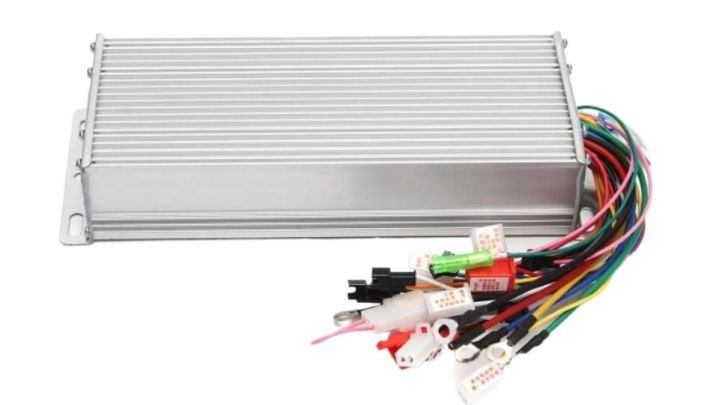
The architecture consists of power electronics that convert incoming AC power to controlled DC output, then invert that power back to variable-frequency AC for motor operation. Modern Industrial Brushless Motor Controller guide systems incorporate sophisticated microprocessors that monitor motor parameters in real-time, adjusting power delivery based on load conditions and performance requirements.
Industrial applications benefit from this design because it enables continuous operation without scheduled maintenance for brush replacement. Traditional brushed systems require regular inspection and component replacement, often forcing production shutdowns during critical manufacturing periods. Brushless controllers eliminate this maintenance requirement while providing superior speed regulation and torque control across the entire operating range.
Power Electronics Integration and Control Logic
The power electronics section within brushless controllers handles the conversion and switching functions that drive motor operation. Insulated gate bipolar transistors (IGBTs) or metal-oxide-semiconductor field-effect transistors (MOSFETs) serve as switching elements, controlled by pulse-width modulation signals generated by the controller’s processor. These switches operate at frequencies typically ranging from several kilohertz to tens of kilohertz, creating smooth power delivery to motor windings.
Control logic monitors multiple feedback parameters simultaneously, including motor current, voltage, temperature, and rotational speed. The processor uses this information to adjust switching patterns, ensuring optimal motor performance while protecting against overcurrent, overvoltage, and thermal conditions that could damage equipment or disrupt production processes.
Sensor Integration and Position Detection Methods
Position detection represents a critical function in brushless motor control, with two primary approaches used in industrial applications. Sensored systems incorporate Hall effect sensors or optical encoders mounted directly to the motor, providing precise rotor position feedback to the controller. These sensors enable accurate commutation timing and precise speed control, particularly important in applications requiring exact positioning or synchronization with other equipment.
Sensorless control systems determine rotor position through electrical parameter monitoring, analyzing back electromotive force (EMF) generated by motor windings. This approach reduces system complexity and eliminates potential sensor failure points, though it may have limitations at very low speeds where back EMF signals become difficult to detect reliably.
Application Requirements Analysis for High-Power Industrial Systems
Industrial brushless motor controller selection depends heavily on the specific operational demands of the target application. Conveyor systems in mining operations require different control characteristics than variable-speed pumps in chemical processing plants. Understanding these application-specific requirements prevents costly mismatches between controller capabilities and actual operational needs.
Continuous-duty applications such as fans, pumps, and compressors typically prioritize energy efficiency and smooth operation across wide speed ranges. These systems often run for thousands of hours without stopping, making controller reliability and thermal management primary selection criteria. The controller must maintain consistent performance despite ambient temperature variations and electrical supply fluctuations common in industrial environments.
High-torque applications including crushers, mills, and heavy-duty conveyors place different demands on motor controllers. These systems require substantial starting torque and must handle sudden load changes without losing speed regulation or tripping protective systems. The controller’s current handling capacity and overload tolerance become critical factors in ensuring reliable operation under challenging conditions.
Environmental and Installation Considerations
Industrial environments expose motor controllers to conditions that would quickly disable standard electronic equipment. Dust, moisture, temperature extremes, and electrical interference require robust enclosure designs and component protection strategies. Controllers intended for cement plants, foundries, or outdoor installations need appropriate ingress protection ratings and thermal management systems capable of handling harsh operating conditions.
Electrical environment factors also influence controller selection and installation practices. Facilities with multiple large motors, welding operations, or variable frequency drives create electromagnetic interference that can disrupt sensitive control circuits. Proper grounding, shielding, and isolation techniques become essential for reliable controller operation in these electrically noisy environments.
Integration with Existing Control Systems
Modern industrial facilities typically operate integrated control systems that coordinate multiple processes and equipment functions. Motor controllers must communicate effectively with programmable logic controllers (PLCs), supervisory control and data acquisition (SCADA) systems, and other automation components. Communication protocols such as Modbus, Ethernet/IP, or DeviceNet enable this integration while providing access to motor performance data for monitoring and optimization purposes.
The controller’s ability to provide diagnostic information and status feedback supports predictive maintenance strategies that prevent unexpected equipment failures. Real-time monitoring of motor current, temperature, and vibration patterns helps maintenance teams identify developing problems before they result in costly production interruptions.
Performance Characteristics and Operational Benefits
Brushless motor controllers deliver measurable performance improvements compared to traditional control methods, particularly in applications requiring precise speed control or energy efficiency. The elimination of brush friction reduces overall system losses while providing more consistent torque output across the entire speed range. This translates to improved process control and reduced energy consumption in applications where motors operate at varying speeds.
Speed regulation accuracy represents another significant advantage of brushless control systems. Traditional brushed motors experience speed variations due to brush resistance changes and mechanical wear, affecting process consistency in critical applications. Brushless controllers maintain precise speed control regardless of load variations, supporting tighter process tolerances and improved product quality in manufacturing operations.
The extended operational life of brushless systems reduces maintenance costs and unplanned downtime. Without carbon brushes to replace or commutators to resurface, motor maintenance requirements shift from reactive component replacement to proactive monitoring and preventive care. This change in maintenance approach allows facilities to schedule service activities during planned shutdowns rather than responding to emergency failures.
Energy Efficiency and Power Factor Considerations
Brushless motor controllers contribute to facility-wide energy efficiency improvements through several mechanisms. Electronic commutation timing optimization ensures maximum power transfer efficiency across varying load conditions, while regenerative braking capabilities recover energy during deceleration phases. These efficiency gains compound over time, particularly in applications with frequent speed changes or varying load demands.
Power factor correction capabilities built into many brushless controllers help facilities avoid utility penalties while reducing overall electrical system stress. Improved power factor reduces current flow through facility wiring and transformers, lowering electrical losses and extending equipment life throughout the electrical distribution system.
Reliability and Fault Protection Features
Industrial brushless motor controllers incorporate comprehensive protection systems designed to prevent equipment damage and ensure safe operation under abnormal conditions. Overcurrent protection monitors motor current in real-time, quickly shutting down the system if current exceeds safe operating limits. Thermal protection prevents motor and controller overheating through temperature monitoring and automatic derating of power output when thermal limits approach.
Fault diagnostic capabilities help maintenance personnel quickly identify and resolve problems when they occur. The controller records fault events with timestamps and operating conditions, providing valuable information for troubleshooting and preventing recurrence. Advanced systems can differentiate between temporary disturbances that require automatic restart and serious faults that need maintenance attention before resuming operation.
Selection Criteria for Industrial Applications
Selecting appropriate brushless motor controllers for industrial applications requires careful evaluation of multiple technical and operational factors. Power rating represents the most fundamental consideration, with controllers sized to handle both continuous operating current and peak current demands during starting or high-load conditions. Undersized controllers will experience premature failure or nuisance tripping, while oversized units increase initial costs without providing operational benefits.
Control flexibility becomes important in applications where operating conditions change over time or where the controller may need to adapt to different operational modes. Some controllers offer programmable acceleration and deceleration rates, multiple speed preset options, and configurable input/output functions that support various operational requirements without hardware modifications.
The controller’s ability to interface with facility monitoring and control systems affects both operational efficiency and maintenance effectiveness. Controllers with comprehensive communication capabilities enable remote monitoring, automated fault reporting, and integration with computerized maintenance management systems that track equipment performance and schedule preventive maintenance activities.
Vendor Support and Service Considerations
Long-term support availability plays a crucial role in industrial motor controller selection, particularly for critical applications where extended downtime cannot be tolerated. Established manufacturers typically provide longer warranty periods, maintain spare parts inventory, and offer technical support services that help resolve operational issues quickly. Local service availability becomes especially important for facilities in remote locations or regions with limited technical support infrastructure.
Documentation quality and training availability affect the facility’s ability to maintain and troubleshoot controller systems effectively. Comprehensive technical manuals, wiring diagrams, and troubleshooting guides enable maintenance personnel to resolve routine problems without external support, reducing both response time and service costs.
Implementation and Commissioning Best Practices
Successful implementation of industrial brushless motor controllers requires systematic planning and attention to installation details that affect long-term reliability. Proper mounting location selection considers both environmental conditions and access requirements for routine maintenance activities. Controllers should be positioned to minimize exposure to heat sources, vibration, and contamination while providing adequate clearance for air circulation and service access.
Electrical installation practices directly impact controller performance and reliability. Power wiring must be sized appropriately for continuous current ratings and voltage drop limitations, while control wiring requires separation from power circuits to prevent electromagnetic interference. Grounding systems need careful design to provide effective noise immunity without creating ground loops that can cause erratic operation.
Commissioning procedures verify that all controller functions operate correctly and that protective systems respond appropriately to test conditions. This process includes parameter configuration, communication setup, and coordination with other facility systems. Proper commissioning identifies potential problems before the equipment enters production service, preventing costly startup delays or equipment damage.
Testing and Validation Procedures
Comprehensive testing during commissioning ensures that the motor controller system will perform reliably under actual operating conditions. Load testing verifies that the controller can handle expected current demands without overheating or voltage regulation problems. Protection system testing confirms that overcurrent, overvoltage, and thermal protection functions respond correctly to simulated fault conditions.
Communication testing validates that data exchange between the controller and facility control systems operates correctly under various conditions. This includes verifying alarm transmission, status reporting, and remote control functions that will be used during normal operations. Documentation of test results provides baseline information for future troubleshooting and performance comparison purposes.
Conclusion
Industrial brushless motor controllers represent a significant advancement in motor control technology, offering improved reliability, energy efficiency, and operational flexibility compared to traditional systems. The elimination of mechanical wear components reduces maintenance requirements while providing superior speed control and process consistency in demanding industrial applications. Success in implementing these systems depends on careful selection based on application requirements, proper installation practices, and comprehensive commissioning procedures that verify all functions before entering production service.
The investment in brushless motor control technology typically provides measurable returns through reduced maintenance costs, improved energy efficiency, and decreased unplanned downtime. As industrial facilities continue to face pressure for improved efficiency and reliability, brushless motor controllers offer a proven solution that addresses these operational challenges while supporting long-term productivity goals. The key to successful implementation lies in understanding specific application requirements and selecting systems that match those needs while providing room for future operational changes and improvements.
