


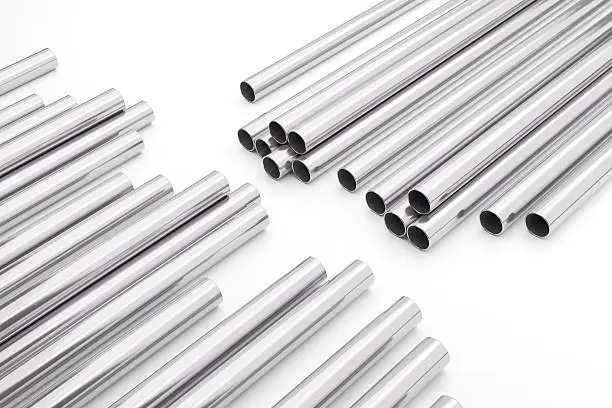
Stainless steel seamless pipes are strong, resist rust, and work well in many tough jobs. Picking the right one can save you time, money, and headaches later. This guide walks you through the main things to think about when choosing seamless pipes. We cover grades, sizes, schedules, pressure needs, temperature, corrosion issues, and more. By the end, you should know how to pick the best pipe for your project.
Why Choose Stainless Steel Seamless Pipes?
Seamless pipes have no weld seam, so they handle high pressure and stress better in many cases. They offer uniform strength all around the pipe. This makes them a top pick for oil and gas, chemicals, power plants, and food processing where leaks or failures are not okay.
They come in different grades that fight corrosion in various ways. Seamless pipes also meet strict standards like ASTM A312 for most uses. When you need reliability in harsh spots, seamless is often the way to go over welded pipes.
Key Factors to Consider When Selecting
Start by looking at your project’s needs. Ask these questions:
- What fluid or gas will flow through the pipe?
- What pressure will it see?
- How hot or cold will it get?
- Is there risk of corrosion from chemicals, salt, or acids?
- What size and length do you need?
- Does your budget allow for higher-cost options?
These answers point you to the right grade, schedule, and size.
Choosing the Right Grade
The grade decides how well the pipe fights rust and holds up under heat or chemicals.
The most common ones are:
- 304/304L: Good all-around choice. It resists everyday rust and works in food, water, and mild chemical setups. Low carbon (304L) helps avoid issues after welding.
- 316/316L: Adds molybdenum for better resistance to chlorides and pitting. Great for marine, chemical plants, or pharma where salt or acids are present.
- 321 or 347: These handle high heat well, up to around 800-900°C in some cases. They resist carbide issues at high temps, so use them in exhausts or heat exchangers.
- Duplex like 2205: Stronger than regular grades and very good against stress corrosion cracking. Good for offshore or tough chemical work.
Pick based on your environment. For mild use, 304 saves money. For harsh spots, go 316 or higher.
Understanding Pipe Schedules
Schedule tells you the wall thickness for a given size. Thicker walls mean higher pressure handling but more weight and cost.
Common schedules for stainless include:
- Sch 10S or 10: Thin walls for low pressure. Light and cheap, good for general plumbing.
- Sch 40S or 40: Standard choice for many jobs. Balances strength and cost. Works for medium pressure in industrial lines.
- Sch 80S or 80: Thicker for higher pressure. Used in boilers or chemical lines.
- Sch 160 or XXS: Very thick for extreme pressure or heat.
For stainless, schedules often end in “S” like 40S because they differ slightly from carbon steel ones.
To compare options like sch 10 vs sch 40, check wall thickness and pressure ratings for your size.
Higher schedule means better pressure resistance but less flow area inside the pipe.
Selecting the Right Size and Dimensions
Size means nominal pipe size (NPS), like 1/2 inch or 4 inch. This is not the exact outside or inside diameter.
Outside diameter stays the same for a given NPS up to 12 inch, then it changes.
Wall thickness changes with schedule.
Steps to pick size:
- Figure out needed flow rate.
- Calculate inside diameter for that flow.
- Add wall thickness based on pressure.
- Match to standard NPS and schedule.
Standards like ASME B36.19 cover stainless pipe sizes. Always check tolerances for OD, wall, and length.
Pressure and Temperature Ratings
Pressure rating depends on grade, schedule, size, and temperature.
At higher temps, strength drops, so pressure rating goes down.
Use manufacturer tables or ASME codes to find allowable pressure.
For example, Sch 40 316 pipe might handle 2000 psi at room temp but much less at 500°C.
Factor in safety margins. Test or calculate burst pressure too.
For high-pressure jobs, pick thicker schedules or stronger grades.
Corrosion and Environment Considerations
Match the grade to the fluid.
- Water or mild chemicals: 304 is fine.
- Seawater or chlorides: 316 or duplex to avoid pitting.
- Acids: Check specific resistance; 316 handles some sulfuric better.
- High heat: 321 or 310 for oxidation resistance.
Also think about crevice corrosion in tight spots or stress cracking in chlorides.
Passivation or surface finish can help too.
Other Practical Tips
- Length: Seamless pipes come in standard 6m or 20ft, but cut to size is common.
- Ends: Plain, beveled, or threaded for easy joining.
- Certifications: Look for ASTM, ASME, or mill test reports.
- Cost: 316 costs more than 304, thicker schedules add up.
- Supplier: Pick ones with good quality control.
Test samples if your job is critical.
Final Thoughts
Selecting stainless steel seamless pipes comes down to matching grade, schedule, and size to your pressure, temperature, corrosion, and flow needs. Start with the environment and demands, then narrow down options using standards and tables.
This approach gives you a pipe that lasts, stays safe, and works efficiently. If unsure, talk to a supplier or engineer for exact matches.
For reliable stainless steel seamless pipes and more info, visit a trusted source that covers various grades and sizes.
