


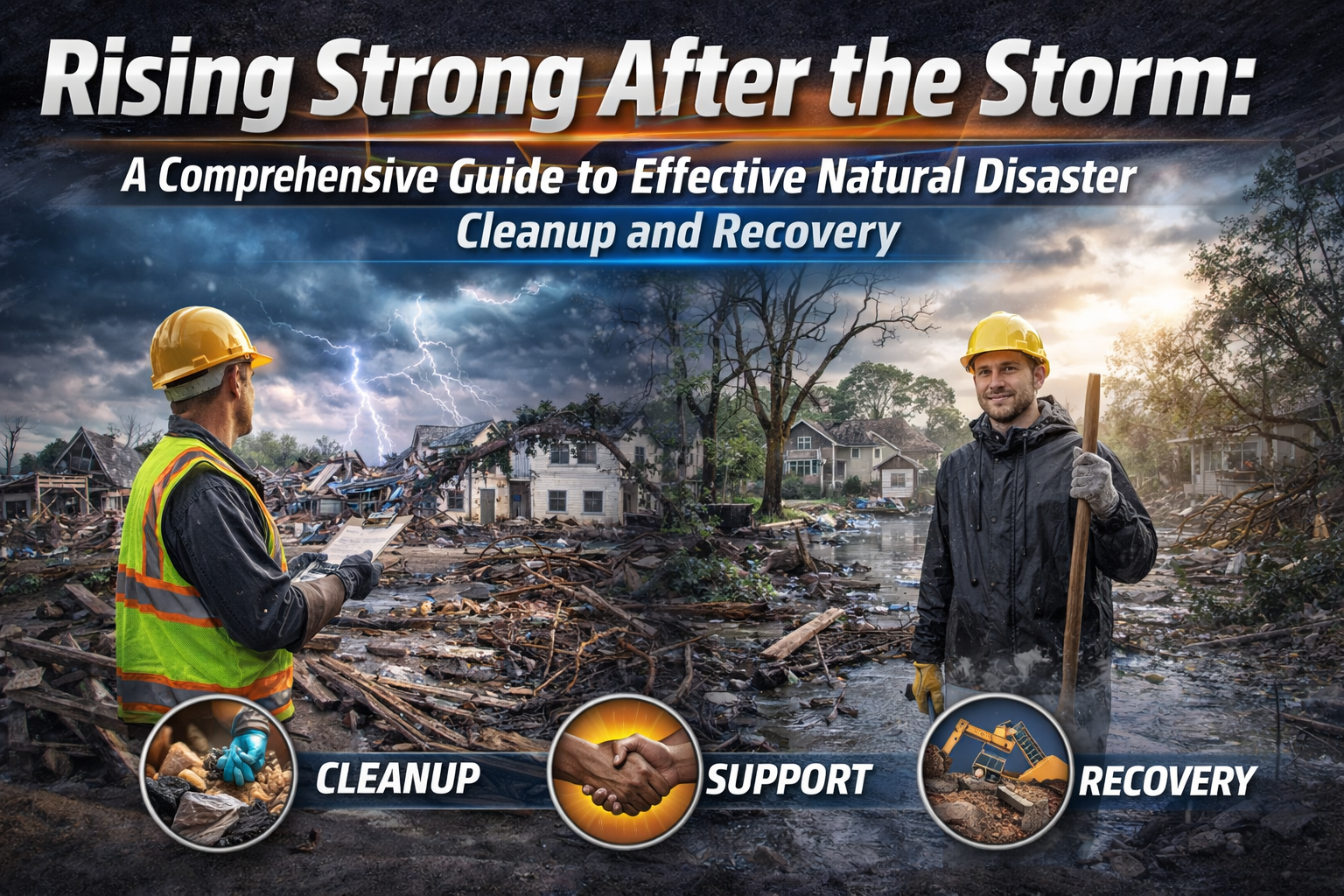
Natural disasters can strike with little warning and leave behind widespread destruction that disrupts lives, damages property, and challenges entire communities. Whether caused by hurricanes, floods, wildfires, earthquakes, tornadoes, or severe storms, the aftermath often feels overwhelming. Homes may be damaged or destroyed, infrastructure can be compromised, and essential services may be interrupted for days or even weeks. In these critical moments, natural disaster cleanup becomes the first and most essential step toward recovery.
Cleanup is not merely about removing debris. It is a structured and strategic process that involves ensuring safety, assessing damage, restoring livable conditions, preventing further harm, and laying the groundwork for rebuilding. A careful and organized approach helps reduce long-term risks, including structural instability, mold growth, contamination, and emotional distress. Understanding how disaster cleanup works and what steps to prioritize can make a significant difference in how quickly and safely recovery unfolds.
Understanding the Impact of Different Natural Disasters
Each type of natural disaster creates distinct forms of damage, which directly influence cleanup methods and timelines.
Floods often leave behind standing water, soaked materials, contaminated surfaces, and hidden moisture inside walls and flooring. Water damage can weaken structural components and create ideal conditions for mold growth within 24 to 48 hours.
Hurricanes and severe storms combine water damage with high winds, resulting in broken windows, torn roofing, fallen trees, and scattered debris. Structural compromise is common, and electrical hazards may be present.
Wildfires leave behind burned structures, smoke damage, soot contamination, and weakened materials. Even areas not directly touched by flames may suffer extensive smoke and ash infiltration.
Earthquakes can cause cracks in foundations, collapsed walls, ruptured gas lines, and unstable debris. Cleanup in these situations must prioritize structural safety and hazard detection.
Tornadoes often cause concentrated but severe destruction, scattering debris across wide areas and leaving homes exposed to weather and theft.
Because every disaster has unique consequences, cleanup strategies must be tailored to the type and extent of damage.
Prioritizing Safety Before Cleanup Begins
Safety must always come first. After a natural disaster, hidden hazards can pose serious risks. Before entering any damaged property, it is essential to verify that authorities have declared the area safe.
Electrical systems may be compromised, and standing water can conduct electricity. Gas leaks are another potential danger, especially after earthquakes or severe structural damage. Downed power lines should never be approached. Structural instability is also a major concern; weakened walls or ceilings may collapse without warning.
Personal protective equipment is critical during cleanup. Gloves, sturdy boots, protective eyewear, and masks or respirators help prevent injury and exposure to contaminants. In cases involving floodwater or fire residue, additional protection may be necessary to guard against harmful bacteria and airborne particles.
Taking time to assess risks before beginning natural disaster cleanup significantly reduces the likelihood of injury and secondary damage.
The Initial Assessment and Documentation Process
Once safety is confirmed, a thorough assessment of the damage should be conducted. Documentation is an essential step, especially for insurance claims and financial assistance.
Photographs and videos should capture all affected areas, including structural damage, destroyed belongings, and visible debris. Detailed notes about the extent of damage, water levels, burn marks, or fallen structures provide valuable evidence when filing claims.
This assessment also helps determine the scope of cleanup required. Identifying which areas are salvageable and which materials must be discarded allows for a more organized recovery plan.
In many cases, professional inspectors or restoration specialists can provide more detailed evaluations. Their expertise can reveal hidden damage that may not be immediately visible, such as moisture trapped behind walls or weakened support beams.
Water Removal and Drying Procedures
For disasters involving flooding or heavy rainfall, water removal is one of the most urgent priorities. Standing water accelerates structural deterioration and promotes mold growth.
Water extraction typically involves pumps, wet vacuums, and industrial-grade equipment. Once visible water is removed, drying becomes the next focus. Dehumidifiers and high-powered air movers are used to eliminate residual moisture from walls, floors, and air spaces.
Materials such as carpeting, insulation, and drywall often require removal if they have been saturated. Porous materials absorb water quickly and may not dry thoroughly enough to prevent mold contamination.
Thorough drying can take several days, depending on the extent of damage and environmental conditions. Skipping or rushing this stage can lead to long-term structural issues and health risks.
Debris Removal and Structural Stabilization
Storms, tornadoes, and earthquakes frequently leave behind large amounts of debris. Fallen trees, broken glass, damaged roofing materials, and collapsed walls must be cleared systematically.
Heavy debris removal may require specialized equipment and trained personnel. Attempting to move large or unstable objects without proper tools can lead to injury.
Structural stabilization is often necessary before full cleanup can proceed. Temporary supports, tarps, or board-ups protect the property from further weather exposure and unauthorized entry. Securing the structure ensures that additional damage does not occur during the recovery process.
Proper sorting of debris is also important. Hazardous materials such as chemicals, fuel, or asbestos must be handled and disposed of according to regulations.
Addressing Mold and Contamination Risks
Mold is one of the most common and dangerous consequences of water-related disasters. It can begin developing within a short period and spread rapidly through airborne spores.
During natural disaster cleanup, affected areas must be carefully inspected for signs of mold growth. Discoloration, musty odors, and soft or crumbling materials may indicate contamination.
Professional mold remediation often involves removing affected materials, treating surfaces with antimicrobial solutions, and using containment methods to prevent spores from spreading to unaffected areas.
Contamination is not limited to mold. Floodwaters may carry bacteria, sewage, chemicals, and other hazardous substances. Surfaces exposed to contaminated water must be thoroughly disinfected. In some cases, certain materials cannot be safely restored and must be replaced entirely.
Ensuring proper sanitation protects both property integrity and occupant health.
Smoke and Soot Cleanup After Fire Damage
Wildfires and structural fires leave behind smoke residues that can penetrate deep into building materials. Even if flames did not reach certain areas, smoke damage can cause staining, odors, and respiratory concerns.
Soot particles are acidic and can corrode surfaces over time. Cleaning requires specialized techniques and products designed to neutralize and remove residues without spreading contamination.
Air purification systems and odor removal treatments help restore indoor air quality. Porous materials heavily affected by smoke may need replacement to eliminate lingering smells.
Comprehensive smoke cleanup is a crucial component of natural disaster in boulder city cleanup in fire-affected regions.
Restoring Utilities and Essential Systems
After debris removal and structural stabilization, attention turns to restoring utilities such as electricity, plumbing, and heating or cooling systems.
Qualified professionals should inspect electrical wiring before power is restored. Damaged wiring poses significant fire risks. Plumbing systems must also be checked for leaks or contamination.
Heating and ventilation systems require cleaning and inspection to ensure they are free from debris, soot, or mold. Restarting these systems prematurely can circulate contaminants throughout the property.
Restoring essential systems marks a major milestone in the recovery process, allowing occupants to return to safer and more comfortable conditions.
Emotional and Psychological Considerations
While the physical aspects of cleanup are demanding, the emotional toll of experiencing a natural disaster should not be overlooked. The loss of personal belongings, disruption of routines, and uncertainty about the future can create significant stress.
Taking recovery one step at a time can help reduce feelings of overwhelm. Seeking support from family, friends, or professional counselors may also be beneficial.
Community involvement often plays a powerful role in recovery. Neighbors helping neighbors fosters resilience and accelerates cleanup efforts. Shared experiences can create bonds that strengthen communities long after rebuilding is complete.
Acknowledging emotional well-being as part of natural disaster cleanup ensures a more holistic recovery.
Preventing Secondary Damage During Recovery
Secondary damage refers to additional harm that occurs after the initial disaster. Delays in cleanup, inadequate drying, or improper repairs can all contribute to further deterioration.
Temporary protective measures, such as roof tarping and window boarding, help prevent rain or pests from causing more damage. Regular inspections during the recovery phase allow homeowners to identify new issues early.
Maintaining detailed records of repairs and cleanup activities also supports future insurance or assistance claims.
Proactive measures reduce long-term expenses and ensure that recovery efforts remain effective.
Hiring Professional Cleanup Services
While some homeowners attempt to manage cleanup independently, professional disaster restoration services provide significant advantages.
Experienced teams have access to specialized equipment, advanced drying technology, and protective gear. They understand industry standards and safety regulations, ensuring thorough and compliant restoration.
Professional services also accelerate recovery timelines. Their efficiency can reduce downtime and help families return to normal routines more quickly.
When selecting a restoration company, it is important to verify credentials, experience, and references. Transparent communication about costs and timelines builds trust and prevents misunderstandings.
Long-Term Recovery and Rebuilding
Cleanup is only the first stage of recovery. Rebuilding and restoration follow once debris is cleared and damage is assessed.
Reconstruction may involve repairing foundations, replacing roofing, installing new drywall, and restoring landscaping. In some cases, homeowners choose to implement improvements that enhance resilience against future disasters.
Installing impact-resistant windows, reinforcing roofing materials, improving drainage systems, or elevating structures in flood-prone areas can reduce vulnerability.
Long-term recovery also includes reviewing insurance coverage and updating emergency preparedness plans. Lessons learned during one disaster can inform better preparation for the next.
Strengthening Preparedness for the Future
Although natural disasters cannot always be prevented, preparation can significantly reduce their impact.
Emergency kits, evacuation plans, and secure storage of important documents provide critical support during crises. Regular property maintenance, such as clearing gutters, trimming trees, and inspecting roofing, reduces potential damage during storms.
Understanding local risks and developing a response plan ensures quicker action when disaster strikes again.
Preparedness is an investment in safety and resilience.
Conclusion
Natural disasters disrupt lives in profound ways, leaving behind physical destruction and emotional strain. However, effective natural disaster cleanup provides the foundation for recovery and renewal. By prioritizing safety, conducting thorough assessments, removing debris, addressing contamination, and restoring essential systems, individuals and communities can begin rebuilding with confidence.
Cleanup is not a single action but a series of deliberate and coordinated steps. Each phase, from water extraction to structural stabilization and mold remediation, contributes to long-term safety and stability. Professional assistance often accelerates progress and ensures compliance with safety standards.
Ultimately, recovery is about more than restoring buildings. It is about restoring peace of mind, rebuilding routines, and reinforcing resilience. With careful planning, informed decisions, and community support, it is possible to rise strong after even the most devastating natural disaster.
