


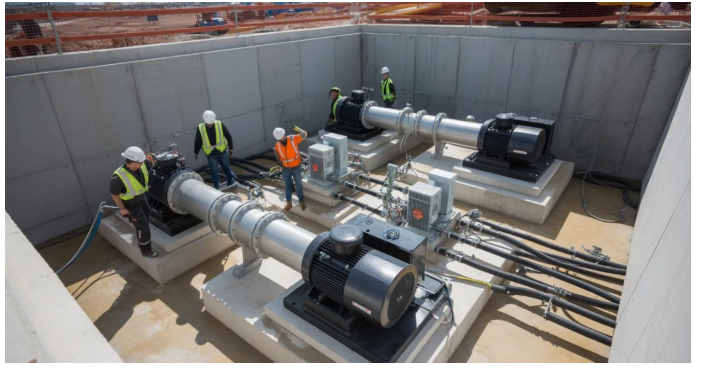
Modern wastewater and surface water management requires pump stations, particularly where gravity drainage is insufficient to move water. They are also safe for transporting sewage and stormwater to treatment plants, which ensures proper drainage and environmental protection.
Properly maintained pump stations prevent flooding, sewage overflow, and costly infrastructure failures. It is essential to select a specialist provider to design, install, and maintain their products, ensuring their efficiency and compliance with UK regulations.
What Are Pump Stations?
Pump stations are artificial structures built to transfer wastewater, sewage, or stormwater from lower levels where gravity drainage cannot proceed. Frequently used in housing development, commercial and industrial sites, civil engineering, and industrial infrastructure, these systems are very popular.
The average pump station consists of a number of important components:
- Wastewater pumps that are highly efficient.
- Chambers where water gathers, and pumping occurs before it moves on.
- Electrical systems and control panels.
- Water-transfer pipework and water-transfer valves.
- Surveillance hardware and sensors.
Where gravity drainage cannot occur due to site or terrain characteristics, pump stations are employed. They provide a constant flow of water and prevent blockages and operational disruptions.
Why Pump Stations Are Essential in Modern Developments
The growth of cities and the construction of infrastructure have increased demand for efficient drainage systems. Pump stations offer one of the most reliable ways to move wastewater in places where gravity drainage is ineffective.
The significance of pump stations consists of:
- Effective wastewater and sewage transportation.
- Less flooding in the lowlands.
- Better environmental security.
- Heavy drainage systems of high developments.
- Provision of assistance to residential, commercial, and industrial developments.
Unless the drainage systems are adequately designed, they may not handle large volumes of water, especially during heavy rainfall or peak hours.
Professional Pump Station Design
Design is considered to be one of the most important phases in the pump station lifecycle. An appropriate system will result in efficiency, reliability, and industry conformity over the long term.
Design services provided by professionals generally involve:
- Electrical and mechanical systems design.
- Hydraulic analysis and selection of pumps.
- Formation of structure and the furnishing of chambers.
- Conformance planning with the requirements of water authorities.
- Descriptive technical drawings and documentation.
Prior to creating unique pump station solutions tailored to individual projects, expert engineers monitor site conditions, anticipated flow rates, and infrastructure requirements.
This is a customised design in which pump stations are engineered to be efficient while meeting building requirements and water industry standards.
Pump Station Installation and Commissioning
After the design phase, professional installation ensures the system works reliably from the first day. The installation of professional pump stations requires precise coordination among engineers, contractors, and developers.
The major installation processes are:
- Preparation and excavation of the site.
- Placing of chambers and installing pipes.
- Integration of the pump and control system.
- Checks on electrical installation and safety.
- System checking and commissioning.
The advanced role of engineers is to ensure that all parts work properly, are safe, and comply with regulations. Good-quality installation minimises the risk of services failing and ensures wastewater is managed in the long run.
Smart Monitoring and Remote Telemetry
Smart monitoring technologies are largely used in modern pump stations to enhance effectiveness and minimise downtime. Remote telemetry enables the engineer to monitor the system’s live performance.
The important advantages of intelligent monitoring are:
- Real-time monitoring of the pump performances.
- Early defect detection and warnings.
- Remote system diagnostics
- Reduced need for site visits
- Movement of operations at a higher speed.
State-of-the-art monitoring mechanisms will capture performance data and inform engineers whenever abnormal behaviour takes place. This proactive strategy enables issues to be resolved before they become major failures. Smart monitoring also leads to increased reliability, as well as minimised maintenance costs and operational risk.
Pump Station Maintenance and Servicing
It is important to maintain pump stations regularly to keep them in good working order. Pumps, motors, electrical systems, and other components of the machine might depreciate with time unless the machine is serviced regularly.
Normally, professional pump station maintenance is performed to include:
- Checking of pumps and motors.
- Descalification and cleaning of wet wells.
- Electrical system testing
- Alarm and telemetry checks
- Performance assessments
Planned maintenance helps identify evidence of wear early and avoid unexpected failures. This preventive measure will ensure the equipment operates continuously and save time in the workplace.
Compliance with UK Water Industry Regulations
The pump stations utilised in the UK must meet strict regulatory requirements to ensure safety, environmental protection, and operational reliability. Professional providers guarantee compliance with Sewers for Adoption, building codes, water authority codes, and environmental protection rules. Through compliance, pump stations can be adopted by water companies as needed and operate safely within public infrastructure networks, which is essential for obtaining approvals and ensuring long-term reliability.
Benefits of Proactive Pump Station Management
The performance of pump stations requires proactive management to ensure their longevity. In modern service providers, engineering expertise is combined with cutting-edge monitoring to deliver preventive maintenance solutions.
Key benefits include:
- Reduced emergency repairs
- Better system reliability.
- Lower operating costs
- Increased equipment life.
- Improved environmental safety.
By tracking performance data and conducting regular checks, the engineers will be able to detect potential problems early and address them before they affect system operations. This proactive solution benefits the reliability of infrastructure in the long run and effective waste management.
Choosing the Right Pump Station Specialist
Identifying the appropriate provider for pump stations is critical to achieving credible performance and regulatory compliance.
The most important aspects to be done are:
- Knowledge of pump station design and engineering.
- Developments and experience in various sectors.
- Complete design to maintenance services.
- Availability of state-of-the-art technology in monitoring.
- Support and capability of nationwide service.
There are specialised firms offering a complete package of design, supply, installation, monitoring, and servicing. This holistic solution guarantees that the entire life cycle of the pump station is well managed.
Conclusion
Pump stations are critical infrastructure components that ensure effective control of wastewater and stormwater in residential, commercial, and industrial developments. Modern pump stations are designed to be reliable in operation and efficient over an extended period, achieved through design to specifications, professional installation, and intelligent monitoring and preventive maintenance.
As pressure on drainage systems and the environment grows, investing in professionally designed pump stations is essential to sustainable infrastructure development.
