


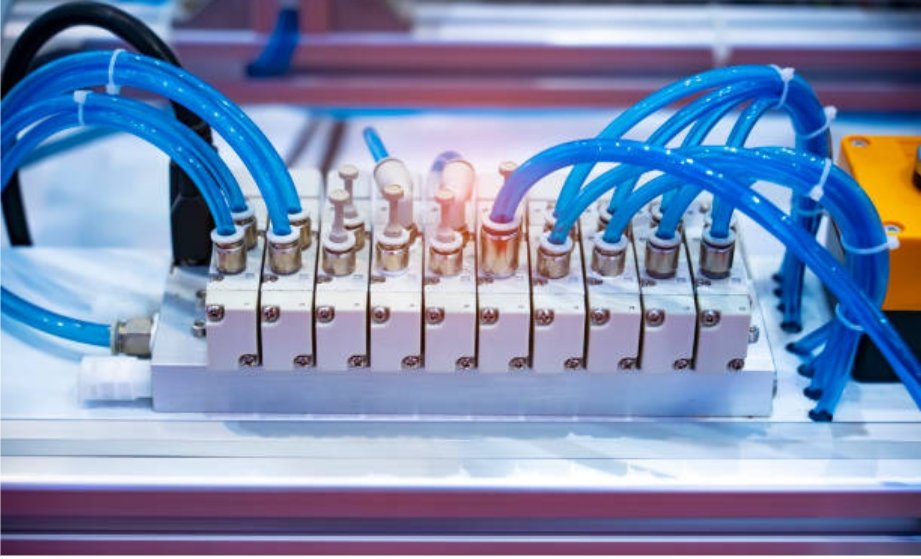
Pneumatic equipment has proven itself in providing safe, efficient, and reliable automation. Today’s industrial advancements automation include manufacturing, assembly, packaging, and control processes. Compared to electrics and hydraulics, pneumatics offer cost-effective and eco-friendly alternatives for B2B companies wanting to boost automation.
For businesses looking for precision-engineered pneumatic solutions, Omchele offers a wide selection of advanced pneumatic valves and solenoid water valves that cater to the industrial automation system’s varying global needs.
Pneumatic equipment consists of mechanical systems and components utilizing compressed air and gas. These systems are widely used in industrial automation due to system reliability, simplicity, and ease of control. Pneumatic Equipments mainly includes:
- Air compressors – serve as the power source for pneumatic equipment.
- Air preparation units – regulates and maintains clean air, as well as lubricates the supplied air.
- Pneumatic actuators and cylinders – air pressure conversion to mechanical actions.
- Pneumatic valves – control the flow, direction, and pressure of air.
- Tubing, connectors, and fittings – designed and used to transport and distribute air between various components.
This feature allows firms to mechanize processes that involve clamping, pressing, conveying, and assembling repetitively, all with great accuracy and little upkeep.
The Advantages of Pneumatic Equipment in Industrial Applications
Pneumatic systems provide value that makes them essential in manufacturing and process industries.
Reliability and Durability
Pneumatic appliances and systems provide value that makes them essential in manufacturing and process industries. Being air-powered, these systems have relatively less usage of moving parts. This results in less wear and lesser maintenance compared to the hydraulic and electrical appliances.
Safe and Clean Operation
Pneumatic systems eliminate potential contaminants and fire hazards. These systems provide optimal safety for industries such as food processing, pharmaceuticals, electronics, and medical manufacturing that have extreme hygienic requirements as they utilize air, not oil or hydraulic fluids.
Cost-Effective and Easy to Maintain
Because these systems use compressed air, they cost little for the initial setup and ongoing maintenance. The modular design of valves, cylinders, and fittings streamlines the replacement parts procurement process. For many years, pneumatic systems deliver their services efficiently and effectively, with little needed upkeep.
Flexibility and Adaptability
Pneumatic systems can be modified according to the varying needs of different industrial processes. The compact nature of these systems and the diverse components available make them appropriate for both basic and advanced automation, irrespective of complexity.
Common Types of Pneumatic Equipment
There are several classes of pneumatic equipment available for use in automated industrial processes. Each performs specific and necessary roles in the pneumatic system.
Pneumatic Valves
Valves control the flow, pressure, and direction of compressed air in a pneumatic system. There are a variety of types, including:
- Directional control valves that determine the route of the air flow.
- Pressure control valves that set and control the pressure within safe and predetermined limits.
- Flow control valves that change the speed of hydraulic actuators.
A variant of these valves, called the solenoid valve, controls the flow of air or water automatically using an electric signal. Omchele’s solenoid water valves are made for dependability and accuracy for automation systems that demand control and endurance.
Pneumatic Cylinders and Actuators
Pneumatic cylinders transform compressed air received in the system into mechanical movement, which can be in a direct line or a rotational motion. Single-acting cylinders, double-acting cylinders, and rotary actuators are the most common types. These are fundamental in lifting, pressing, and clamping.
Air Preparation Units
These units, typically called FRLs (Filter, Regulator, Lubricator), make sure each system component gets clean, conditioned air. FRLs spare air system components of wear by removing airborne contaminants and providing a light lubrication to the moving component parts of the air system. Furthermore, conditioned air increases the operational life of the system.
Tubing and Fittings
For an efficient and leak-free gerotor system, the interconnecting peripherals of the system should be tubed using high quality piping or hose. Tubes, hoses, and gerotor system peripherals should be made of various engineering materials or adapted in size to meet minimum or maximum working pressure and environmental conditions to prevent excess wear or rust.
Sensors and Control Systems
In fully automated pneumatic systems, control systems with position, pressure, and flow sensors have become standard. Linking these sensors to PLCs allows for fine tune control over system functions.
Applications of Pneumatic Equipment in B2B Industries
Pneumatic equipment is used in a wide breadth of business sectors to boost operational productivity, improve safety and provide consistent results.
Manufacturing and Assembly
Automated production lines use pneumatic cylinders and tools for part movement, positioning, and assembly. For tasks that require precision and control, pneumatic equipment is unparalleled.
Food and Beverage Industry
Among the numerous advantages of pneumatic systems is the ability to maintain hygiene and cleanliness while operating. These systems are utilized in the packaging machines, bottling lines, and conveyors in places where sanitary conditions and hygiene are of utmost priority.
Pharmaceutical and Medical Equipment
With respect to the pharmaceutical industry, pneumatic technology is employed in the actuator and valve systems that control the dispensing, packaging, and labeling of pharmaceutical products in a manner that meets the industry’s stringent hygiene standards.
Automotive Industry
In the automotive industry, pneumatics are employed in the automation of manufacturing processes, including tire inflation systems and robotic assembly. This technology has increased reliability and reduced the amount of manual labor needed.
Electronics and Semiconductor Production
Pneumatics are frequently utilized in the manufacturing of sensitive and delicate electronics for which advanced electric systems are used and where the systems may interfere with the pneumatics.
The Future of Pneumatic Equipment in Automation
The advanced forms of automation pneumatic equipment are developed as a response to the adoption of Industry 4.0 and smart manufacturing.
Integration with IoT and Smart Sensors
The latest generation of automation pneumatic equipment features smart sensors that provide real time monitoring of pressure, flow, and the overall efficiency of the system. These measurements can be used with IoT for predictive maintenance and system optimization.
Energy Efficiency and Sustainability
The emphasis on energy efficiency within pneumatic technology is growing. Improvements in air management systems, advanced leak detection technologies, and low-consumption valves assist manufacturers in diminishing energy waste and mitigating adverse effects on the environment.
Miniaturization and Lightweight Design
Owing to new materials and design paradigms, pneumatic components are becoming lighter and more compact. This facilitates the integration of these components into robotic systems and applications with restricted space.
Enhanced Control and Precision
The latest pneumatic valves and actuators provide enhanced control over pneumatic flow and pressure, leading to more seamless motion and greater precision. This control is necessary in the electronics, packaging, and automation robotics sectors.
Why B2B Companies Trust Omchele for Pneumatic Solutions
B2B companies that require reliable and well-performing pneumatic equipment view Omchele as an important partner in industrial automation. Omchele manufactures durable pneumatic valves, solenoid valves, cylinders, and air-treatment systems that comply with international standards.
Omchele also provides sophisticated control within the range of solenoid water valves, which are accurately crafted for superb energy efficiency and performance. Their focus is on reducing operational complexity, improving productivity, and ensuring operational reliability.
Omchele also serves industrial clients in the automotive, electronics, food processing, and packaging industries, focusing on service innovation, quality control, and technical expertise.
Conclusion
The importance of the pneumatic equipment in the automation of industries will continue to grow. The safety and dependability of pneumatic equipment will ensure its use in motion control and automation for years to come. However, the pneumatic electronic controls of the equipment will become increasingly advanced, more energy efficient and more interlinked as the automation technology develops.
Omchele integrates leading technology with industrial engineered products to offer reliable pneumatic devices, including the solenoid water valve solutions.
The use and automation of industrial processes will become more efficient and precise with quality pneumatic automation equipment. The increased use of pneumatic equipment will also improve the automation processes in industries for a sustainable future.
