


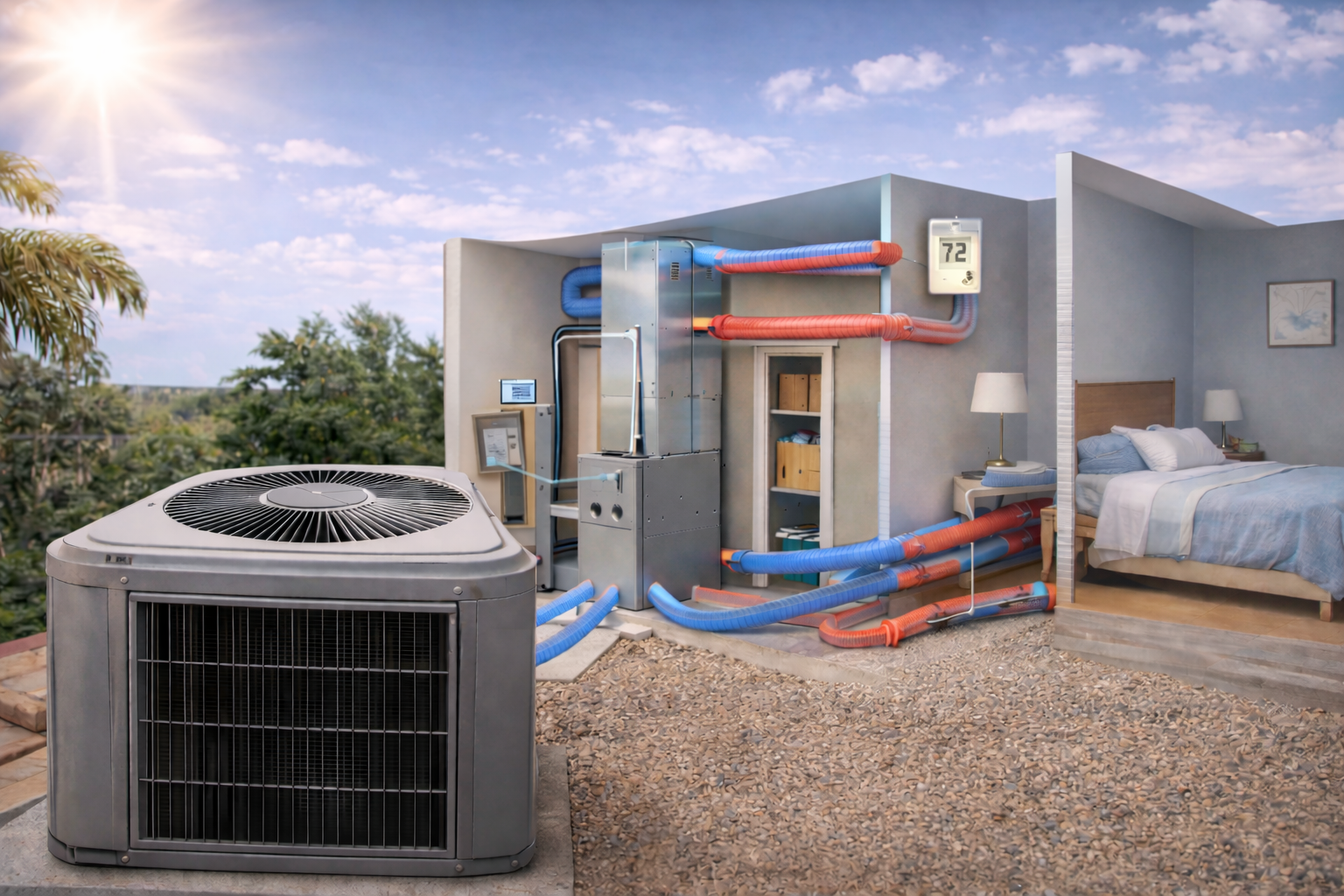
If you’ve ever shopped for a new comfort system or spoken to an HVAC technician, you’ve likely heard the term HVAC. But what does HVAC mean? And how does your AC fit into all that? Here’s everything you need to know about your HVAC system.
HVAC Explained
HVAC stands for Heating, Ventilation, and Air Conditioning. Your air conditioner is just one part of your home comfort system. As homeowners, we tend to think of our AC unit as its own entity. However, it actually combines with your heating system and ventilation to create your HVAC unit. So what do those other parts do?
The heating portion obviously heats your home. The ventilation portion circulates air throughout your home and replaces old stale air with fresh outdoor air. The air conditioning portion cools and dehumidifies your home when the warmer months roll around. With all those pieces working together you can have a comfortable home no matter the weather outside.
What Does Your AC Do?
You may think that your air conditioner simply pumps cold air into your home. However, your AC unit actually removes heat and humidity from the air. It does this with the help of refrigerant that runs through coils. As the refrigerant runs through coils inside your home, it pulls heat out of the air and transfers it outdoors. So rather than adding cool air to your home, your AC unit is removing hot air.
Four major components make up your AC system. They work together to draw out heat and humidity from your home. The evaporator coil is housed inside your home and absorbs the heat in your air. The compressor pumps refrigerant through the system and keeps everything pressurized. The condenser coil is located outside your home and dumps the heat collected from your indoors into the outdoor air. The expansion valve regulates refrigerant flow and keeps the system at proper pressure.
How Does AC Work With Other HVAC Components?
HVAC systems are designed to work with other components in your home. Your AC shares ductwork, thermostat and often blower fan with your furnace. NHS mentioned that when you adjust the temperature on your thermostat, you’re commanding your HVAC system to do work.
The system determines whether to engage heat, cooling, or ventilation based on your preferences and current temperature. This close relationship between your heating and cooling allows you to enjoy your comfort system without thinking about the smaller parts that make it up.
Your HVAC system also handles ventilation. Ventilation replaces air that’s in your home with fresh air from outdoors. Not only does your system keep your home filled with fresh air, but it also filters out pollutants, allergens, and moisture.
Getting Smart About AC
Air conditioning has come a long way since its invention. Not only can you control your cooling system from an app on your phone, but it can learn your schedule and preferences automatically.
Many systems now include a smart thermostat that syncs with your AC system. This allows the system to only run when necessary and control how much cool air it puts out at any given time. By analyzing outdoor temperature, humidity levels, and your behavior, your smart thermostat can adjust output to save you money on your energy bill.
Some systems even allow you to control the temperature in different zones or areas of your home. Want your bedroom to be cooler at night but don’t care if the guest room is cool? A zoned system will let you do that and save you money by not cooling spaces you don’t need to.
Why Energy Efficiency Is Important
Gas and electricity rates aren’t getting any cheaper. That’s why it’s important to have an energy efficient air conditioning system. Not only will energy efficient AC keep you comfortable but it can save you money!
Look for air conditioners with high SEER ratings. SEER stands for Seasonal Energy Efficiency Ratio. The higher the better when it comes to SEER ratings. New HVAC systems must meet a certain SEER criteria, but many manufacturers boast higher ratings than that.
Another way manufacturers are increasing efficiency is by using variable-speed compressors. These compressors don’t simply turn on when you need cooling and off when you don’t. A variable-speed compressor can adjust how hard it works to match demand.
Don’t Forget HVAC Maintenance
In order for your HVAC system to run efficiently, you need to maintain it. Be sure to schedule annual maintenance with an HVAC technician. During this appointment, your technician will inspect your system, clean the coils, and check refrigerant levels.
You can also help your AC run efficiently by changing your air filter regularly. This prevents dust and debris build up in your system and keeps your airflow consistent. Typically, air filters need to be changed every 1-3 months.
The HVAC of Tomorrow
The HVAC industry is always improving and becoming more advanced. In the future, we can expect HVAC tech to be even more energy efficient and kinder to the environment. Right now, manufacturers are working on refrigerants that have less of an impact on the environment.
Heat pumps are an innovation that provides both heating and cooling. A heat pump works like your AC system in reverse to heat your home during the winter. Heat pumps allow you to have both your heating and cooling system all in one!
Solar powered air conditioning isn’t too far out of reach either. As solar panels become cheaper to produce, more homeowners are able to run their AC with little to no impact on their electric bill. Solar AC requires a larger initial investment but can save you money in the long run.
What to Consider When Buying a New AC?
When the time comes for you to buy a new AC system, there are many things to consider. First off, understanding your HVAC system will help you make better choices. There are many factors that go into buying a new AC system.
Price isn’t everything. Make sure you factor in install quality, energy efficiency, and warranty. You’ll also want to work with HVAC professionals who can properly size the system to your home. A system that’s too big or small can cause problems down the road.
So there you have it, everything you need to know about your HVAC system. By understanding how AC works with your heating and ventilation, you can troubleshoot problems and keep your system running smoothly. Remember to maintain your HVAC system and take advantage of new technology as it becomes available.
When it comes to heating and cooling your home, having the right knowledge and expertise is essential for your home comfort. There’s a lot that goes into the HVAC systems we work on every day, and as we continue our “Know Your HVAC” series, we wanted to tackle some frequently asked questions about air conditioning systems, in particular!
Is my air conditioner its own system, or is it part of my HVAC?
Believe it or not, it all works together. Your air conditioner works in conjunction with your heating and ventilation to keep you comfortable year-round. This team is what we call your HVAC system. They utilize the same ductwork, thermostat, and even blower fan in many cases which is why when one part of your system struggles, you may notice it throughout your home.
2. Does my AC “blow cold air?”
This is another common myth. While we know it feels like your AC is blowing cold air into your home, it’s technically not creating cold air. Your AC removes heat and humidity from the air in your home and expels it outside. Once all of that heat is removed from your indoor air, what you’re left with feels cold. So instead of “blowing cold air,” your AC is “ blowing heat.”
3. Why do my AC and ventilation have to work together?
So we know they work together to cool your home, but why is ventilation important? Your air conditioner can cool a single room pretty easily. But without proper ventilation and air flow from your ductwork, that cooled air will have a tough time spreading throughout your home. Plus, ventilation allows you to replace stale air trapped inside your home with fresher air from outdoors.
4. Why would I want a smart thermostat to work with my AC?
We already know that smart thermostats are awesome because you can adjust temperature settings from your smartphone. But did you know that smart thermostats can increase your overall efficiency? A smart thermostat can learn your daily routines, like when you’re typically home and away. Instead of running your AC all day long to keep your house cool, your smart system will work when it needs to and pause while you’re away. That means savings on your next energy bill!
5. Does SEER matter or is that just a number to sell me on buying a new AC?
If you’ve been shopping around for a new air conditioner, you’ve definitely heard us mention SEER before. SEER stands for Seasonal Energy Efficiency Ratio. Basically, the higher your SEER rating is, the more your AC can cool without consuming too much energy. That not only saves you money but helps keep those energy bills low while you’re chilling at home. And when you pair your high SEER unit with a variable-speed compressor, you’ll experience quieter operation and increased efficiency.
6. What kind of maintenance does my AC really need?
It may surprise you to know that your AC doesn’t require a lot of maintenance to keep cool. In fact, yearly maintenance from one of our professional technicians can help your system run smoothly for years to come. In between those appointments, you can help keep your AC running efficiently by regularly changing your air filter. A dirty filter can restrict airflow and cause your system to work harder than it needs to. Give your AC a little TLC and it’ll take care of you and your family!
