


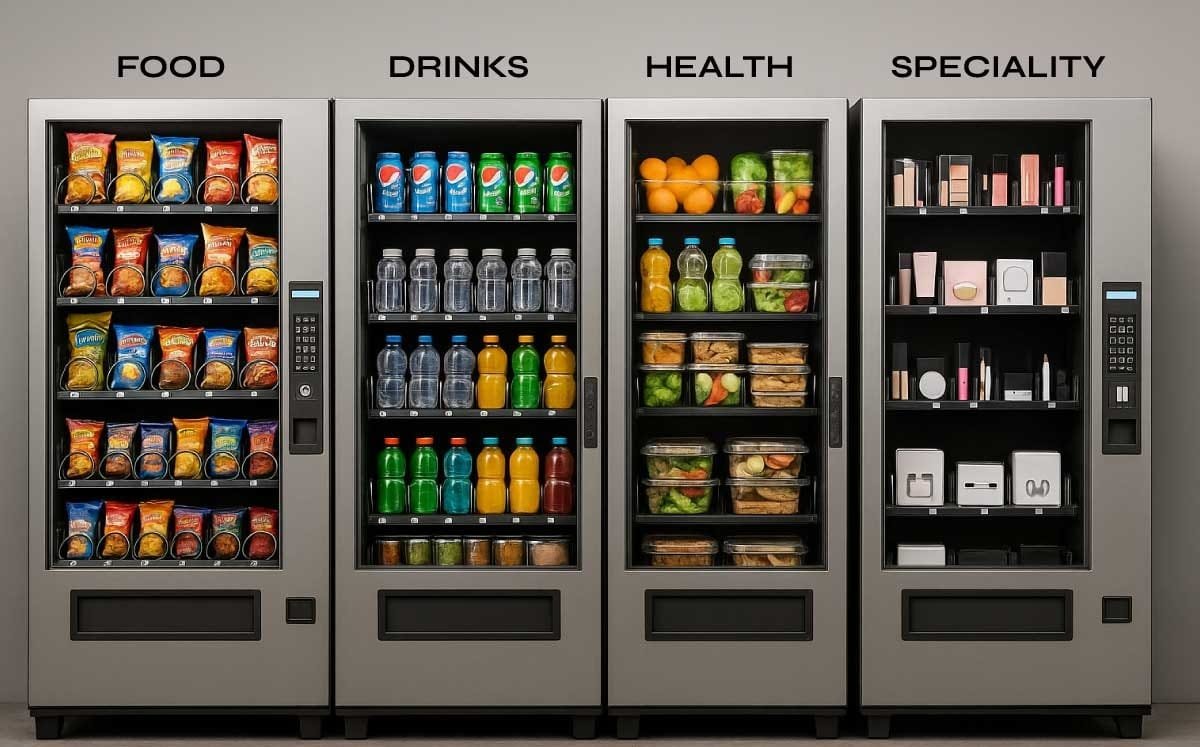
Keeping customers, staff, or guests fed and caffeinated throughout the day is not always straightforward. Office workers grab snacks between meetings. Gym members reach for protein bars after training. Hotel guests look for food options late at night when everything else is closed. Vending machines help meet this demand without requiring a kitchen, retail staff, or extended opening hours, but choosing the wrong machine can quickly lead to poor sales and wasted investment.
For businesses that are new to vending, understanding the basics upfront makes a real difference. Selecting the right vending machine for my business comes down to three core factors: who your customers are, how and when they buy, and the physical space available at your location.
Match the Machine to Your Venue
The most effective vending setups are designed around real customer behaviour, not assumptions. One of the easiest ways to assess this is by observing nearby cafés, service stations, or convenience stores. What people buy there is often a strong indicator of what they will buy from a vending machine.
In corporate offices where meetings run back to back, coffee demand is high throughout the day. Hot beverage machines tend to perform well in these environments, particularly those offering espresso-style options rather than instant coffee. In fitness centres, the pattern is different. Protein bars, sports drinks, and recovery snacks usually sell fastest in the hour following peak class times.
Hotels and short-stay accommodation present another set of requirements. Guests often want a wider range of options, including cold drinks, snacks, and ready-to-eat meals. In these locations, combination machines or multiple units are often necessary to cover different needs without overloading a single machine.
Outdoor or semi-outdoor venues require extra consideration. Locations near pools, sports fields, or recreational areas experience heat, humidity, and temperature fluctuations. Weather-resistant vending machines are essential in these environments, as standard indoor models can fail quickly under harsh conditions. In staff-only workplaces, fresh food vending may also be viable, provided there is enough daily foot traffic to support fast product turnover.
Size and Placement Constraints
Space is one of the most common limiting factors when installing a vending machine. A full-size combination machine typically requires around 1.8 metres of wall space, plus additional clearance for servicing and restocking. Measuring carefully before committing helps avoid costly relocation later.
Smaller locations such as staff rooms, narrow corridors, or compact foyers may be better suited to slimline or wall-mounted machines. Locker-style vending machines are another option, particularly for mixed product ranges. These units can dispense both chilled and ambient items from the same footprint, although they are still relatively new compared to traditional machines.
Placement also affects ongoing operations. Refrigerated machines need adequate ventilation and stable power supply. Hot beverage machines may require a water connection or regular manual refilling. Access for restocking trolleys and cleaning equipment should be factored in as well. A machine tucked neatly out of sight may save floor space, but it can significantly slow down servicing.
Product Mix and Turnover
The size of your customer base directly influences how much product variety you can support. High-traffic locations can justify machines with forty or more selections and may require restocking multiple times per week. Smaller sites often perform better with a tighter range that turns over consistently rather than a large selection that sits unsold.
Research published in PLOS ONE found that vending machines stocked entirely with healthier products significantly reduced calories purchased, without causing people to buy more items or seek unhealthy alternatives elsewhere, suggesting that healthier product mixes can perform reliably when aligned with location and demand.
Fresh food vending demands careful planning. Sandwiches, wraps, and salads rely on daily or near-daily sales to remain viable, whereas packaged snacks and bottled drinks offer longer shelf life and lower risk. Many operators start with packaged products and expand into fresh options once buying patterns are clearly established.
Payment options also influence purchasing behaviour. Contactless payments are now expected in most settings, particularly offices and public venues. Machines that support tap-and-go, mobile wallets, or app-based payments tend to see higher transaction volumes. In some industrial or regional workplaces, coin mechanisms may still be relevant, so understanding your audience is key.
Maintenance and Support Access
Even the most reliable vending machines require maintenance. Coin mechanisms can jam, refrigeration systems can fail, and touchscreens can freeze. The speed at which these issues are resolved directly affects customer trust and machine profitability.
Service availability varies by location. Metro areas typically have faster technician response times, while regional sites may experience longer delays. This makes supplier support an important consideration when choosing equipment.
Stocking arrangements also matter. Managing refills internally offers more control over product choice and pricing but requires storage space and staff time. Full-service vending arrangements reduce workload but may limit flexibility. The right balance depends on how hands-on you want to be.
Making Your Choice
Choosing the right vending machine is not about finding a one-size-fits-all solution. It starts with understanding how many people pass through your venue, when they are most likely to buy, and what products make sense for that environment. Observing traffic flow, break patterns, and existing purchasing habits provides valuable insight.
Once those factors are clear, selecting the right vending machine becomes far more straightforward. The best-performing machines are the ones that feel convenient, relevant, and easy to use for the people who rely on them every day.
