


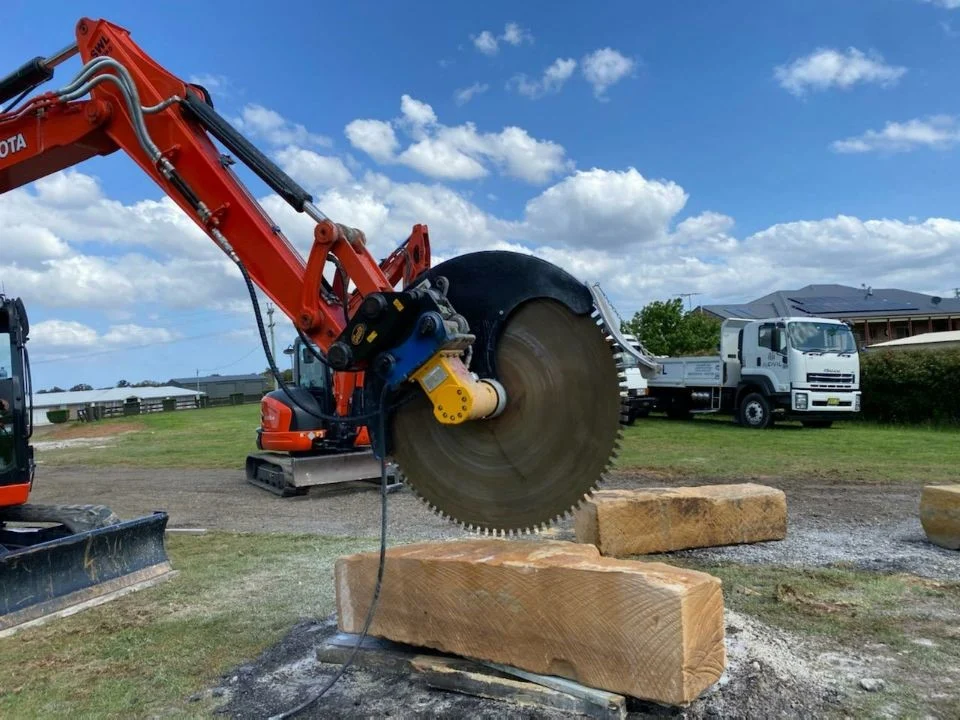
Choosing the right excavation attachment is very important, especially when dealing with hard rock, reinforced materials, or environments that are sensitive to vibration. A rock cutter is becoming a popular alternative to traditional impact tools because it enables controlled material excavation through continuous cutting rather than impact. This makes rock cutters an ideal choice for applications such as trenching, foundation excavation, tunneling, and surface grading, where accuracy and minimal ground disturbance are required.
Knowing how to assess excavation attachment specifications, ground conditions, and compatibility with the excavator is essential to making the right choice.
Understanding the Working of Rock Cutting Attachments
Rock cutting attachments are based on the concept of rotating drums that are equipped with special picks or teeth. The drums slice through the material through grinding action, and not by applying a force to the material. This method reduces shock loads on the excavator, lowering vibration and making excavation easier.
Rock cutters find application in different areas such as urban construction, trenching, tunneling, pipeline installation, and quarry profiling due to the cutting action that they possess. They are applied in areas where either blasting or hammering is not permitted.
Matching the Rock Cutter to Excavator Specifications
One of the most critical factors to consider is matching the rock cutter to the excavator specifications. Some of the factors to consider include:
- Weight class of the carrier: The rock cutter should be within the weight range of the excavator to ensure balance and stability.
- Hydraulic flow and pressure: Low hydraulic flow and pressure may affect the efficiency of the rock cutter and result in early wear.
- Mounting interface: A proper fit will ensure safe operation and prevent stress on the coupler and boom of the excavator.
Rock Cutters for Excavation Flexibility
Different operations demand different cutting characteristics. Trenching requires making narrow and precise cuts, while surface profiling and scaling require making wider cuts with higher material removal rates. In demolition or mining operations, rock cutters must be able to cut abrasive materials without having to stop frequently for maintenance.
Modern rock cutters are designed with modular drums and wear-resistant components, which allow users to configure the equipment to suit specific project needs. This versatility makes rock cutters ideal for use in a variety of industries such as construction, mining, and infrastructure development.
Assessing Ground Conditions and Hardness
Ground conditions are an important factor in deciding which attachment will work the best. Parameters such as compressive strength, abrasiveness, and material type need to be assessed before making a decision.
In an environment where different materials are present, it is common practice to use cutting attachments in conjunction with other tools, like a skid steer rock crusher, to work the excavated material.
Operational Efficiency and Vibration Control
One of the main benefits of rock cutters is their capability to work with low levels of vibration. Low vibration not only helps in protecting adjacent buildings but also enhances operator comfort and machine life.
Continuous cutting also enables a smooth excavation process, which is quite useful in projects that demand accurate depth control. When paired with equipment like a skid steer rock crusher, a smooth process from excavation to crushing can be achieved.
Maintenance, Durability, and Long-Term Value
The durability of attachments impacts operating costs. Rock cutting tools are made from hardened steel and robust housings to resist harsh environments. Regular checks on picks, drums, and hydraulic systems can also be carried out to prevent unexpected downtime.
Ease of maintenance is also an important consideration in equipment selection. Attachments that have easily accessible wear parts and are modular in design help prevent downtime and maximize useful life. In the long run, investment in quality equipment will provide a superior return on investment.
Compatibility with Other Attachments
In today’s construction environment, there is a requirement for various attachments to be used in combination with each other. The integration of cutting tools with a skid steer rock crusher allows materials to be processed directly on-site, eliminating the need to transport excavated rock.
This lowers the cost of transportation and ensures eco-friendly construction.
Conclusion
Choosing the right cutting attachment requires proper consideration of the excavator’s capabilities and the nature of the project. The different factors that should be considered include compatibility, rock hardness, vibration, and maintenance.
With the right selection, rock cutters are unbeatable in terms of precision, efficiency, and reliability in different excavation projects, making them a great addition to any modern equipment fleet.
Find the best rock cutting and crushing technology at Rockzone Americas to equip your excavator with cutting attachments that are precise, durable, and efficient.
