


When we think of lubrication, our minds almost instinctively go to liquids. We think of the amber oil we pour into our car engines, the thick grease we pack into wheel bearings, or the WD-40 we spray on a squeaky hinge. In our terrestrial, room-temperature lives, liquid lubrication is king. It flows, it cools, and it separates metal parts effectively.
But lift that same machine 35,000 feet into the air, or expose it to the vacuum of space, and those liquids become liabilities.
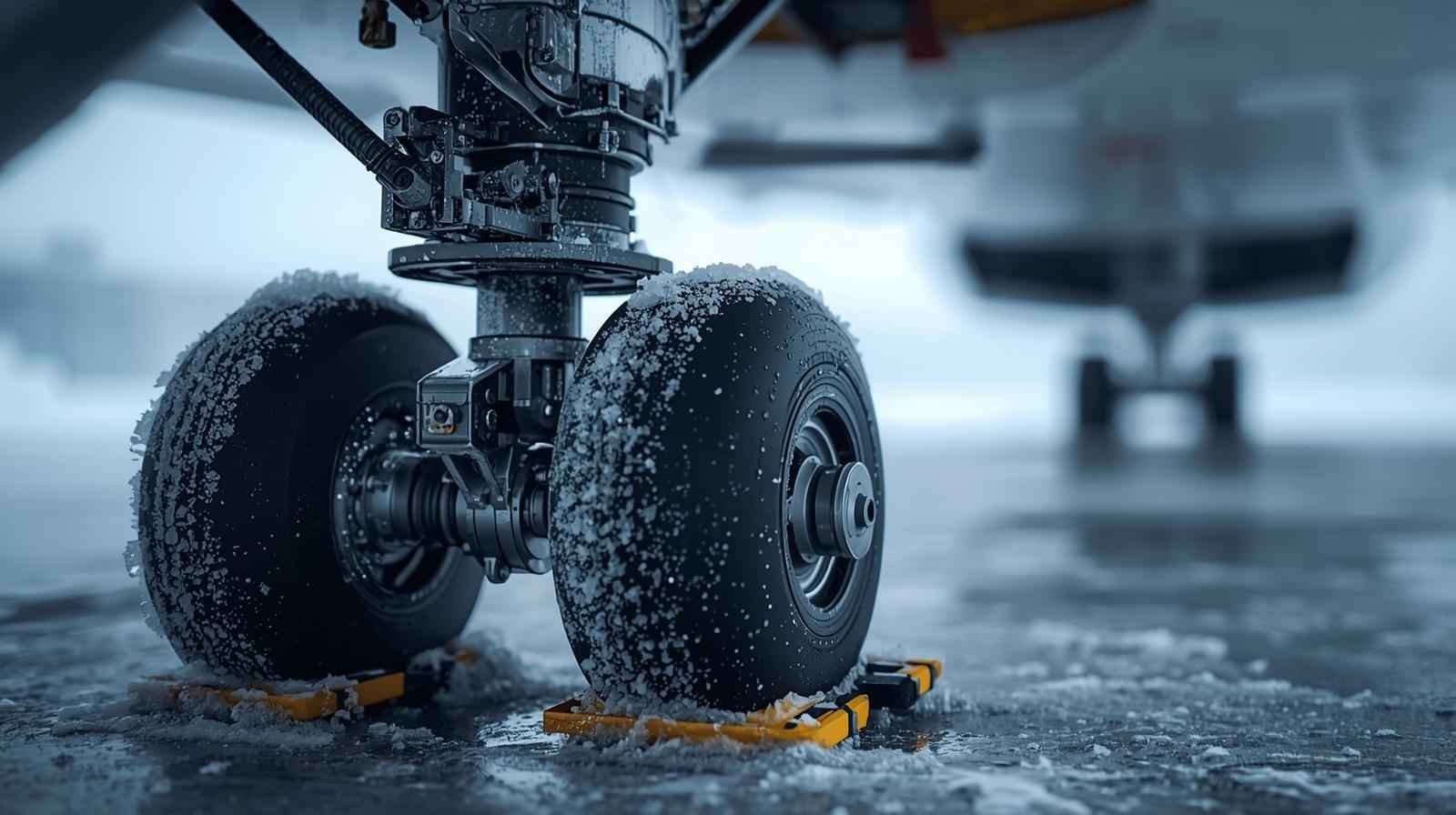
At the cruising altitude of a commercial airliner, the ambient temperature drops to -60°F (-51°C). At these temperatures, standard petroleum-based grease doesn’t flow; it freezes. It turns into a thick, waxy solid that acts more like an adhesive than a lubricant. If the flap actuators or the landing gear mechanisms on a Boeing 777 relied solely on wet grease, they would likely seize solid just when the pilot needed them most.
So, how do aviation engineers solve the problem of friction when the environment forbids the use of oil? They stop thinking in terms of fluids and start thinking in terms of solids. They turn to the invisible, high-stakes world of dry film lubrication.
The Physics of the “Transfer Film”
To understand how a solid can lubricate, you have to look at the microscopic level.
Friction is essentially the result of rough surfaces interlocking. Even a polished metal gear looks like a jagged mountain range under a microscope. When two metal parts rub against each other, these “mountains” (asperities) collide, weld together, and break off. This is wear.
Liquid oil works by creating a hydraulic barrier that floats the two surfaces apart. Dry lubrication works differently. It relies on a concept called the “transfer film.”
Materials like Polytetrafluoroethylene (PTFE) or Molybdenum Disulfide (MoS2) have a unique molecular structure. They are slippery by nature. When applied to a metal surface as a coating and cured, they form a hard, dry skin.
When two parts coated with these materials rub against each other, they don’t grind. Instead, the coating shears. The molecular layers of the lubricant slide over one another like a deck of cards. A microscopic layer of the coating actually transfers from one surface to the other, filling in the valleys of the metal and creating a smooth, glass-like interface. The parts are no longer metal-on-metal; they are coating-on-coating.
The “Stick-Slip” Phenomenon
One of the most critical applications of this technology in aerospace is preventing “stick-slip.”
Imagine you are trying to push a heavy box across a floor. You push and push, but it doesn’t move. Then, suddenly, it jerks forward. You stop, push again, and it jerks again. This is stick-slip. It happens because the “static friction” (the force needed to start movement) is much higher than the “dynamic friction” (the force needed to keep it moving).
In an aircraft, stick-slip is dangerous. If a pilot moves the control stick to adjust the ailerons, they need a smooth, linear response. If the valve sticks and then jerks, the plane will lurch.
Dry film lubricants are engineered to bring the static and dynamic coefficients of friction closer together. They ensure that the force required to start the movement is almost the same as the force required to maintain it. This results in smooth, predictable motion for flight control valves, solenoid plungers, and seat actuators, regardless of the temperature outside.
The Weight of the World (and the Plane)
There is also a hidden economic driver behind the shift to dry lubrication: weight.
A traditional wet lubrication system is heavy. It requires reservoirs, pumps, filters, seals, and lines to move the fluid around. It requires maintenance crews to constantly check levels and top them off.
A dry coating requires none of that. It is intrinsic to the part. A landing gear shaft coated with a high-load dry lubricant is a “fit and forget” component. It doesn’t leak. It doesn’t attract dust and grit (which turns wet grease into sandpaper). And most importantly, it weighs nothing compared to a hydraulic system.
In an industry where every kilogram of weight saved saves thousands of dollars in fuel over the life of the aircraft, replacing heavy grease fittings with microscopic tribological coatings is a massive efficiency win.
The Silent Killer at 30,000 Feet
Beyond friction, aerospace components face a relentless chemical assault. Planes fly through rain, snow, and salt-laden air near coastal airports. They are washed with harsh de-icing fluids that can strip paint and corrode steel.
Here, the “dual-action” nature of these coatings becomes vital. Many dry lubricants are bonded in a resin matrix that is naturally hydrophobic (water-repelling) and chemically inert.
By applying these coatings to fasteners, rivets, and structural joints, engineers solve two problems at once. They provide the lubrication needed for assembly (preventing galling when bolts are torqued down) and seal the base metal against oxidation. It is a barrier shield that also happens to be slippery.
Conclusion
The next time you are sitting in a window seat, watching the flaps extend for landing, take a moment to appreciate the invisible engineering at work. The mechanical grace of that massive wing transforming its shape isn’t powered just by hydraulics and electricity. It is enabled by a microscopic layer of chemistry that refuses to freeze, refuses to bind, and refuses to wear out.
These functional coatings are the unsung heroes of modern aviation. They allow us to build machines that operate in environments where biology and traditional physics say they shouldn’t. They prove that sometimes, the best way to keep things moving isn’t to pour oil on the problem, but to engineer the surface itself to be smarter than the friction trying to stop it.
