


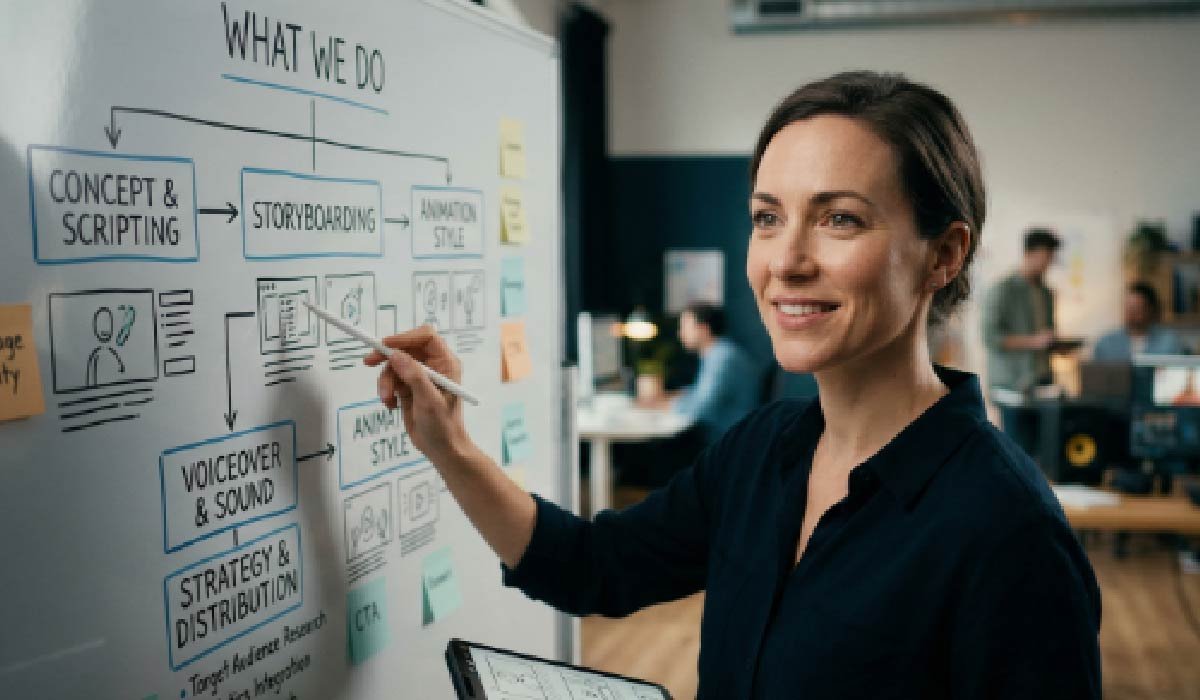
You’ve probably landed on the website of an explainer video company and seen a showreel of slick animations, cheerful characters, and satisfying motion graphics. It all looks impressive. But if you’re a founder, marketer, or content creator trying to figure out whether hiring one is worth it, you might still be wondering: what do these companies actually do all day?
The short answer: a lot more than make things move.
The longer answer is what this piece is about. Because understanding the full scope of what a professional video production company does from the first strategy call to the final file delivery is the difference between hiring one for the right reasons and ending up disappointed.
First, Let’s Kill the Misconception
Most people think of an explainer video company as an animation studio. You give them a script, they animate it, you get a video. Simple transactional exchange.
That framing is understandable animation is the most visible part of the output. But it’s a bit like thinking a podcast production company is just someone who operates a microphone. The mic is a small piece of a much bigger creative and strategic process.
In reality, the best explainer video companies function like a mix of a brand strategist, a UX writer, a storytelling consultant, a voiceover director, and yes an animation studio, all rolled into one. Let’s break down each layer.
1. Strategy and Discovery (Before a Single Frame Is Drawn)
A serious explainer video company begins every project with a discovery process. This involves understanding your audience, your product, your brand voice, and your goal for the video.
Questions they’ll typically dig into:
- Who is watching this video: a skeptical CFO, a curious developer, or a first-time user?
- Where will the video live: a landing page, a product demo, an onboarding flow?
- What do you want the viewer to do after watching, sign up, book a call, feel reassured?
- What’s the one thing you need them to understand or feel?
This strategy layer is where most of the real value is created. Getting clear on purpose before production begins is what separates a video that converts from one that just looks nice.
2. Scriptwriting: The Most Underrated Part of the Job
If strategy is the foundation, the script is the frame. And a great explainer video script is genuinely hard to write.
A best explainer video company employs dedicated scriptwriters not generalist copywriters, but people who understand how words translate to visuals, how pacing works when audio and motion are synced, and how to keep a viewer’s attention in the first 8 seconds and hold it for another 90.
Great explainer scripts tend to follow a problem-solution-benefit arc: they open by naming a frustration the viewer already feels, introduce the product or idea as the answer, and close with a clear picture of a better outcome. It sounds simple. It is not simple. Most first drafts miss the mark, which is why professional scriptwriters go through multiple rounds of revision with the client before anything else happens.
Think of this stage like a podcast episode structure. The best podcast hosts don’t just start talking; they build a narrative arc, plant hooks, and resolve tension. The same craft applies to a two-minute explainer.
3. Storyboarding: Translating Words Into a Visual Language
Once the script is locked, the explainer video company builds a storyboard a frame-by-frame visual map of the video before any animation begins.
This is where the visual storytelling decisions are made. What metaphors will represent abstract ideas? How will the characters move? What will appear on screen when the narrator says “imagine a world where…”? Storyboarding answers all of this.
This stage also serves as a checkpoint for the client. It’s far cheaper to change the direction of a scene at the storyboard stage than after 30 hours of animation work have been invested. A professional company will walk you through the storyboard and give you a clear opportunity to flag anything that doesn’t match your vision.
4. Voiceover Direction and Casting
The voice of your explainer video does more work than most people realize. A warm, conversational voice makes a SaaS tool feel approachable. A precise, confident voice makes an enterprise product feel trustworthy. The wrong voice even with perfect animation can make a video feel off in ways viewers can’t quite articulate but definitely sense.
A professional video production company doesn’t just pick a random voice from a marketplace. They cast the right voice for your brand and audience, provide the voice actor with direction based on the script’s tone, review takes, request retakes where needed, and handle all the audio processing.
If you’ve listened to enough podcast ads, you know the difference between a read that sounds genuine and one that sounds like someone reading words off a page. The same distinction applies here and the explainer video company’s job is to get the former, every time.
5. Design and Visual Style Development
Before animation begins, the company designs the visual world of the video. This includes character design (if applicable), color palette, typography, iconography, and an overall aesthetic that should feel like a natural extension of your brand.
A style frame, essentially a single polished still image from the video, is typically presented to the client for approval before the full animation build begins. This is a critical milestone. It answers the question: “Does this look and feel like us?”
Getting the visual language right matters more than people expect. A video that looks generically “corporate” can undermine a brand that’s spent years cultivating a distinctive personality. A video that looks too playful can hurt a product targeting serious enterprise buyers. Style is not decoration, it’s communication.
6. Animation Production
Yes, there is animation. This is where the motion designers bring the storyboard and style frames to life syncing movement to the voiceover, creating transitions, and making sure everything flows naturally from one scene to the next.
This stage is the most time-intensive and where a lot of the production budget is allocated. Good animation isn’t just technically correct, it has rhythm. Elements land at just the right moment to reinforce what the narrator is saying. Motion supports meaning.
Revisions happen here too. Most professional companies offer one to two rounds of revisions on the animation before final delivery, so clients can make sure everything feels right.
7. Sound Design and Music
Sound design is the finishing layer that most viewers don’t consciously notice but absolutely feel. The right background music sets tone and energy without competing with the voiceover. Subtle sound effects (a click, a notification ping, a swoosh) add dimension and make visuals feel more real and satisfying.
A good explainer video company has access to licensed music libraries and experienced sound designers who know how to build an audio environment that complements rather than clutters.
8. Delivery, Formats, and What Happens After
A final video isn’t just a single file. Depending on where you plan to use it, you might need different aspect ratios (16:9 for YouTube, 1:1 for social, 9:16 for Stories), different length cuts (a 90-second full version and a 30-second social cut), and different file formats.
Professional explainer video companies plan for this from the beginning and deliver files that are production-ready for wherever the video needs to go: website embed, social media, sales decks, email campaigns, or app onboarding flows.
Some companies also offer ongoing support: updating videos when a product changes, creating sequel videos as a series grows, or adapting content for new markets with different language voiceovers.
Why Does Any of This Matter to You?
If you’re a founder trying to explain your product, a marketer tasked with improving conversion rates, or a content creator building a brand, understanding the full scope of what an explainer video company does changes how you evaluate and brief one.
It means you stop looking for the cheapest animation shop and start looking for the partner who asks the best questions. It means you come prepared with clarity on your audience and goals, not just a rough idea for a script. And it means you understand that when you’re quoted a budget, most of that investment isn’t going into pixels moving on a screen, it’s going into the thinking that makes those pixels matter.
The same logic applies to podcasting. A great podcast isn’t valuable because someone pressed a record. It’s valuable because someone thought deeply about who they’re talking to, what story they’re telling, and how to make a listener feel something. A video production company, at its best, does exactly the same thing just in 90 seconds, with motion and music.
The Bottom Line
When you hire an explainer video company, you’re not buying animation. You’re buying a process one that starts with understanding what you need to communicate, builds a story around it, gives it a voice and a visual identity, and delivers something that can do real work for your brand.
The animation is just how the story shows up on screen.
