


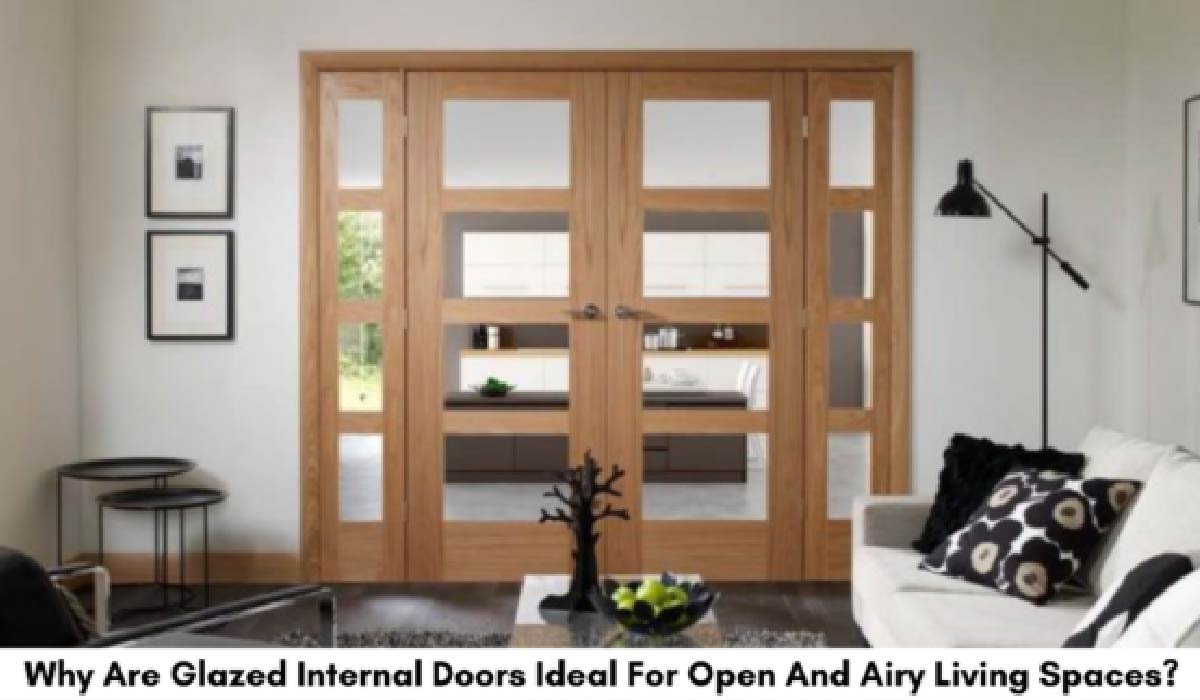
Making a home feel open and with natural light is not always easy to achieve because solid internal doors may often block the light and make the room darker and more confined, even with a well-thought-out design.
As a result, the rooms can seem smaller and less interconnected, which impacts comfort and usability. Meanwhile, it is not always practical to remove walls, as it decreases privacy and restricts the functionality of spaces, notes Helios Property Management solutions.
This is where the glazed internal doors provide a practical and balanced solution. They help to pass the light easily as they move across rooms, yet at the same time create a clear separation where necessary. In addition, options like clear glass, clear beveled glass, and frosted glass give flexibility depending on the level of privacy.
Moreover, these doors contribute to visual openness as well as functionality without any significant structural modifications.
This article discusses how glazed interior doors can help create open and airy living spaces in a practical and efficient manner.
1. Natural Light Flow Across Rooms
One of the most evident advantages of using glazed internal doors in your design is the distribution of natural light in your house. Daylight is not limited to rooms with direct access to windows, but rather, it penetrates adjoining areas and thus enhances the overall brightness.
Consequently, the darker spaces, like corridors or interior rooms, start to be more open and usable. For example, clear glass allows the maximum amount of light to pass through, whereas partially glazed designs allow a steady flow without overwhelming the space. This contrast helps in controlling the amount of light that reaches each room.
Moreover, it can be particularly efficient in situations when the light is transferred from brighter, south-facing rooms into the darker areas of the house. With time, such a regular distribution results in a more integrated interior, with every area enjoying improved visibility and comfort.
2. Spacious Layout Without Structural Changes
Achieving a sense of openness may require significant structural intervention, including the demolition of walls to have an open-plan layout. Nevertheless, this method may be expensive and disruptive. Alternatively, glazed doors are a more convenient option that offers an aesthetic visual connection between spaces without altering the structure.
Since they permit visibility across rooms, they minimize the visual barriers created by the solid doors. Consequently, the interiors seem bigger and more continuous, although the rooms are functionally distinct.
Further, fully glazed doors contribute to the impression of openness since they maximize transparency. In the meantime, half-glazed features provide a balance between openness and structure.
Moreover, this adaptability can be applied to custom sizes and glazing options, so matching the layout requirements in the specific layout is easier and does not lead to the loss of design intent.
3. Privacy Options Without Blocking Light
Although openness is valued, privacy is a fundamental consideration in most parts of the house. Fortunately, glazed internal doors have various glazing features, which manage this requirement successfully.
For example, clear glass and clear beveled glass enable maximum light penetration and still have a clean and open look. Contrarily, frosted glass or obscure glass limits visibility but allows light to go through. Due to this reason, these alternatives are best suited in areas like the bathroom, dining, or home office.
Consequently, there is uniform brightness in all rooms without compromising privacy. However, the flow of light can not always be good in areas like bedrooms, which can influence sleep and general comfort.
Thus, it is important to choose a suitable glazing option depending on the purpose of the room.
4. Design Compatibility Across Interior Styles
The other significant benefit is that glazed interior doors can be used to complement a large number of interior styles. Regardless of whether it is a modern or a traditional home design, they can be a part of the entire appearance.
For example, a glazed door with oak frames adds contrast and texture, and therefore is better suited in a more traditional interior. Meanwhile, other materials, like walnut, ash, and painted finishes in white, black, or grey, offer greater opportunity to suit various design preferences.
Moreover, glazing options like a clear, beveled, or frosted finish can also be used to make the glass even more personalized. In more modern interiors, glazed doors with very thin frames in an industrial style make a structured and contemporary effect.
Consequently, these doors can serve as practical features as well as decorative ones in the house.
5. Defined Spaces with Visual Connection
Maintaining clearly defined spaces is important for everyday functionality. However, fully enclosed rooms can sometimes feel restrictive, especially when natural light is limited. In such situations, the lack of visual connection can make interiors feel more segmented and less inviting.
However, glazed doors address this by preserving separation while still allowing visual continuity. For example, a kitchen and living area can remain distinct in purpose, yet feel connected through shared light and partial visibility.
Depending on the layout, this can be achieved using a single-glazed door or a pair of doors, allowing wider openings where needed. Consequently, movement between rooms feels more natural and less confined. At the same time, the layout remains organized and practical, supporting both comfort and efficient space use.
6. Durable Glass and Everyday Safety
Durability is an important factor when selecting internal doors, and glazed options are designed with this in mind. Typically, they use toughened safety glass, which is stronger and more resistant to impact than standard glass, making it suitable for regular household use.
In the event of breakage, this type of glass is designed to shatter into smaller, less harmful fragments. Therefore, it provides an added level of safety for everyday use, especially in homes with children or frequent movement between rooms.
Moreover, the combination of solid framing and reinforced glazing ensures long-term performance. Even in high-traffic areas, these doors maintain their functionality and appearance over time.
In some cases, specific designs can also meet fire door requirements depending on thickness and construction, which adds another layer of reliability.
Final Thoughts
Glazed internal doors provide a practical way to create interiors that feel brighter, more open, and better connected. By allowing natural light to move freely between rooms, they reduce the enclosed feeling often caused by solid doors. At the same time, they maintain clear boundaries, ensuring that each space continues to function effectively.
In addition, a wide range of glazing options, materials, and finishes allows you to tailor the design to different needs and interior styles. From enhancing light flow to supporting privacy and safety, these doors offer a well-balanced solution. Overall, they help create a living environment where openness, structure, and functionality work together seamlessly.
