


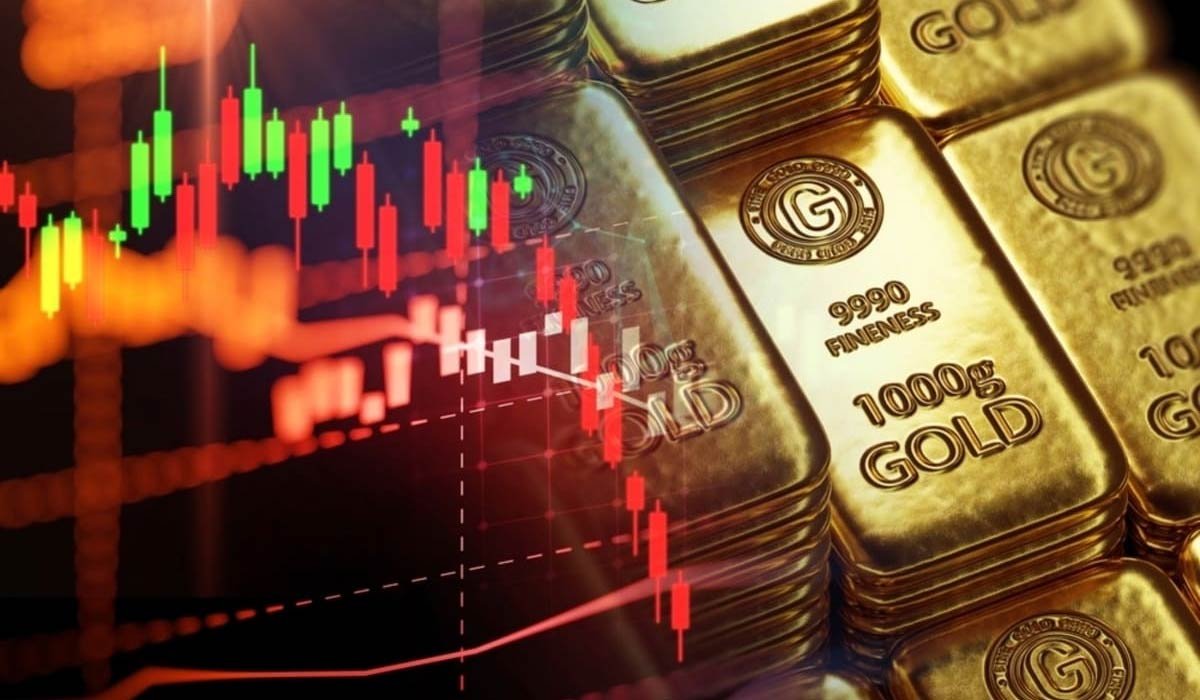
Gold has once again captured the attention of investors around the world. In periods marked by economic uncertainty, geopolitical tensions and persistent inflation, the precious metal often regains prominence as a perceived store of value. Recent market data shows that gold has experienced a remarkable surge in value, prompting renewed interest among both institutional and retail investors in the United Kingdom.
As of early March 2026, gold opened at around £3,871 per ounce, reflecting strong momentum after months of steady gains. Over the previous year, the price of gold has risen by more than 70%, highlighting the scale of investor demand for the metal during turbulent financial conditions.
While the gold market can be volatile in the short term, its long history as a safe-haven asset continues to make it a focal point during times of economic stress.
Why gold tends to rise in uncertain times
Gold’s reputation as a defensive asset is rooted in centuries of financial history. Unlike currencies issued by governments, gold is a tangible commodity with a limited supply. Because of this scarcity, it is often viewed as a hedge against economic instability or currency depreciation.
When stock markets experience sharp declines or economic forecasts become uncertain, investors frequently turn to gold as a way to preserve wealth. This shift in demand can push prices higher.
Recent geopolitical tensions and global economic uncertainty have reinforced this pattern. As financial markets react to shifting interest-rate expectations and international conflicts, gold has once again emerged as a preferred refuge for cautious investors.
The role of inflation and interest rates
Inflation also plays an important role in shaping gold demand. When inflation rises, the purchasing power of traditional currencies declines. In these situations, assets perceived as scarce or tangible can become more attractive.
Over the past two decades, gold has delivered average annual returns significantly higher than the average rate of inflation in the UK, helping preserve the “real” value of wealth over long periods.
However, the relationship between gold and inflation is not always straightforward. Over shorter time frames, the price of gold can fluctuate significantly depending on interest-rate expectations and broader market sentiment.
Higher interest rates can sometimes weigh on gold prices because the metal does not produce income or yield. Investors may prefer interest-bearing assets such as bonds when rates are high. Conversely, when markets anticipate rate cuts or financial instability, gold often regains momentum.
How the price of gold is determined
The price of gold is primarily determined by supply and demand in global markets. In the United Kingdom, pricing is closely linked to the benchmark established by the London Bullion Market Association (LBMA), which sets reference prices used across the international gold market.
Two main pricing mechanisms exist. The fixed price, agreed by LBMA members during scheduled meetings, is commonly used for large institutional transactions. Meanwhile, the spot price reflects the real-time value of gold in global markets and is the price most commonly referenced by traders and investors.
Because gold is traded globally, gold cfd price is also influenced by currency movements, particularly the value of the US dollar. A weaker dollar often makes gold cheaper for international buyers, potentially increasing demand.
Different ways to invest in gold
Investors in the UK have several options for gaining exposure to gold. The most traditional method is purchasing physical gold in the form of bullion bars or coins. Popular coins such as the Sovereign and Britannia are widely recognised and often command a premium due to their collectability.
Gold jewellery is another option, though it usually carries a significant markup because buyers pay not only for the metal itself but also for craftsmanship and design.
Alternatively, investors can gain exposure to gold through financial instruments such as mining company shares or investment funds linked to the gold market. These options allow investors to participate in price movements without owning the physical metal.
Digital gold products have also emerged in recent years. These services allow investors to buy fractional ownership of physical gold stored in secure vaults, often lowering the barrier to entry for individuals who want exposure to the metal without purchasing full bullion bars.
Gold’s long-term role in a diversified portfolio
Despite its popularity, gold is rarely considered a complete investment strategy on its own. Many financial advisers suggest using gold as part of a diversified portfolio rather than relying on it as the sole investment asset.
Unlike shares or bonds, gold does not generate income in the form of dividends or interest. Its value is derived solely from price appreciation. Because of this, its role is often seen as defensive rather than growth-oriented.
Nevertheless, gold has historically performed well during periods of financial turbulence, which explains why it continues to attract interest during uncertain economic cycles.
A market shaped by global forces
Looking ahead, the future of gold prices will depend on several interconnected factors. Inflation trends, central bank policies, geopolitical developments and currency movements all influence investor behaviour.
Gold’s limited supply means that even relatively small changes in demand can produce substantial price swings. As global economic conditions evolve, the precious metal will likely remain a central part of conversations about wealth preservation and financial stability.
For UK investors navigating an unpredictable economic environment, gold continues to represent both an ancient store of value and a modern financial asset shaped by the forces of global markets.
