


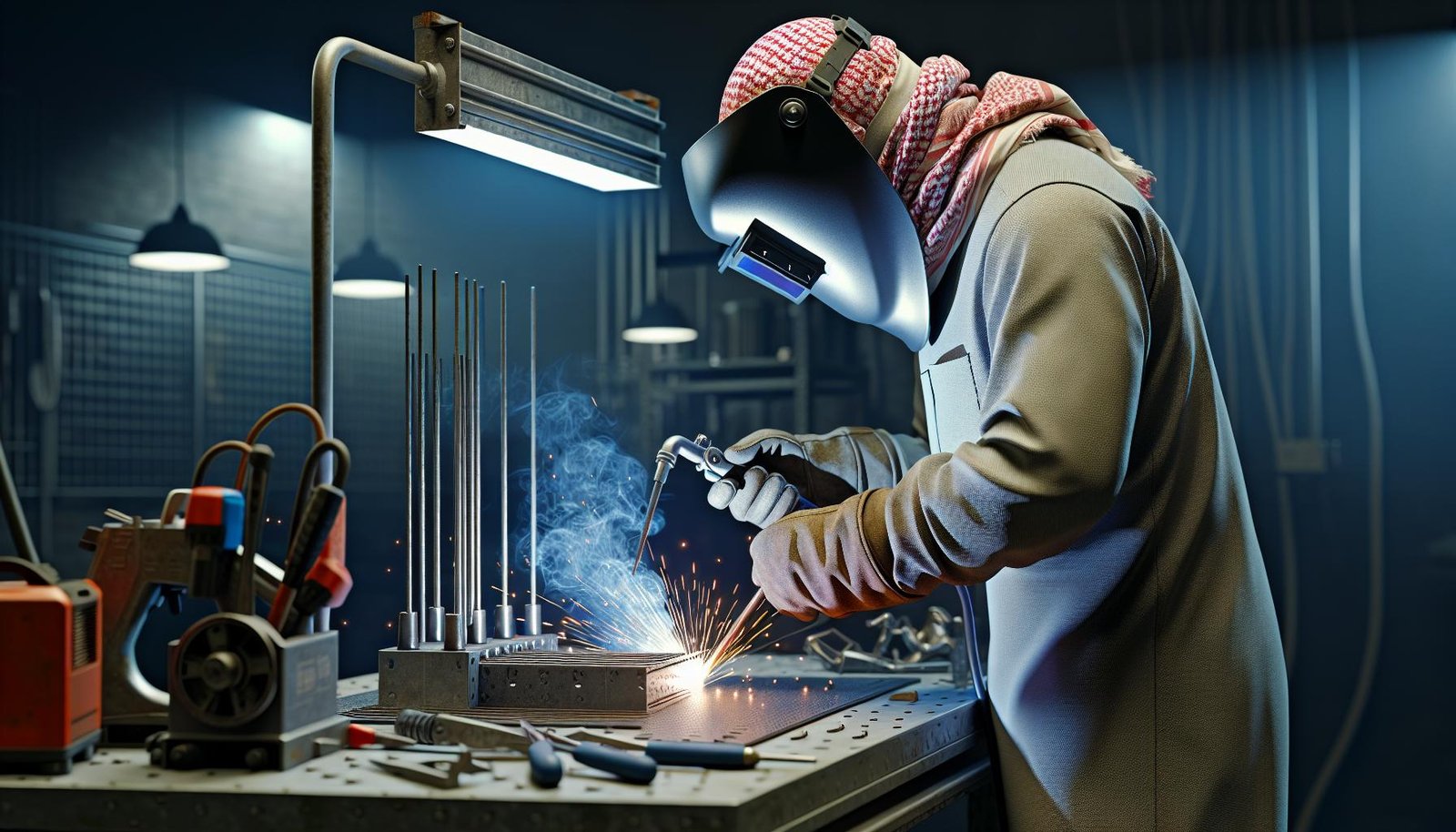
Manufacturing operations face increasing pressure to balance weld quality with production efficiency. The choice between welding processes directly impacts material costs, labor requirements, and overall project timelines. Two dominant methods—Gas Tungsten Arc Welding (GTAW) and Metal Inert Gas (MIG) welding—present distinct operational profiles that influence everything from initial setup costs to long-term maintenance schedules.
Understanding the financial and operational implications of each process becomes critical when production volumes, material specifications, and quality standards must align with budget constraints. The decision extends beyond equipment acquisition to encompass training requirements, consumable costs, and the broader impact on workflow efficiency across different industrial applications.
Understanding Gas Tungsten Arc Welding Process Fundamentals
Gas Tungsten Arc Welding uses a non-consumable tungsten electrode to create an electric arc that melts the base material. The process operates within a protective atmosphere of inert gas, typically argon or helium, which prevents contamination during the welding operation. This controlled environment enables precise heat management and produces welds with exceptional purity and strength characteristics.
The process requires separate filler material when additional metal is needed to complete the joint. This separation of heat source and filler material gives welders complete control over both the heat input and the amount of material added to the weld pool. For comprehensive technical specifications and service capabilities, a Gas Tungsten Arc Welding Services overview provides detailed information about implementation requirements and quality standards.
Equipment Configuration and Operational Requirements
GTAW systems require more complex equipment setups compared to other welding processes. The welding machine must provide precise amperage control, often with high-frequency start capabilities to initiate the arc without touching the tungsten electrode to the workpiece. Gas delivery systems need accurate flow regulation to maintain proper shielding throughout the welding operation.
Tungsten electrodes require specific preparation and maintenance protocols. Different tungsten alloys serve various applications, and electrode geometry directly affects arc characteristics and weld penetration patterns. This level of control demands higher operator skill levels and more extensive training compared to other welding methods.
Material Compatibility and Application Range
The process excels with materials that demand high-quality welds and minimal contamination. Stainless steel, aluminum alloys, titanium, and exotic metals respond well to GTAW techniques because the inert gas protection and controlled heat input preserve material properties. The absence of flux or coating materials eliminates potential contamination sources that could compromise corrosion resistance or mechanical properties.
Thin materials benefit significantly from GTAW capabilities since the precise heat control prevents burn-through and distortion issues common with higher-energy welding processes. This makes the method particularly valuable for precision fabrication work where dimensional accuracy must be maintained throughout the welding operation.
MIG Welding Process Characteristics and Operational Profile
Metal Inert Gas welding feeds a continuous wire electrode through the welding gun while simultaneously providing shielding gas protection. The wire serves as both the electrode and the filler material, creating a streamlined process that can maintain consistent deposition rates. This integration of electrode and filler material enables faster welding speeds and higher production rates compared to processes requiring separate filler rod manipulation.
The continuous wire feed mechanism maintains a consistent arc length automatically, reducing the skill level required for basic operations. Operators can focus on travel speed and gun positioning rather than managing multiple variables simultaneously. This operational simplicity translates to reduced training time and more predictable production outcomes across different operator skill levels.
Production Efficiency and Speed Considerations
MIG welding typically achieves higher deposition rates than GTAW processes, making it suitable for applications where production volume takes priority over absolute weld quality. The continuous wire feed allows for longer welding runs without interruption, reducing the stop-and-start cycles that can impact overall productivity.
Setup time between different welding tasks tends to be shorter with MIG processes since wire changes and gas adjustments require less preparation compared to tungsten electrode preparation and precise amperage settings. This efficiency becomes particularly important in job shop environments where frequent changeovers between different materials and joint configurations are common.
Material Applications and Limitations
Carbon steel and some stainless steel alloys work well with MIG processes, particularly in structural applications where absolute corrosion resistance is not the primary concern. The process handles thicker materials effectively, making it suitable for heavy fabrication work where penetration and deposition rate matter more than surface finish quality.
However, reactive materials like aluminum and titanium present challenges for MIG welding due to contamination susceptibility and the difficulty of maintaining proper shielding gas coverage. The wire feeding mechanism can also create issues with soft materials that tend to deform under the feeding pressure required for consistent wire delivery.
Direct Cost Analysis Between Process Options
Initial equipment investment differs significantly between the two processes. GTAW systems require higher upfront costs due to more sophisticated power supplies, gas delivery systems, and tungsten electrode preparation equipment. Professional welding organizations document that complete GTAW setups can cost substantially more than comparable MIG systems when factoring in all necessary components.
Consumable costs follow different patterns for each process. GTAW operations consume tungsten electrodes, filler rods, and shielding gas, but tungsten electrodes last considerably longer than MIG wire, and gas consumption rates are generally lower. MIG processes require continuous wire replacement and typically use more shielding gas due to higher welding speeds and longer continuous operations.
Labor Cost Implications and Training Requirements
Operator training costs vary significantly between processes. GTAW requires extensive skill development to manage multiple variables simultaneously—torch angle, travel speed, filler rod addition, and arc length control all demand coordination and practice. This training investment translates to higher labor costs initially but often results in more versatile operators capable of handling complex welding challenges.
MIG welding training can be completed more quickly for basic operations, allowing new operators to achieve productivity faster. However, advanced MIG techniques for critical applications still require substantial skill development, though generally less than comparable GTAW proficiency levels.
Productivity and Throughput Considerations
Time per linear inch of weld favors MIG processes for most standard applications. The continuous wire feed and higher deposition rates enable faster completion of routine welding tasks. This speed advantage becomes particularly pronounced on longer welds where the efficiency gains compound over the length of the joint.
GTAW productivity depends heavily on the specific application requirements. For high-quality work on critical components, the additional time invested in GTAW may prevent costly rework or field failures that would more than offset the initial time investment. The calculation becomes more complex when factoring in quality-related costs and warranty implications.
Quality Outcomes and Long-Term Performance Factors
Weld quality characteristics differ substantially between processes, affecting long-term performance and maintenance requirements. GTAW typically produces superior mechanical properties and corrosion resistance due to the controlled environment and precise heat management capabilities. The lack of flux or coating materials eliminates contamination sources that could compromise weld integrity over time.
Surface finish quality strongly favors GTAW methods, particularly important for applications where appearance matters or where post-weld finishing operations need to be minimized. The controlled heat input also reduces distortion, which can eliminate expensive straightening operations or fixture requirements that add cost to the overall fabrication process.
Inspection and Testing Requirements
Quality control procedures often differ based on the welding process used. GTAW welds typically require less extensive inspection due to the inherent process control and reduced defect probability. This can translate to lower inspection costs and faster approval cycles for completed work.
MIG welds may require more thorough inspection protocols, particularly for critical applications, due to higher potential for porosity and inclusion defects. The additional inspection time and potential rework costs should be factored into the total cost analysis when comparing process options for specific applications.
Service Life and Maintenance Implications
Long-term performance differences between GTAW and MIG welds can significantly impact total project costs when considering service life expectations. GTAW joints typically demonstrate superior fatigue resistance and corrosion performance, potentially extending component life and reducing replacement frequency.
Maintenance accessibility also varies with weld quality characteristics. High-quality GTAW joints may allow for easier repair work when service is eventually required, while lower-quality welds might necessitate complete replacement rather than repair options.
Application-Specific Decision Framework
The choice between GTAW and MIG processes should align with specific operational requirements rather than following general preferences. Critical applications involving corrosive environments, high stress conditions, or strict dimensional tolerances typically justify the additional investment in GTAW capabilities and the associated time requirements.
Production volume requirements create another decision point. High-volume manufacturing operations may benefit from MIG efficiency even when some quality characteristics are compromised, provided the application can tolerate the reduced performance levels. The key lies in matching process capabilities to actual performance requirements rather than over-engineering solutions.
Material-Driven Process Selection
Base material characteristics often dictate process selection regardless of other factors. Reactive metals, thin-gauge materials, and dissimilar metal joints typically require GTAW capabilities to achieve acceptable results. Attempting to use MIG processes on inappropriate materials can result in complete project failure rather than simply reduced efficiency.
Conversely, thick steel fabrication projects may not benefit from GTAW capabilities, making the additional investment difficult to justify. Understanding material-specific requirements prevents both over-investment in unnecessary capabilities and under-investment that leads to quality problems.
Regulatory and Code Requirements
Industry standards and regulatory requirements may mandate specific welding processes for certain applications. Pressure vessel codes, aerospace specifications, and nuclear industry standards often specify GTAW for critical joints regardless of cost considerations. These requirements eliminate process selection decisions and focus attention on implementation efficiency.
Even when codes allow process options, insurance and liability considerations may favor higher-quality welding methods. The cost of potential failures must be weighed against the additional investment in superior welding processes, particularly for applications where public safety is involved.
Conclusion
The decision between Gas Tungsten Arc Welding and MIG welding requires careful evaluation of multiple cost and performance factors. While MIG processes offer clear advantages in production speed and initial training requirements, GTAW methods provide superior quality outcomes that may justify the additional investment for critical applications. The choice ultimately depends on matching process capabilities to specific operational requirements, considering both immediate costs and long-term performance implications. Success lies in accurately assessing true application needs rather than defaulting to the lowest initial cost option or the highest quality process without regard to actual requirements.
