


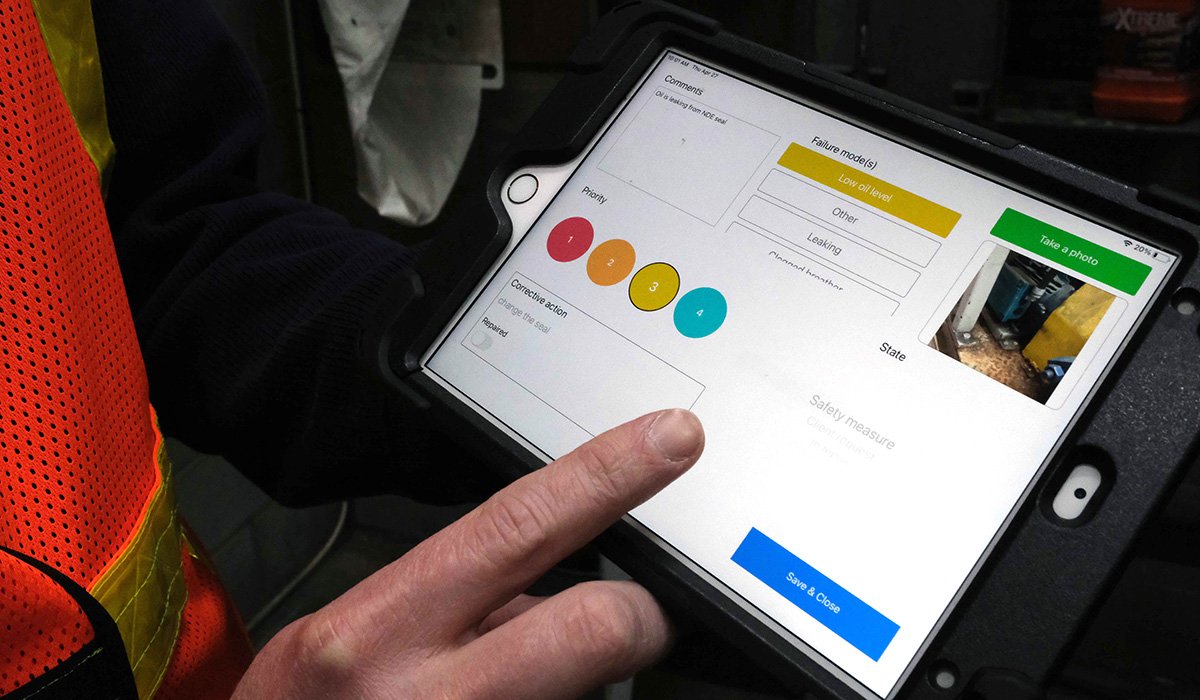
Equipment failures in industrial operations create cascading problems that extend far beyond the immediate downtime. When critical assets fail unexpectedly, production lines halt, maintenance teams scramble to diagnose problems, and management faces difficult decisions about repair costs versus replacement investments. The traditional approach of scheduled maintenance and reactive repairs often misses the subtle changes in equipment performance that signal impending failures.
Modern industrial facilities rely on complex interconnected systems where a single component failure can disrupt entire production processes. This reality has shifted maintenance strategies away from time-based schedules toward condition-based approaches that monitor actual equipment health. The difference between detecting a bearing vibration early and discovering it after catastrophic failure can mean the difference between a planned maintenance window and weeks of unplanned downtime.
Understanding how to systematically monitor critical assets requires knowledge of different monitoring frameworks, each designed to address specific types of equipment and failure modes. These frameworks provide structured approaches to collecting, analyzing, and responding to equipment condition data in ways that prevent failures before they occur.
Condition-Based Monitoring Framework
Condition-based monitoring represents a fundamental shift from calendar-driven maintenance to data-driven decision making. This framework continuously tracks the actual operating condition of equipment through sensors and analysis tools, allowing maintenance teams to schedule interventions based on equipment needs rather than predetermined timelines. A comprehensive critical asset monitoring solution built on this framework uses real-time data collection to establish baseline performance patterns and identify deviations that indicate potential problems.
The framework operates by establishing normal operating parameters for each piece of monitored equipment. Temperature ranges, vibration patterns, pressure levels, and electrical signatures create a fingerprint of healthy operation. When sensors detect measurements outside these established ranges, the system generates alerts that allow maintenance teams to investigate and address problems before they escalate into failures.
Sensor Integration and Data Collection
Effective condition-based monitoring depends on strategically placed sensors that capture relevant equipment parameters. Vibration sensors on rotating machinery detect bearing wear, misalignment, and imbalance issues. Temperature sensors identify overheating in motors, pumps, and electrical systems. Pressure transducers monitor hydraulic and pneumatic systems for leaks or blockages. Current sensors track electrical load patterns that reveal motor problems or mechanical binding.
The placement and selection of sensors requires understanding both the equipment being monitored and the failure modes most likely to occur. A centrifugal pump monitoring system might include vibration sensors on the motor and pump bearings, temperature sensors on the motor windings, and pressure sensors on both the suction and discharge sides. This combination provides comprehensive coverage of the most common pump failure mechanisms.
Baseline Establishment and Trend Analysis
Establishing accurate baselines requires collecting data during known good operating conditions across different load levels and environmental conditions. Equipment behavior changes with production demands, ambient temperature, and other operational variables. A complete baseline captures these normal variations so the monitoring system can distinguish between acceptable operational changes and developing problems.
Trend analysis builds on these baselines by tracking how equipment parameters change over time. A gradual increase in bearing temperature or vibration levels signals developing problems that require attention. Sudden changes often indicate immediate issues that need urgent response. The framework uses both gradual trend monitoring and rapid change detection to provide comprehensive equipment health assessment.
Predictive Analytics Framework
Predictive analytics extends basic condition monitoring by using historical data patterns and machine learning algorithms to forecast when equipment failures are likely to occur. This framework goes beyond simple threshold monitoring to identify complex patterns in equipment behavior that precede specific types of failures. By analyzing months or years of operational data, predictive systems learn to recognize the subtle signatures of developing problems.
The predictive approach proves particularly valuable for equipment with long lead times for replacement parts or equipment that operates in remote locations where rapid response is difficult. Rather than simply alerting to current problems, predictive analytics provides advance warning that allows maintenance teams to plan interventions, order parts, and schedule downtime during convenient operational windows.
Pattern Recognition and Machine Learning
Machine learning algorithms excel at identifying patterns in large datasets that would be impossible for human operators to recognize manually. These algorithms analyze thousands of data points simultaneously to identify correlations between different equipment parameters and failure events. A bearing failure might be preceded by specific combinations of temperature increases, vibration frequency changes, and current draw variations that only become apparent when analyzed together.
The algorithms improve their accuracy over time by learning from both successful predictions and false alarms. This continuous learning process helps the system distinguish between normal operational variations and genuine failure precursors. As the system accumulates more data, its predictions become more reliable and specific to the particular equipment and operating conditions of each facility.
Failure Mode Prediction
Advanced predictive systems can identify not just when equipment might fail, but also how it is likely to fail. This capability allows maintenance teams to prepare specific repair procedures and order appropriate replacement parts. A motor might show patterns indicating bearing failure rather than winding failure, allowing technicians to focus their diagnostic efforts and prepare for the specific type of repair needed.
Different failure modes have different urgency levels and repair requirements. Bearing problems might allow several weeks of continued operation with careful monitoring, while electrical insulation breakdown requires immediate shutdown to prevent safety hazards. Predictive analytics helps maintenance teams understand both the timeline and the nature of developing problems.
Risk-Based Monitoring Framework
Risk-based monitoring prioritizes equipment monitoring efforts based on the potential consequences of failure rather than treating all equipment equally. This framework recognizes that organizations have limited resources for monitoring and maintenance, and those resources should focus on equipment where failures create the greatest operational, safety, or financial impact. By categorizing equipment according to failure consequences, facilities can implement more intensive monitoring for truly critical assets while using simpler approaches for less critical equipment.
The framework requires systematic evaluation of each piece of equipment’s role in overall operations. Production bottlenecks, safety-critical systems, and equipment with high replacement costs typically receive priority for advanced monitoring. Supporting equipment that has backup systems or minimal failure consequences might use simpler monitoring approaches or rely on traditional preventive maintenance schedules.
Criticality Assessment Methods
Effective criticality assessment considers multiple factors that contribute to equipment importance. Production impact evaluates how equipment failure affects throughput and product quality. Safety considerations identify equipment where failures could create hazardous conditions. Financial analysis includes both repair costs and lost production revenue. Regulatory implications consider equipment required for environmental compliance or safety certifications.
The assessment process typically uses scoring systems that weight these different factors according to organizational priorities. A chemical processing plant might weight safety factors heavily due to the hazardous nature of the materials being processed, while a discrete manufacturing facility might emphasize production impact and throughput considerations. The resulting criticality rankings guide monitoring investment decisions and maintenance resource allocation.
Monitoring Resource Allocation
Once equipment criticality is established, monitoring resources can be allocated proportionally to failure consequences. High-criticality equipment receives continuous monitoring with multiple sensor types and sophisticated analytics. Medium-criticality equipment might use periodic monitoring with portable instruments or limited permanent sensors. Low-criticality equipment could rely on routine inspections and time-based maintenance schedules.
This tiered approach allows organizations to maximize the value of their monitoring investments by focusing advanced technologies where they provide the greatest benefit. The approach also recognizes that over-monitoring low-risk equipment wastes resources that could be better applied to protecting critical assets.
Integrated Systems Monitoring Framework
Modern industrial operations depend on complex systems where individual equipment pieces work together to accomplish production goals. Integrated systems monitoring recognizes that equipment failures often result from interactions between different components rather than isolated problems with individual machines. This framework monitors entire production lines, process units, or facility systems to identify problems that might not be apparent when looking at individual equipment pieces in isolation.
The framework addresses the reality that many equipment problems originate upstream or downstream from where symptoms first appear. A pump might show signs of distress because of problems with the motor that drives it, the piping system it serves, or the control system that regulates its operation. Integrated monitoring looks at these relationships to identify root causes rather than just treating symptoms.
System Interdependency Analysis
Understanding system interdependencies requires mapping the functional relationships between different pieces of equipment. Process flow diagrams, electrical schematics, and control system documentation provide the foundation for identifying these connections. The analysis identifies how problems in one component can affect others and how multiple minor issues can combine to create system-level failures.
Interdependency analysis often reveals unexpected relationships between equipment that appears unrelated. Changes in ambient temperature might affect multiple pieces of equipment simultaneously. Power quality problems can impact numerous electrical systems throughout a facility. Cooling water temperature variations can influence the performance of heat exchangers, compressors, and electronic equipment across an entire production process.
Cross-Equipment Correlation
Integrated monitoring systems analyze data from multiple equipment sources simultaneously to identify correlations that indicate system-level problems. When several pieces of equipment show similar patterns of degradation, the monitoring system can identify common cause problems that affect multiple assets. This capability helps maintenance teams address root causes rather than repeatedly fixing symptoms.
Cross-equipment correlation also helps distinguish between equipment-specific problems and external influences. If multiple motors show similar performance degradation patterns, the problem might be related to power quality rather than motor condition. If several heat exchangers show reduced efficiency simultaneously, the issue might be cooling water quality rather than heat exchanger fouling.
Reliability-Centered Monitoring Framework
Reliability-centered monitoring builds on the principles established by the National Institute of Standards and Technology for systematic reliability analysis. This framework starts with understanding how equipment can fail and what the consequences of each failure mode might be, then designs monitoring strategies specifically targeted at detecting the most significant failure modes before they occur. Rather than monitoring everything possible, reliability-centered approaches focus monitoring efforts on failure modes that matter most.
The framework emphasizes understanding failure mechanisms at a fundamental level. Different types of bearings fail in predictable patterns. Electrical insulation degrades according to well-understood physical processes. Mechanical wear follows established mathematical relationships. By understanding these mechanisms, monitoring systems can focus on the parameters that provide the earliest and most reliable indication of developing problems.
Failure Mode Analysis
Comprehensive failure mode analysis examines each piece of equipment to identify all the ways it can fail and the likelihood of each failure mode. Mechanical equipment might fail due to wear, fatigue, corrosion, or contamination. Electrical equipment can fail from insulation breakdown, connection problems, or component aging. Process equipment faces additional failure modes related to product contamination, process upsets, or control system malfunctions.
The analysis considers both the probability of each failure mode and its consequences if it occurs. Some failure modes are common but have minimal impact, while others are rare but catastrophic. The monitoring strategy focuses on failure modes that combine significant probability with serious consequences, ensuring that monitoring resources address the most important risks.
Detection Method Selection
Once failure modes are identified and prioritized, the framework selects monitoring methods that provide the earliest reliable detection of each critical failure mode. Vibration analysis excels at detecting mechanical problems in rotating equipment. Thermal monitoring identifies electrical and friction problems. Oil analysis reveals internal wear and contamination issues. Ultrasonic testing can detect leaks and electrical discharge problems.
The selection process considers both technical effectiveness and practical implementation factors. The best theoretical monitoring method might be impractical due to cost, accessibility, or safety considerations. The framework balances detection capability with implementation reality to create monitoring programs that actually get implemented and maintained over time.
Conclusion
Effective critical asset monitoring requires matching the right framework to specific operational requirements and equipment characteristics. Organizations often benefit from combining elements of different frameworks rather than rigidly following a single approach. High-criticality equipment might use integrated predictive analytics, while supporting equipment relies on simpler condition-based monitoring with risk-based prioritization.
The success of any monitoring framework depends on consistent implementation and continuous improvement based on operational experience. Initial monitoring programs often require adjustment as teams learn more about their equipment’s behavior patterns and develop better understanding of the relationship between monitored parameters and actual equipment condition.
The ultimate goal of critical asset monitoring is preventing unexpected equipment failures that disrupt operations, compromise safety, or create excessive maintenance costs. These five frameworks provide structured approaches to achieving that goal, but their effectiveness depends on thoughtful implementation that considers both technical capabilities and organizational realities. The most sophisticated monitoring technology provides little value if it is not properly maintained, correctly interpreted, and consistently acted upon by competent maintenance teams.
