


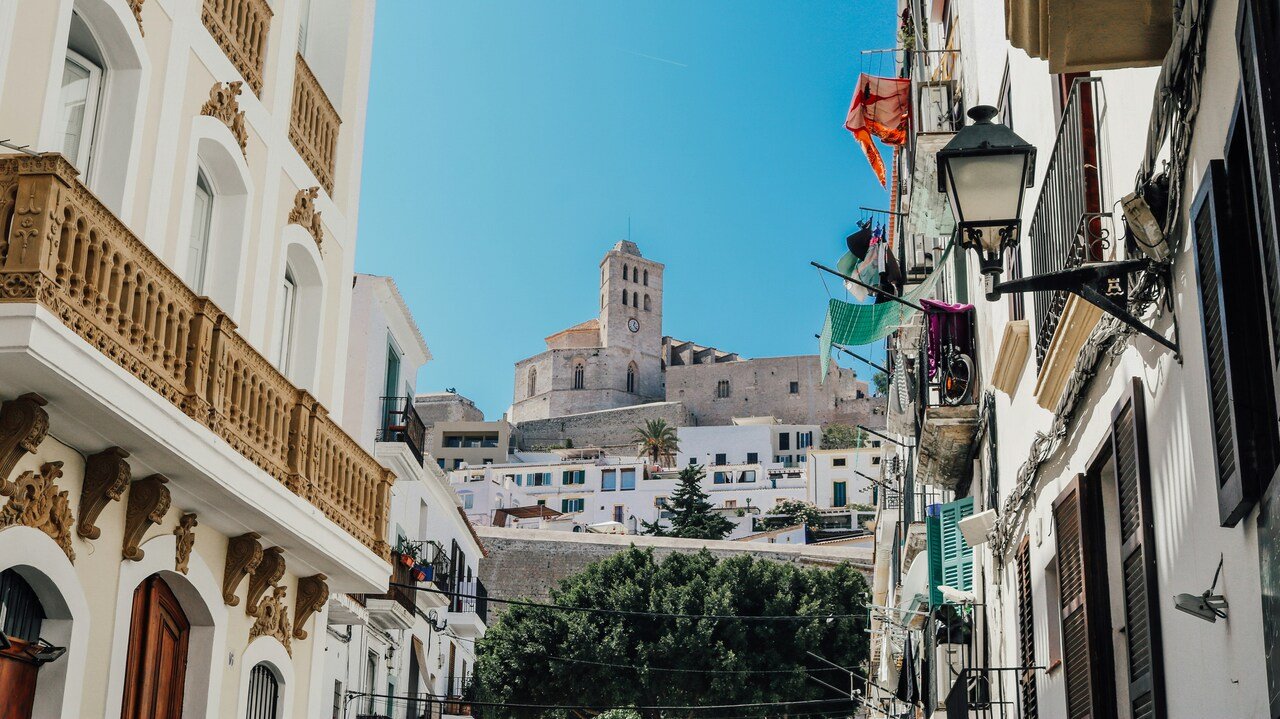
One of the most overplayed tropes in global tourism is the idea that you head to Ibiza for the nightlife alone. While the island is undoubtedly a global powerhouse for world-class clubs and renowned DJs, there is a much quieter, more soulful side waiting to be discovered. Founded in 654 BC, Ibiza is older than many of Europe’s most visited capitals, including Paris and London. Over the millennia, it has been home to Carthaginians, Romans, Moors, and Catalans—leaving behind a cultural tapestry that offers a perfect sanctuary for those looking to balance relaxation with a sense of discovery.
Puig de Missa: A Fortified Sanctuary
To truly experience the “unplugged” side of the island, where the bass thumps dissipate into the sea breeze, Puig de Missa is the perfect starting point. This 16th-century fortified church sits majestically overlooking Santa Eulària, serving as a stunning example of how Ibizan architecture was designed for both defense and devotion.
The whitewashed complex invites visitors to slow down and wander. It houses the Ethnographic Museum, located within a beautifully restored traditional farmhouse (finca). Here, you can glimpse the island’s rural past through ancient agricultural tools and traditional costumes. It is a space that immediately shifts your mindset into vacation mode, allowing you to de-stress by escaping into simpler, more traditional times.
The Art of Slow Living on the East Coast
In Ibiza, you are never more than a few moments away from the sea, but not all coastlines are created equal. The island is dotted with promenades designed for leisurely strolls rather than neon-lit parties.
Unlike the high-octane energy of the south, the many high-quality Santa Eulalia hotels on the east coast cater specifically to travelers seeking serenity. By choosing this area, you are more likely to find specialized spa services and quiet pool areas, avoiding the “accommodation lottery” of more rowdy districts. Staying here means you are just a short walk away from Roman-era flour mills, authentic hippy markets, and peaceful river walks—the ultimate recipe for a restorative stay.
History and Bliss Through Gastronomy
Food is perhaps the most sensory way to connect with Ibiza’s heritage, and Santa Eulària has long been celebrated as the island’s gastronomic heart. Calle de los Restaurantes is a vibrant street brimming with authentic Balearic flavors. Here, you can enjoy a meal that is as much a history lesson as it is a delight:
- Bullit de Peix:This traditional fish stew originated in the 18th century, born from the resourcefulness of local fishermen.
- Fresh Seafood:Sourced from the same waters where Romans once established fish-processing factories.
- Traditional Cheesecake (Flaó):While its roots trace back to the Catalan arrival in 1235, the use of honey and mint reveals the subtle influence of the island’s Moorish era.
Finding balance in Ibiza is surprisingly easy. Many of the island’s most significant historical sites have evolved into its quietest spots—tucked away from the nightlife, yet perfectly served to be both convenient and profoundly relaxing.
