


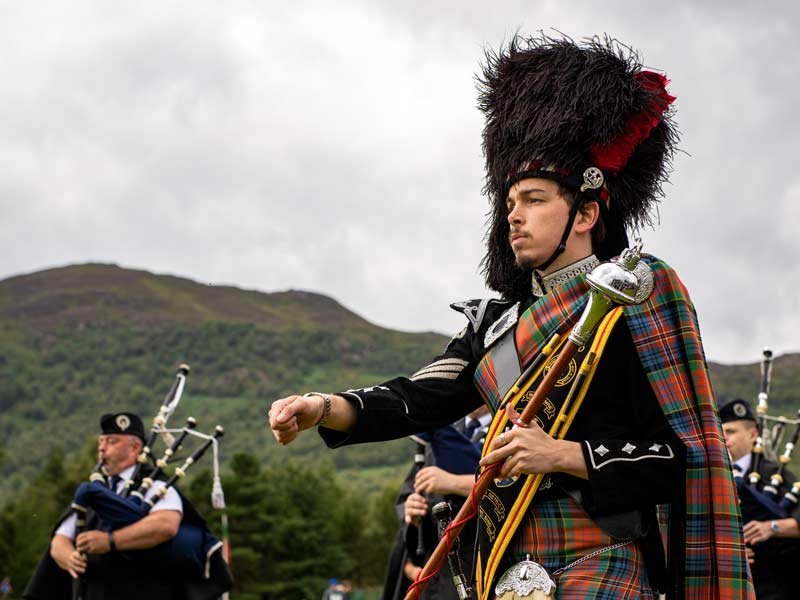
From the windswept glens to the bustling city streets, Scotland’s spirit is vibrantly expressed through its cultural heritage. At the very heart of this identity lies a powerful symbol: the kilt and its accompanying ensemble, collectively known as traditional highland wear. More than mere clothing, these garments are a profound statement of belonging, a historical narrative woven into every thread, and a testament to centuries of tradition. For those of us at the Scottish Kilt Shop, this heritage is not just a legacy to be observed; it is a living craft, meticulously preserved and passionately practised, ensuring that the authentic spirit of Scotland continues to adorn generations.
Our journey into the soul of Scotland begins with the kilt itself – an icon recognised globally. Yet, its true essence lies in the meticulous craftsmanship and the rich stories embedded within its tartan. A genuine kilt, particularly those offered by the Scottish Kilt Shop, is a masterpiece of tailoring, requiring between eight and nine yards of heavy-weight, pure wool tartan, chosen for its durability, drape, and vibrant colours. This isn’t mass production; this is an art form, with each pleat carefully hand-stitched to the sett or stripe of the tartan, ensuring it hangs perfectly and sways with a characteristic elegance unique to Scottish tradition. The fabric itself is often sourced from ethical Scottish mills, upholding a commitment to quality that honours both the land and its craftspeople.
The Anatomy of Authenticity: Deconstructing Highland Dress
Understanding traditional highland wear means appreciating each component of the full outfit, each element steeped in history and purpose.
The Kilt: As discussed, the kilt is the star. Its history stretches back to the ‘feileadh-mòr’ or great kilt, a single piece of cloth wrapped and belted around the body, serving as both clothing and blanket. The modern ‘feileadh-beag’ or small kilt emerged in the 18th century, becoming the tailored garment we recognise today. Each tartan tells a story, often linked to a particular clan, district, or family, making the choice of tartan deeply personal and symbolic.
The Jacket: Complementing the kilt are various styles of jackets, each suited for different occasions.
Prince Charlie Coatee & Vest: This is the most formal option, typically worn for black-tie events, weddings, and evening functions. It’s a short-cut jacket with satin lapels, often paired with a three-button waistcoat.
Argyll Jacket & Vest: A versatile daywear and semi-formal option, the Argyll is longer than the Prince Charlie, with gauntlet cuffs and traditionally staghorn buttons. It’s suitable for most daytime events and less formal evening gatherings.
Braemar Jacket & Vest: Offering a slight variation on the Argyll, the Braemar features a more defined, often braided, cuff detail.
Tweed Jackets: For truly informal settings, such as country pursuits or casual gatherings, a tweed jacket provides warmth, durability, and a classic Scottish aesthetic.
The Sporran: Derived from the Gaelic word for purse, the sporran is an essential accessory. Due to the lack of pockets in a kilt, the sporran serves as a functional pouch for carrying personal items. It hangs centrally at the front and varies from simple leather day sporrans to elaborate dress sporrans made with sealskin, badger, or horsehair, often adorned with intricate cantles (the metal top frame). Its style should match the formality of the jacket.
The Kilt Pin: A small but significant detail, the kilt pin adds weight to the apron of the kilt, preventing it from flapping open. They often feature Celtic designs, thistles, or clan crests, adding a touch of personal flair and heritage.
The Sgian Dubh: Pronounced “skee-an doo,” this small, single-edged knife is traditionally worn tucked into the top of the kilt hose, with only the hilt visible. Its name means “black knife,” possibly referring to the colour of the handle or its concealed nature. Historically, it served as a utility knife and a discreet form of defence. Today, it’s primarily a ceremonial accessory, though care must be taken regarding its legality in certain public spaces.
Kilt Hose & Flashes: These are specially designed socks, typically made of wool, that reach just below the knee. The flashes are elasticated garters that hold the hose up and are often chosen to match or complement a colour within the tartan, adding a dash of coordinated vibrancy to the outfit.
Ghillie Brogues: Distinctive lace-up shoes, Ghillie brogues feature long laces that wrap around the ankle and are tied without a tongue, allowing them to dry quickly in wet conditions – a practical design for Scotland’s often damp climate.
The Symphony of Scotland: Echoes of the Glens
Just as traditional highland wear visually narrates Scotland’s past, so too do the stirring sounds of its musical instruments scotland weaves into the very fabric of its identity. Music is not merely entertainment here; it is a communal expression, a historical record, and an emotional release. The instruments themselves often carry as much heritage and craftsmanship as the garments we wear.
The Great Highland Bagpipe: Undoubtedly the most iconic of Scottish instruments, the sound of the Great Highland Bagpipe is synonymous with Scotland. Its powerful, resonant drones and melodic chanter have rallied clans to battle, celebrated victories, mourned losses, and heralded countless festivities. The crafting of bagpipes is an intricate art, requiring precision turning of wood (often African Blackwood or Cocobolo), the careful seasoning of reeds, and the skilled assembly of bags and covers. Each set of pipes is a unique creation, designed to produce a sound that evokes the very soul of the Highlands. Its presence at every significant Scottish gathering, from weddings to Highland Games, underscores its enduring importance.
The Fiddle: While perhaps less globally recognised as “Scottish” than the pipes,
the fiddle (violin) holds a profoundly important place in Scottish folk music. Its expressive melodies and rhythmic drive are central to ceilidh bands and traditional sessions. Scottish fiddling styles are distinct, characterised by their ornamentation, bowing techniques, and a vast repertoire of reels, jigs, strathspeys, and slow airs that tell tales of love, loss, and daily life. The art of violin making, or lutherie, demands exquisite woodworking skills and an understanding of acoustics, creating instruments capable of producing the vibrant, emotional tones essential to Scottish music.
The Clarsach (Scottish Harp): The clarsach is Scotland’s ancient harp, a beautiful, delicate instrument whose history stretches back over a thousand years. Once played by bards and nobility, it provided elegant accompaniment to storytelling and song. Its sweet, ethereal tones offer a stark contrast to the pipes, representing a gentler, more contemplative side of Scottish musical heritage. Modern clarsachs are often made from native Scottish woods, continuing a tradition of utilising local materials to craft instruments of exquisite beauty and sound.
The Bodhrán: A simple yet incredibly versatile frame drum, the bodhrán is a staple of traditional Irish and Scottish music. Played with a ‘tipper’ or ‘beater,’ it provides a rhythmic pulse that drives the melody forward. Its construction, typically a goatskin head stretched over a wooden frame, might seem straightforward, but the nuances of its sound and the skill required to play it well are profound, adding depth and energy to any ensemble.
A Shared Ethos: Crafting Sound and Fabric with Soul
What connects the intricate pleating of a kilt to the resonant drone of a bagpipe, or the delicate strings of a clarsach to the robust weave of tartan? It is a shared ethos of uncompromising quality, deep respect for tradition, and the artistry of skilled hands. Both the creation of authentic traditional highland wear and the crafting of fine musical instruments demand.
Patience and Precision: From hand-stitching each kilt pleat to fine-tuning the components of a bagpipe, hurried work simply will not do. The results of true craftsmanship are evident in every detail.
Quality Materials: Ethically sourced, durable wool for kilts, and specially selected woods, leathers, and metals for instruments. The foundation of any heirloom piece is superior raw material.
Custodianship of Heritage: Both crafts are not just about making an object; they are about preserving knowledge, techniques, and stories passed down through generations. They are living links to Scotland’s past.
At the Scottish Kilt Shop, we understand this profound connection. Our dedication to providing hand-tailored, authentic highland dress, crafted in Scotland with ethically sourced wool, stems from the same deep-seated reverence for heritage that inspires the makers of the finest musical instruments. We believe that true Scottish excellence is about more than just appearance; it’s about the integrity of the process, the soul infused into the creation, and the lasting legacy it carries.
The Enduring Legacy: From Ancient Glens to Modern Celebrations
Traditional highland wear, far from being relegated to dusty museum exhibits, continues to thrive in the modern world. It is the cherished attire for Scottish weddings, marking a moment of deep personal and cultural significance. It graces graduations, formal dinners, and ceilidhs, bringing a touch of history and unmistakable style to every occasion. Even in contemporary fashion, elements of highland dress are reinterpreted, yet the authentic ensemble remains unparalleled in its distinctiveness and grace.
The same can be said for Scotland’s musical landscape. While new genres emerge, the timeless melodies played on traditional instruments continue to fill halls, pubs, and open-air festivals across the country and around the globe. They are a constant reminder of Scotland’s vibrant cultural pulse, a testament to the enduring power of its artistic expressions.
Preserving the Authentic Spirit with Scottish Kilt Shop
In a world increasingly dominated by mass-produced goods, the value of authentic, handcrafted items rooted in deep cultural tradition becomes immeasurable. The Scottish Kilt Shop stands as a beacon for those who seek genuine traditional highland wear – garments that are not only beautiful but carry the very essence of Scotland. Our commitment to ethical sourcing, hand-tailoring in Scotland, and unwavering quality ensures that every kilt, jacket, and accessory we offer is a piece of heritage, made to be cherished for a lifetime.
Whether you are exploring your own Scottish roots, planning a momentous occasion, or simply drawn to the unparalleled elegance of highland dress, choosing an authentic article is a statement of respect for a rich and vibrant culture. Just as the haunting melodies of the pipes echo through time, the timeless appeal of a well-made kilt and its accompanying finery will continue to resonate, connecting individuals to the proud and enduring spirit of Scotland.
